





It’s Time for a Social Rent Revolution!

The winds of political change were felt through the Council Chamber at Manchester Town Hall on Friday afternoon as the Manchester Social Housing Commission launched their final report and recommendations to a room of over 100 housing and planning professionals, councillors, officers, housing activists, residents and communities.
You can watch clips of different sections of the event using the links at the bottom of this article.
Chaired by The Right Reverend Dr David Walker, Bishop of Manchester, and opened by Cllr Bev Craig, Leader of Manchester City Council, the event began with powerful community testimonies. One single mum wept as she described her experiences of fleeing domestic abuse with her two disabled and asthmatic children only to find herself stuck in poor quality damp and mouldy private sector accommodation having to carry her wheelchair-bound child up and down the stairs several times a day to use the toilet in a house with no aids and adaptations.
Vicky Leigh, a Commissioner and Assistant Principal of Manchester Academies Trust, described the experiences of families supported through their At Home project through which they have supported over 300 families. Vicky talked of a family who have been able to stay together in the same community in secure tenancy social rent accommodation in an area where many families have been and continue to be displaced because of the lack of decent and affordable homes. Vicky described Clare as “one of the lucky ones”. She has one daughter in year 10 living at home with her, and two older daughters, one living with her, and another living nearby with her own family in their own secure social rent home. Living close together means they can all support each other with school runs and childcare. On their journey to this situation however, they had lived in such poor-quality social housing that their ceiling collapsed and the bathroom from the flat above fell through into their home.
Lina Dowouna and Reverend Kate Gray of Wythenshawe Central Network shared their experiences of tokenistic resident involvement and consultation processes in the latest wave of regeneration in Wythenshawe Town Centre. Reverend Kate explained that Wythenshawe Central Network know their own communities and know what kinds of tools and techniques work best, yet barely any local representatives have attended the workshops and meetings WCN have organised to gather the community’s views and priorities and share inspiring ideas for the future. This needs to change to rebuild trust:
“It really matters that this isn’t being done by the council. That makes a difference to people who feel excluded and done to. And I am sad to say that in the conversations that we have had in Wythenshawe, many local councillors are consistently absent from those conversations. And I want to challenge you to attend, and listen, and take part. That will help build active trust.”
Pledges to action
Bernard Sudlow of Hulme Community Forum and Sue Thomas O’Flaherty of Lifted Carers and Wythenshawe Central Network put a series of asks to key stakeholders who had agreed to participate as panellists at the event.
All panellists including Steve Fyfe for GMCA; Cllr Bev Craig, Leader of the Council; Cllr Gavin White, Executive Member for Housing and Regeneration; Matt Jones, interim Chair of the Manchester Housing Providers Partnership and Charlie Norman, Chair of the GM Housing Providers Partnership pledged to work with Commissioners to establish a Social Homes for Greater Manchester Scrutiny Panel focused on ensuring the Commission’s recommendations are taken forward in Manchester and across GM, that will meet quarterly until the next General Election.
Bishop David thanked Afzal Khan MP and Hannah Spencer MP for their attendance (despite having to leave early for constituency surgeries) and explained he will be personally following up with the Greater Manchester All Party Parliamentary Group of MPs to explore how to advance the Commission’s national policy recommendations.
In addition to participation in the scrutiny panel, Matt Jones Interim Chair of the Manchester Housing Providers Partnership and Charlie Norman, Chair of the GM Housing Providers Partnership expressed their full support and pledged to work with partners to ensure repairs are being carried out in a timely fashion and investment is made to remove dangerous damp and mould; and to ensure that providers are limiting demolitions to cases of last resort.
Cllr Bev Craig and Cllr Gavin White acknowledged that there was more work to do to ensure Manchester City Council works in collaboration with communities when planning for local areas. In addition toparticipation in the scrutiny panel, they committed to working with Social Homes for Manchester to co-create a policy on Community Led Development and expressed their political commitment to achieving a target of 30% social rent in the new Local Plan for Manchester.
Cllr White said:
“When we go to Regulation 19, we need that feedback: give us that evidence to present to the inspector to ensure that we can get the Local Plan through. It is the political aspiration to get 30% social rent entirely but that’s what we need in Regulation 19.”
Addressing inequalities
Dr Cordelle Ofori, Director of Public Health for Manchester City Council, who was invited to share her expertise on the links between health and housing inequality said:
“I am really supportive of this because the Right to Health and the Right to a Home go hand in hand. In Manchester […] between the poorest and the most affluent parts of the city, for boys it’s a 9-year gap in life expectancy and for girls it’s a 7-year gap. That’s completely unacceptable …But the things that make the biggest difference to health inequality are the things that sit outside of health services, and housing is a really important part of that […] If all of your money is going on keeping a roof over your head, you haven’t got much left for everything else. It’s also important for children’s education, it’s important for being able to get more training to move up the job ladder and get a better job, it’s important for so many things.”
Cordelle highlighted Making Manchester Fairer’s three key focus areas of (i) Shifting power to communities; (ii) Tackling poverty including fuel poverty; and (iii) Tackling racism and discrimination. Cordelle highlighted how racially minoritised groups are more likely to live in social housing, more likely to live in poor quality housing, and more likely to be in housing that is overcrowded; and the need to address the particular housing needs of disabled families. She called on all partners engaged in taking this work forwards to think about: what are the implications specifically for different population groups in Manchester amidst these recommendations; and how can we ensure these inequalities are addressed in the actions that are taken.
Celebrations and next steps
Several contributors celebrated the approach that has been taken by the Commission which you can read about in the concluding pages of the main report which shares detail on the methodology, challenges, and success factors as evaluated by Commissioners.
Bishop David thanked colleagues at Manchester City Council for their support and engagement without whom the process would not have been possible and added:
“This has been a really exceptional engagement for me. I have sat on a large number of housing commissions over a large number of years…and yes, you have meetings and you visit a few places, and you produce a report and present your recommendations, and yeah we’re doing all of that. But the distinctive thing about this, is the extent to which it’s been the voices of people living in social housing or living in estates around the city who have driven the process forward. That has been unique. I’ve long been committed to what they call coproduction and codesign, but I’ve never seen it done so determinedly as the Manchester Social Housing Commission has done it.”
The SH4M coalition is the legacy structure which will now take forward the Commission’s findings and recommendations and seek to maximise implementation, working always in partnership with community leaders across Manchester, Greater Manchester and England. The coalition will publish an annual progress tracker each year at least until the next General Election.
Together, Commissioners have met with Ministers, ministry teams, representatives of the All-Party Parliamentary Group on Greater Manchester, and special advisers; have submitted written evidence to successive national consultations and audit committees; and have presented evidence to Lords and MPs. Partner organisations such as Mustard Tree met directly with Angela Rayner in 2024 to share on the extent and impacts of the housing and homelessness crisis in Manchester in advance of the April 2025 budget.
Importantly, throughout these engagements we have developed new connections and relationships that have supported ongoing advocacy, parliamentary questions and ministry negotiation on community rights in planning, and new opportunities for joint working, including: the Women’s Budget Group on the gendered impacts of the housing and climate crisis; and the Lloyds Local Collaborations programme.
A key request to the GM APPG is to work with SH4M to establish a working group to advocate for the reforms needed nationally to enable accelerated delivery of ecologically sustainable social rent homes across Greater Manchester. We look forward to working with Manchester City Council and partners across Greater Manchester through the new Social Homes for GM Scrutiny Panel and a wealth of other legacy projects. These include: new neighbourhood planning processes in Hulme and Moss Side; work to explore Community Land Trust pilots in Miles Platting and Wythenshawe; a network of organised communities with a deeper understanding of housing and planning systems and potential community led placemaking innovations just as five Manchester Pride in Place areas have been announced; and a new transparency and accountability data portal project with GMCA. A new Social Homes for Trafford coalition has also launched; and we are keen to share learning with groups across the city-region and nationally.
To stay informed, you can sign up to the Social Homes for Manchester mailing list.
CLIPS OF THE LAUNCH EVENT
More Stories
Learning from East Marsh
Pride in Place Manchester
Neighbourhood Planning in Hulme
Introducing… Hannah and Menna!

Hannah Berry – Social Homes for Manchester Project Lead
Social Homes for Manchester (SH4M) has accomplished a lot since it was launched in 2023 by Community Savers leaders, and a coalition of partners including GM Tenants Union, Greater Together Manchester, Shelter, Mustard Tree, and Steady State Manchester. Not least, an 18 month long Social Housing Commission, which is about to launch its final report and recommendations.
All this has been achieved by people volunteering their time, so having had the fortune to be employed by CLASS as a dedicated project worker for the campaign, I’m eager to see how I can help build momentum and fulfill all the ambitions of the influencing plan!
I fell into community engagement work by accident in 2002, while on a sabbatical from Ethical Consumer magazine, and one job has led to another, culminating in my current role. I set up and coordinated Manchester Women’s Network (bringing together community groups), Manchester Women’s Design Group (to lobby and influence on planning issues), and co-directed a ‘popular education’ organisation which ran workshops in low income areas of Manchester and Salford. More recently, at GM level, I worked for the ‘Ambition for Ageing’ neighbourhood development programme, and the GM Equality Alliance, where I learned a lot about city-wide and regional policy making.
Until last month I was based at Fuel Poverty Action, a straight-talking member-led organisation which fights for warm homes and clean, affordable energy, under the control of people and communities (I really like SH4M’s environmental focus for this reason). I was the Operations Lead, but like CLASS, we were a small team, so I picked up useful campaign skills.
Being involved in GM Housing Action (GMHA), and our community-led housing project, GM Housing Futures (whose legacy SH4M is taking forward), was also a pretty good grounding for this role. What feels exciting, is meeting all the wonderful activists and leaders in the Community Savers network, through whom the campaign already has roots in many wards and neighbourhoods, and the structures and expertise needed to extend its reach. I look forward to posting regular updates on the SH4M news page, and activating the mailing list, as I continue to work alongside the SH4M Steering Group, Community Team and lovely colleagues at CLASS.
Menna Hassan – Independent Living Worker, Ageing Well in Place in Hulme
I began work as the Independent Living Worker on the Ageing Well in Place in Hulme project in March. Working with older adults is incredibly meaningful to me. Every day I have the opportunity to support individuals in maintaining their independence and confidence in their own homes and communities. Sometimes this support involves helping someone access services or navigate housing and wellbeing systems, and other times it simply means listening and making sure someone feels seen and supported.
A key part of my role is also ensuring safety and wellbeing through risk assessments, safeguarding processes and Duty to Refer when appropriate. My goal is always to make sure people feel secure, respected and empowered to make decisions about their own lives.
More Stories
Learning from East Marsh
Pride in Place Manchester
Neighbourhood Planning in Hulme
Aquarius Community Savers – 2025!

At Community Savers, we believe that the people who live in a neighborhood are the best experts on what that neighborhood needs. This year Aquarius Community Savers (ACS) has proven that principle tenfold. Here is a look at what we’ve achieved by working together with many other local partners.
Protecting the Heart of Hulme: Aquarius Community Centre
The Aquarius Community Centre is more than just a building; it’s a lifeline. With One Manchester’s lease ending in 2027, the Friends of Aquarius Community Centre campaign has been working to ensure it remains a community-led hub.
We are thrilled to share that Odd Arts has submitted a formal proposal to take on the lease. Their plan isn’t just about management—it’s a commitment to a “community-led decision-making” model that keeps the power in the hands of residents and local partners.


Housing Justice: The Social Housing Commission
Our members, Bernard Sudlow and Sally Casey, have been the voices of the Aquarius estate on the Social Housing Commission. Their advocacy is moving the needle on systemic change:
- A Win for Social Housing: Thanks to persistent advocacy, the target for social rented homes in new developments has jumped from less than 5% affordable or social rent to 21% social rent in the draft local plan. We continue to push for the 30% goal advocated for by Social Homes for Manchester.
- Defending Our Neighbourhood: We successfully secured recognition of the Aquarius estate as a residential area in the new draft Local Plan for Manchester, a vital step forward in protecting our facilities from being swallowed by city centre expansion.
Knowledge is Power: Training & Exchanges
Building a resilient community requires skills. This year, ACS members completed training in Conflict Management, Financial management, and Fundraising. In July, a highlight was our learning exchange to https://ambitionlw.org/Ambition Lawrence Weston in Bristol. Seeing their success with community-led renewable energy and asset management sparked fresh ideas for what we can achieve right here in Greater Manchester.
Ageing Well in Place in Hulme
The Ageing Well in Place initiative is transforming how we support our older and more vulnerable neighbours in Hopton and Meredith Court.
- New staff members: We welcomed Roísín, our Development Worker, in 2025, and we are excited to appoint an Independent Living Worker in Spring 2026.
- Health Integration: Our new partnership with Cornbrook Medical Practice ensures that health services are integrated directly into our community work.
- The “Naturally Occurring Retirement Community” (NORC) Model: We are bringing services to the people, making it easier for residents to stay independent and connected.
A New Space for Connection
After five years of campaigning, the Hopton community space is finally under construction! While planning delays have shifted the opening date, the vision remains clear. The space will be managed by the newly formed Hopton and Meredith Tenants and Residents Association (HMTARA).

Planned activities include:
- The Breakfast Club: Already serving 23 people every weekend (with deliveries for those who can’t leave their flats).
- Wellness & Skills: From Tai Chi and music workshops to IT clubs and DIY sessions.
Savings and Safety Nets
Aquarius Community Savers continued to support our community to put away small amounts for particular goals throughout 2025. We now have 35 regular members in the savings club who deposited a total of £7,152 in savings in 2025! We also continue to manage a Crisis Fund for those in urgent need. Whether it’s fuel top-ups, a weekly food shop, or essential furniture, our committee is here to help. Referrals are handled with care and can be kept anonymous.
We are looking forward to continuing this progress in 2026!


More Stories
Learning from East Marsh
Pride in Place Manchester
Neighbourhood Planning in Hulme
More Power for Communities? We’re working on it…
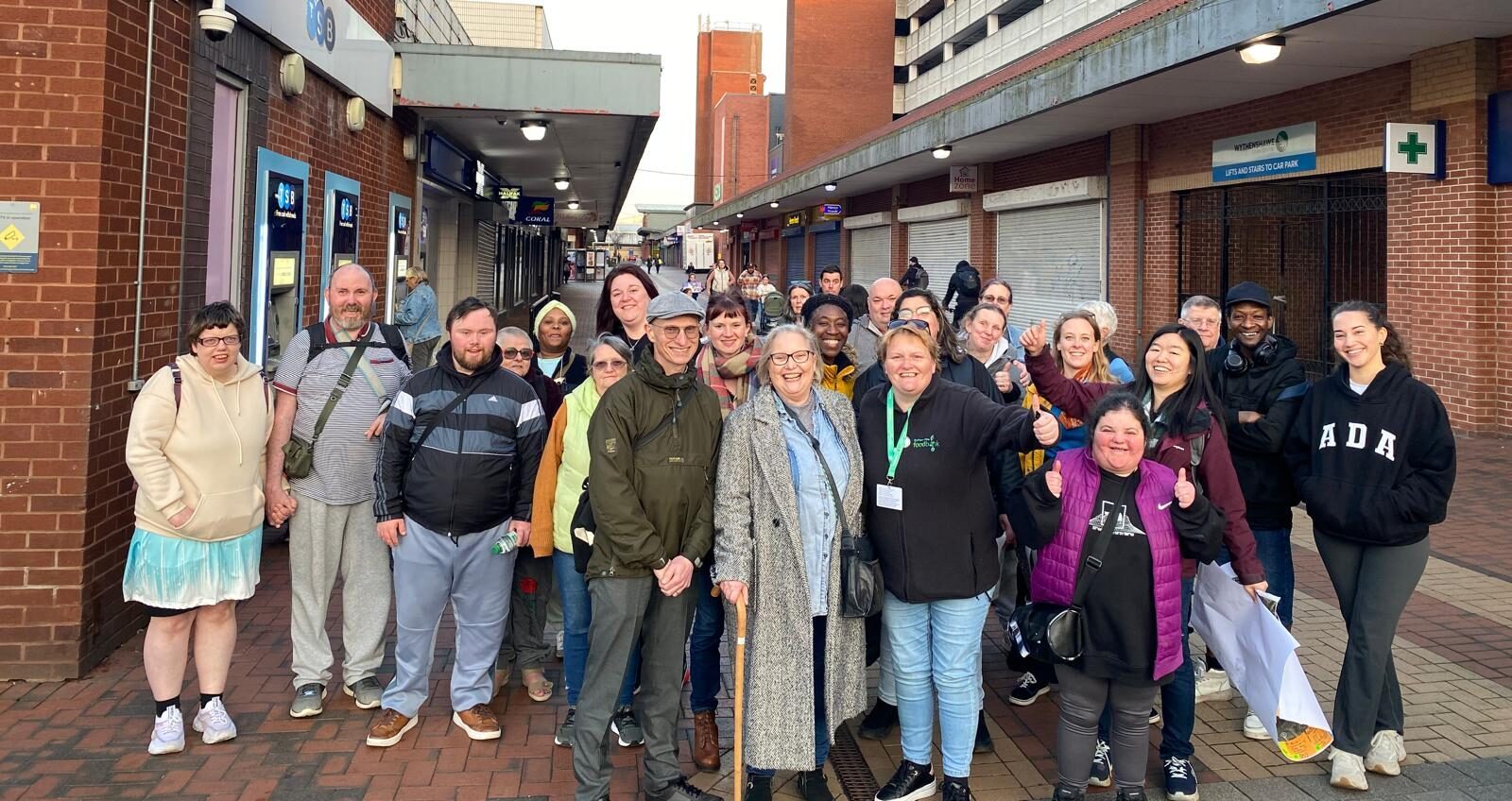
Its a busy time for community action with important changes in motion.
Below, community leaders from North, Central and South Manchester share the priorities they have organised around through the Manchester Social Housing Commission process and to ensure their voices are heard within the draft Local Plan for Manchester – after something called the ‘Regulation 18 consultation’ closed yesterday. We are also working closely with a coalition of groups in Moss Side who are now looking to establish a neighbourhood forum and create their own Neighbourhood Plan!
At the same time in parliament, MPs are debating amendments to the English Devolution and Community Empowerment bill this week that would include: # Establishing a community ownership fund to enable voluntary and community organisations to purchase assets of community value; # Strengthen options for community stewardship of land and assets; and # Introduce a statutory requirement to assess government performance against its duty to provide:
(i) access to a clean and healthy environment;
(ii) access to land or space to play, roam, and swim;
(iii) access to land for food growing;
(iv) the ability to contribute to and challenge decisions made at a local level;
(v) access to, use of, and ability to propose acquisition of assets of community value.
Community Savers are working with @We’reRightHere and @RightsCommunityAction to advance these forms of #CommunityPoweredPolitics nationally; and also amplifying our community voices across the City of Manchester within the consultation process for the new Local Plan in coalition with @SocialHomes4Mcr.
Collyhurst & Miles Platting
Residents, community groups, churches, and projects have been joining together across Ancoats, Collyhurst and Miles Platting since 2019 through Miles Platting Community & Age-friendly Network or ‘MPCAN’. MPCAN launched the Social Homes for Manchester campaign in October 2023 on the site where they were calling for new social rent homes after a net loss of over 500 homes following a PFI-led regeneration gone wrong. They are delighted that social rent homes will now be built on three of the sites they had been calling to have developed for this purpose and to have achieved an increase from 5% social or affordable rents to 21% social rent in city council policy together with the Social Homes for Manchester coalition.
Sue Anya, Miles Platting Savers and St Georges Youth and Community Centre on social rent housing targets:
MPCAN’s priorities also include:
30% social rent homes as a minimum across the 15,000 homes to be delivered in total through the Victoria North development framework in a context of over 4,600 children living in Temporary Accommodation across the city. And a new district centre to be developed at the crossroads between Ancoats, Collyhurst and Miles Platting including:
- A multi-purpose community and social centre, community-led housing, and health and wellbeing joint services centre on the St Cuthberts Church site along the lines of that which was to be delivered under the Miles Platting PFI. Manchester City Council could work with the community and the GM Live Well programme to look at the possibility for a GM Live Well Centre on the St Cuthberts site and help to facilitate NHS partnership for a joint services centre.
- Healthy and affordable food retail is desperately needed in the area with a volunteer run social supermarket the only way for residents of Miles Platting to access healthy nutritious fruit and vegetables without taking two buses to the nearest supermarket.
- Health and wellbeing leisure facilities such as a leisure centre and library to replace that which was demolished.
- Health infrastructure is desperately needed to address rapidly increasing population including GPs surgeries, dental practices, and specialist clinics tailored to local needs.
- Investment in the improvement and protection of green spaces and development of green spaces into active lifestyle zones including through outdoor gyms and community gardens and allotment spaces.
- Improved transport infrastructure to enable older, disabled, and people with long-term conditions or mums with lots of children to easily travel between local locations and to food retail and healthy lifestyle venues.
- To reconsider plans to build on Vauxhall Gardens which is an important heritage site for the local community
- Protection and improvements to existing Gypsies, Travellers and showpeople sites
The Aquarius Community
Tenant organising in the Aquarius estate has a long and rich history dating back to the Hulme Alliance in the 1970s. Most recently Aquarius Tenants and Residents Association, Aquarius Community Savers, Hulme Tenants Union, On Top of the World Project and residents across high rise social housing blocks owned by Guinness Partnership and One Manchester have joined together in their calls to have their neighbourhood recognised as a residential area that is distinct from and requires different forms of planning and housing interventions to the City Centre and Oxford Road Corridor. They are delighted to see their estate has been marked as outside the city centre in the new draft Local Plan but the boundary is currently in the wrong place.
Bernard Sudlow, Aquarius TARA and Aquarius Community Savers, on rezoning the Aquarius estate:
Aquarius tenants and residents and their community associations are also asking for:
- The inclusion of Hopton Court and Cooper House tower blocks within the rezoned Aquarius estate as key residential buildings linked to the estate.
- For a clear policy statement that: ‘all new homes should be safe in relation to the risk of fire; all new homes should have access to natural light; all new homes should demonstrate how they will be resilient to a changing climate; all new homes should be free from unacceptable and intrusive noise and light pollution; all new homes should not contribute to unsafe or illegal levels of indoor or ambient air pollution and must be built to minimise and where possible eliminate, the harmful impacts of air pollution on human health and the environment; and all new homes should be designed to provide year-round thermal comfort for inhabitants’.
- For a policy of at least 30% homes for social rent in all new developments of ten homes or above including a fair proportion of larger family homes not just one and two-bedroom apartments in a context of 4,600 children living in Temporary Accommodation across the city
- For stronger wording on developer contributions in line with the National Planning Policy Framework stating that: “the Council will seek contributions from development. These contributions will be relative to the scale and impact of the development and will ensure that Manchester’s communities are not adversely affected by development.’
- And, for a new policy on Community Involvement from the pre-application stage that gives communities a meaningful influence over the developments that shape their neighbourhoods and determine their health outcomes.
Wythenshawe Central
Diverse Wythenshawe women have been coming together to identify their priorities for poverty action since 2022, initially through the Women of Wythenshawe initiative, which saw community and faith groups taking action for systems change on Domestic Abuse, Housing and SEND. Now, through Wythenshawe Central Network which to date brings together over 130 local residents and 22 community and faith groups for a stronger voice over their needs and priorities for their own neighbourhood.
Mariam Karim, Better Things Ambassador, presented Wythenshawe Central’s priorities to the Manchester Social Housing Commission in December 2024 which have since been further developed and submitted this week as their ‘Regulation 18’ consultation response. Here, Mariam shares on that experience of participating in the Commission process:
Zoe Marlow, emerged from her community leadership roles with Women of Wythenshawe and as Housing Commissioner to be successfully elected as a local ward councillor for Woodhouse Park in September. Here, she speaks about what it was like to represent Wythenshawe Central Network on the housing commission for the preceding 18 months:
Wythenshawe Central Network’s priorities for the Local Plan are principally focused on the Wythenshawe Town Centre redevelopment within which they are calling for:
- At least 600 of all new homes to be for social rent within the Wythenshawe Civic Centre regeneration area to meet genuine local need and to tackle Manchester’s housing crisis.
- A fair proportion of low- and mid-rise, family-friendly social rent housing. This is particularly important given that the first three housing developments will be, in the majority, one and two bedroom apartments.
- Requirement for leasehold and governance arrangements on new retail, leisure, enterprise and community infrastructure/facilities, which can control the cost of these facilities for local residents both in terms of use (entrance fees/tickets etc) and potential hire or lease such as for small businesses and young entrepreneurs from the local area.
- Accountable governance structures for new community facilities to ensure these reflect local priorities and needs long into the future.
- Proactive provisions to protect long-term residents from displacement as investment and housing markets change.
The Local Plan process continues. Next year a second draft of the Local Plan will be published and come out for a Regulation 19 consultation and then there will be an examination in public.
For more information or to get involved please visit https://www.socialhomes4mcr.org.uk/get-involved.
More Stories
Learning from East Marsh
Pride in Place Manchester
Neighbourhood Planning in Hulme
Savers uniting from Middlesbrough to Wythenshawe!
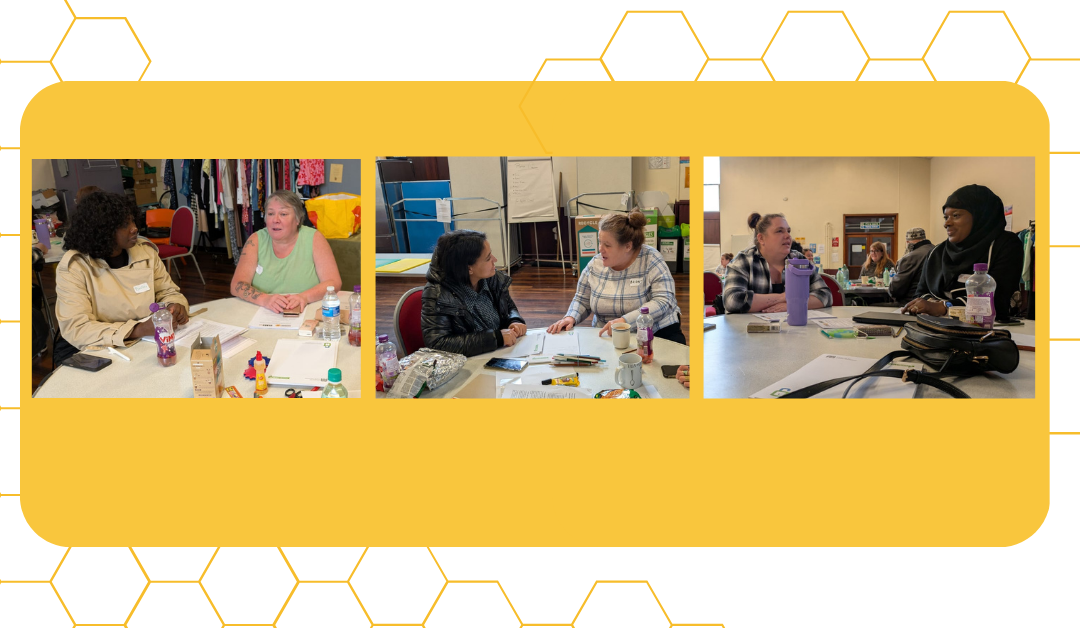
Community Savers leaders had another productive quarterly network meeting on Thursday and were delighted to welcome Rama, Fatima, and Mabintou from Middlesbrough!
Rama is coordinator for a CIO called Creative Minds Middlesbrough and is working with local women to learn from the Community Savers approach and set up their own savings group.
Leadership development, sharing learning and peer support are fundamental pillars of the Community Savers methodology and here Lina – a leader form Dandelion Savers and Wythenshawe Central Network shares on what Quarterly Network meetings are all about:
After a jam-packed morning full of Community Savers business affiliated savings groups from Brinnington, Miles Platting, Hulme and Wythenshawe shared their experiences of setting up and running savings clubs with our Middlesbrough guests. Bridget from MIles Platting Savers reflects on what she was able to share here:
Savings clubs are the building blocks of the Community SAvers approach and contribute significant impacts to financial and social inclusion and wellbeing. For example, our 2024 members survey revealed that:
· 85% of members feel more positive about life
· 81% feel less isolated
· 96% feel more community connection
· 96% saw improved mental health
Community Savers is about much more than saving money however. Through the savings clubs, local residents are able to come together to discuss local issues and soon begin developing their own local initiatives to address gaps and challenges.
Over time, the clubs become organising hubs for a wider network of groups and projects forming neighbourhood networks able to take collective action to reduce inequality and promote a better future for their local area.
For now though, Fathima, Rama and Mabintou will be focusing on getting the hang of getting their new savings club off the ground with support from a shared partner of Community Savers and Creative Minds Middlesbrough – Turn2us https://www.turn2us.org.uk/
Rama visiting from Middlesbrough talking about her experience of attending a Community Saver network meeting.
Fatima from Middlesbrough reflecting on the learning from the day.
More Stories
Learning from East Marsh
Pride in Place Manchester
Neighbourhood Planning in Hulme
Savings, Spaces, and Solidarity: Community Savers in 2024

We have worked together with Nifty Sustainability CIC on an in depth look at what Community Savers affiliates and partnerships are achieving through our community action with a focus on 2024. Below is an abridged version of sections from Nifty’s excellent independent evaluation report – its a great read!
Download our 2024 Impact Evaluation here
Inputs
Community Savers members and leaders bring their time and expertise, life experience, willingness and enthusiasm to the alliance, and CLASS works hard to ensure these are valued and meaningful. CLASS supports Community Savers to develop capacity, knowledge and skills. CLASS nurtures community leaders and creates social and strategic spaces for reflection, learning and relationship building such as the annual retreat. The Community Savers–CLASS alliance is genuinely effective with transparent and authentic leadership and co-governance structures. CLASS also bring a helpful legitimacy to the groups, as well as technical support.
“CLASS come to you. There are other charities out there that support people, but you have to go to them. What’s happened with CLASS is that they meet on your patch, listen to what you need, don’t parachute in, and help you to see that you’ve got the skills amongst you, you’re the experts in the field and it’s just about bringing that voice out really.” Leader interview

Action
Community Savers and CLASS are leading on a variety of innovative activities. However, the building blocks remain the women-led and community-based savings clubs. These are an adaptation of a 30-year strong social movement called Shack/Slum Dwellers International. Stemming from and galvanised by the savings groups, there were no shortage of precedent-setting projects, partnerships, neighbourhood networks and campaigns to explore including Ageing Well in Place in Hulme, Miles Platting Community and Age-Friendly Network, Women of Wythenshawe, and Social Homes for Manchester. These are all underpinned by community priorities and participation and facilitated by CLASS and partners. In addition, community-led learning exchanges lead to knowledge sharing, capacity building and new relationships.

Outcomes
The alliance of Community Savers and CLASS, their approach and their activities are leading to a range of positive outcomes at the individual, neighbourhood, and city-regional scale, which would not otherwise be possible.
Members have more savings, less debt, more resilience to financial shocks
The number of affiliated Community Savers groups/neighbourhood networks remained at 8 in 2024 during a period when CLASS was also coordinating community action of nine member groups in the Women of Wythenshawe network. The numbers of individuals and leaders increased, as did savings turnover both in terms of deposits and withdrawals.

61% of members survey respondents said they would have spent the money they saved through the savings club on other things, and many of these said they would have wasted it on ‘rubbish’ and things they didn’t need and that the savers groups were valuable in reducing this. 52% of members survey respondents said that being a member of their savings group had changed the way they think about how to manage money.
“I’ve never saved before I joined the Dandelion Savers. For more than 2 yrs now, I’ve realised how you can save money. I have £1000 in savings now.”
Leaders have increased skills, employment and personal development opportunities
It is clear from the data that being involved in Community Savers and CLASS work is leading to positive impacts around knowledge and skills, and personal development opportunities. Throughout 2024, Community Savers and Women of Wythenshawe leaders engaged in ongoing skills development from the basics for running local groups like financial management and accounting; health and safety; first aid; and building an inclusive approach for people with diverse needs; to safeguarding, mental health and neurodiversity; and understanding incorporation.
Members have improved mental and physical health

These impacts were reportedly as a result of, for example, having somewhere to go, people to meet, speak to and share problems with, and feeling accepted as part of a community.
“I used to be a recluse and didn’t come out of my flat for 10 years and then I found out about this place and started coming here 7 months ago. If i don’t come here for a week, then come the week after, people say ‘where’ve you been?’ It’s nice to know you’ve been missed.” Savings club member
“I would like to say a massive thanks to Wow for giving us the opportunity to learn new skills that will help us grow and helping us believe that we can make a difference, and to empower us to encourage and inspire others to do the same. WoW is the best thing that has happened to Wythenshawe. Together we are stronger.” Women of Wythenshawe Leader

Increased access to community facilities
The importance of community spaces and facilities came through strongly and some important milestones were reached in 2024 around spaces that Community Savers and CLASS are involved with.
Mums’ Mart finally signed the lease on a derelict caretakers flat in a local church enabling the renovation to get underway. The space was co-designed by local mums and will be free to use for local women’s groups for the next ten years. Miles Platting Community & Age-friendly Network have successfully registered a new CIO, in partnership with St Cuthberts C of E Parochial Church Council, called St Cuthberts Communities Together with a joint vision for a multipurpose faith and community hub. And in Hulme, One Manchester are renovating a 3-bedroom ground floor flat and a caretakers room into tenant-governed community spaces for residents of Hopton Court and Meredith Court tower blocks.


“This community has been stripped of all its assets – the swimming pool, the library, you name it, it’s gone. But now we’ve got so much hope that through St Cuthberts Communities Together we can have a space where we can socialise, worship, maybe space for the NHS, maybe some housing. Big plans! And CLASS helped support us with that” Leader interview – MPCAN
Women of Wythenshawe
The Women of Wythenshawe network is doing amazing work and being part of the network is having positive impacts on people’s confidence to act on their ideas. Groups and organisations are working together more which means signposting can be effective between groups and services. WoW have united around four priority areas for community action on gendered poverty – domestic abuse, women-led social enterprise, SEND education and social housing provision.
“CLASS have done something very unique I think. Because they have spoken to the local women about what the needs are. So, you know the big ones are housing, disability, domestic violence, and they’ve looked at those and it’s three separate groups because it’s three separate issues. However, they’re all interconnected but you almost can’t have this big umbrella of going ‘right let’s deal with them all’ because every one takes such a lot of knowledge, experience, time. So, by having the three and then pulling them together we can all help each other. So, the housing team are fighting for better housing and accommodation for disability but also for women fleeing DV… So we’re all working together” Partner interview
The work on housing was a catalyst for the development of Wythenshawe Central Network which has become the legacy structure for Women of Wythenshawe. Wythenshawe Central decided to affiliate with the wider Community Savers network in October 2024.
“I’m most proud of the connection we have made with so many women in Wythenshawe and the Wythenshawe Central Network that has come out of it. And now we are engaging the community in the development of the town centre. It feels like we are the bridge between the developers and the community and sharing all the information.” Leader interview

Social Homes for Manchester
The Social Homes for Manchester campaign coalition was catalysed by Community Savers mobilisation in 2023 and launched the Manchester Social Housing Commission chaired by the Bishop of Manchester, Dr David Walker, in 2024. The Community Savers leadership felt they had reached a stage of development where they wanted to join their voices together across the city. Together with partners, they have made the following six requests of Manchester City Council:
- At least 30% social homes included in all new developments of over 10 units to be enacted in local policy and enforced through the setting and enforcement of section 106 obligations.
- Stronger public accountability and scrutiny for the setting and enforcement of developer obligations to build new social housing
- Establish a Commission on SocialHousing for the City of Manchester.
- Develop a practical strategy for thepromotion of Community Led Housing.
- Develop a practical strategy for the renovation/transfer of empty homes into homes for social rent.
- Ensure all new developments are climate and nature friendly

Community Commissioners are a core part of the process and include women of different ages from different parts of Manchester and those who have made Manchester their home from different backgrounds. They are the ones who have been organising in their local areas and encouraging people to talk about the issues that are affecting them, and they are shaping the agenda of the Commission for example by making sure housing provider accountability and scrutiny is included alongside increased numbers of social housing. They bring diverse experience and expertise into the room and add weight and legitimacy to the process.
“The fact that we’ve got people from the communities sat on the coalition and the Commission – but particularly the Commission – alongside some incredibly influential individuals. I think that speaks for itself.” Partner interview
Join the mailing list and/or become a member of the coalition here
“I’ve learned where to go, and who to approach, and what to say to the people that we are asking things from, whereas two years ago I wouldn’t have had a clue about any of what we are doing now. I’ve learned how to understand the jargon, how to approach things, how to be in the room with so many highly qualified people, but feel that I belong there which is very important because people like me don’t usually feel they belong in that room.” Leader and Community Commissioner, Wythenshawe
In November, Community Commissioners Thirza of GM Tenants Union and Zoe of Wythenshawe Central and Dandelion Savers gave powerful testimonies in the House of Lords to launch the Commission’s five urgent national policy asks. And residents and community leaders from Hulme, Miles Platting, Moss Side, and Wythenshawe have drawn on several years of local organising as well as more recent community workshops September-December 2024 to draw together local priorities for housing and local development. They presented these priorities to senior officers in Manchester City Council’s Planning department in January 2025 in anticipation of the new Local Plan for Manchester in 2025.
“The booklets we’ve produced have been helpful for when I’m talking to our local members about things in their ward and when social housing projects come up… the Commission has articulated the evidence across the city… I work with all the Councillors to make the case for that. So I think the Social Housing Commission has helped with that evidence.” Commissioner, Manchester City Council
“When someone living in social housing expresses something related to whatever that topic of conversation is, people really switch on and listen because I think most, if not everyone else at the table doesn’t live in social housing and I think it’s important to kind of counterbalance this sort of abstractness of policy by having that real world perspective to ground us.” Commissioner interview
Learning and Next steps
CLASS and Community Savers have carried out extensive reflection and learning together throughout 2024 enabling them to develop a new three year strategic plan which is available for download. This sets out the current organising context they are negotiating and a series of strategic objectives and priorities for 2025-2028.
The Community Savers groups are having positive impacts at member, household and group levels around saving money and building financial resilience, as well as connecting members of the community, reducing isolation and supporting wellbeing. CLASS is meeting these groups ‘where they are’ and working with them to explore relevant opportunities for skills, knowledge and capacity building, which is developing confidence and encouraging members to develop local activities and interventions to make their communities better for those that live there. CLASS is also working hard to develop partnerships with organisations that have shared values around relevant issues such as social housing, domestic abuse and ageing well to focus on progressing these agendas together.
“CLASS have actually pulled together independent groups that were working in silos and brought them together as a unified group.” Partner interview
All the while, ensuring community voices are being meaningfully included in conversations and governance spaces, which is valued across the board.
“I think it’s important that there are groups that can help give a voice to people but also help organise so that in terms of the formal levels of governance locally and nationally there is a place round the table for everyone.” Partner interview
Positive feedback loops are developing whereby Community Leaders feel more confident and empowered through having their voices heard and their place at the table and so are creating and leading more ambitious agendas for change.
“…it’s genuinely innovative, and I genuinely believe that if more communities have this opportunity you could start to see a profound shift in the voice and power and democracy that communities have. But it’s more than that, because the way CLASS do it, they really engage with the council and other services and make these services listen to tenants and engage with tenants. I don’t think you could ever really capture the impact fully of how this approach influences the culture of the sector.” Partner interview


CLASS and Community Savers are delighted with Nifty Sustainability CIC’s evaluation of our work and impacts in 2024! With the chancellor’s announcement of £39 billion for social and affordable housing on 11th June it could be that the hard work of housing justice coalitions across the country may be about to pay off. But the devil will be in the detail. What is needed now are clear targets for what proportion of new build homes will be developed for social rent!
More Stories
Learning from East Marsh
Pride in Place Manchester
Neighbourhood Planning in Hulme
Introducing….

New additions to the CLASS staff team

Gemma – Fundraising and Communications
‘If you don’t ask, you don’t get’
I’ve never asked someone for a job before, but when my son started school last year, I knew I needed to do something I felt really passionate about. I could see the impact Community Savers was having for both individuals and communities, and I knew it was something I wanted to be part of. I nervously approached CLASS for a job in the summer of 2023, luckily they said yes, and I have been in post a year now!
I first came across the Community Savers idea in 2017 when I was doing some fundraising consultancy with a charity in Wythenshawe. The Community Savers idea was just starting up and the charity that I co-founded in 2012 supported the initial application to the Charity Commission for CLASS to become a registered charity and support the Community Savers movement. I continued to do some small pieces of work with CLASS and Community Savers, mainly fundraising support over the years.
I’m now working 1 day a week for CLASS, mainly in a fundraising role and supporting external communications. Even though I have worked with CLASS and Community Savers over several years, I’m still learning so much about the model, how everything works and constantly trying to keep up with all of the amazing work the network does. As well as working at CLASS, I still work at the charity that initially introduced me to CLASS (Participate Projects in Bradford).
Time certainly flies when you’re having fun, and this year has shot by. It’s been amazing meeting lots of the leaders, partners, groups and funders connected with CLASS and Community Savers and i’m looking forward to building on these relationships further. There are some exciting plans in place and I’m grateful to play a small part in developing and delivering these over the coming months.
Anne – Project Coordinator (Meredith Matters)

I came to live in Hulme in 1969. My roots are in dance, teaching and theatre adding community activities in 2009 quite by accident!. My heart is in Hulme and the surrounding area, we have seen so many changes both good and bad throughout the years, I hope I can make some difference to its future however small. Having unique experience and ties to the area has made working with its people a pleasure. Hulme has a good heart; it beats its rhythm again and again in me.
I have worked in the community on a number of different projects over the past 15 years mostly through a group called On Top of the World Project. This started out as a a co-produced 3 year project with The Royal Exchange using the arts as a tool of engagement working in high rise blocks in Hulme and Gorton. Then myself, Tina Cribbin and my son Christopher took over the reins putting on social events and a drop in for the Over 50s in the Aquarius area of Hulme. Happily the project has gone from strength to strength bringing in the wider community serving and advocating weekly, we even carried on through lockdown by delivering sessions in the gardens of Hopton Court tower block. On Top is now exploring incorporation as a CIO.
On Top has formed a partnership with one of the Community Savers groups called Aquarius Community Savers and they now run the savings club out of the On Top drop in on a Wednesday at the Aquarius Community Centre. With the closing of so many bank and building society branches, this is a really important local resource – allowing people to save any amount however small in a familiar local venue – it all adds up. So many of our group love saving now. We have a great committee and ever growing resident interest and commitment. Meeting CLASS has been a blessing. We have together traversed red tape and the sometimes challenging landscape of funding and public provider partnerships. We have accessed training and invaluable guidance supporting us in becoming marvellous!
Most recently we have developed a new partnership with Turn2Us and this is how I have come to work for CLASS supporting tenants to develop a new stage of the Ageing Well work this time at Meredith Court tower block through a project called Meredith Matters. Turn2Us are a breath of fresh air, bringing a genuine commitment to co-production with the community and experience and knowhow in financial inclusion and resilience. Our project is called Meredith Matters because we matter. Its not OK to just survive. We will be listened to and effect positive change in our community.
I love working with our diverse and everchanging landscape and people. We do a lot of laughing and enjoy our friendships, the old fashioned ways of checking up and supporting each other have re-emerged. They never really went away.
More Stories
Learning from East Marsh
Pride in Place Manchester
Neighbourhood Planning in Hulme
Meredith Matters!

That Meredith matters and Meredith people matter is a thread that ran through all the work we have undertaken.
The idea that tenants can design research and evaluate their own issues and have the knowledge to solve them came from the work undertaken at Hopton Court where we used evidence from OUR own research to make dramatic changes in the block.
This was with CLASS/Community Savers, One Manchester and the University.
What we are trying to achieve is a NORC: a naturally occurring retirement community. This model was applied in Canada and New York where tower block tenants came together to make change.
There is something different about living in tower blocks. It’s more confined, more isolating, and evidence shows we are more likely to have physical and mental health issues. As the tower blocks in Hulme are in the inner city, Hulme has high pollution, and we live in a two tier system with the ever expanding university buildings and sharing scarce resources with a huge student population.
But as we are all Hulmites, we will not go quietly into the night. We are made of stronger stuff. Built through a lifetime of adversity.
Meredith people didn’t disappoint.
We began our work in autumn 2023 with support from Turn2Us and carried out the research in May/June 2024. We looked at access to social care and financial impacts of the care system. From the evidence gathered at Meredith, there were there 3 themes that emerged: the cost of living, health inequalities and social isolation. Issues that we will now work towards changing.

The experience of working with Meredith tenants was amazing. By being a Tenant myself, I was able to understand a lot of what the tenants talked about. This research was different to others, where it would be a professional coming to you with their own agenda and questions.
This works because we know our own. We know it’s more important to show respect and empathy. We know that tenants are more than a sum total of their problems. We also know their potential and their abilities. We know we are more than a box that some smart arsed professional puts us in.
That’s why it works through one cup of tea at time. Through building trust and having local knowledge.

It was amazing to see that change can happen quickly. Having the GP on site and a Money Mentor meant people accessed services they were finding hard to reach. Instantly benefits were applied for, and someone was able to see the doctor after suffering for years with a long term health condition.
Meredith is a culturally diverse community which brings amazing knowledge and different solutions to problems.
It’s been an absolute honour to work with Meredith. I can see already the shoots of change. I have already hear the stories, laughter, and a community determined to make change for all the residents in the block.
Big up Meredith! Our journey now begins.
Blog by Tina Cribbin, Hulme tenant and member of the Meredith Matters project team
More Stories
Learning from East Marsh
Pride in Place Manchester
Neighbourhood Planning in Hulme
Ageing Well in Place at Hopton Court: Achievements and challenges
Tina Cribbin and Gill Edwards from Aquarius Community Savers reflect together on the rollercoaster ride of developing a pilot Naturally Occurring Retirement Community at Hopton Court tower block in Hulme, a video clip of Roy Bennett sharing achievements to date in April 2023 is also included.
Tina Cribbin:
“Cycles of HOPE, confusion, frustration, and anger, HOPE. Repeat. That’s been my experience of developing the Naturally Occurring Retirement Community (NORC) model in Hulme. Never in my life have I ever heard so many professionals play dumb, “I don’t know! “I will take that away”, “I was never made aware of that”. Or just tell lies: “there was never any agreement on that”, “we had to turn it around quickly so there was no time to consult”.
The NORC model improves the quality of life and wellbeing of older people in tower blocks reducing the need for older people to be moved into different accommodation in later life. This has been an issue I have campaigned on for years but got no joy. It originated in New York and has also been done in other parts of the US and Canada. New York has undergone gentrification on a huge scale for many years and the NORC model has proved successful in older people maintaining their homes and ageing well in place. This is the first time anyone has adapted it in the UK.
In 2019, we joined Community Savers and started working with CLASS. CLASS is a small charity which supports groups affiliated to the Community Savers network. CLASS is led by, for and with women leaders of the network. They worked with us to recognise how important our voices are and what we contribute to our community. They supported us in ensuring local people were not only privy to information but also that we were instrumental in decision making. CLASS is our ally and we have learned that it is near impossible to make change without working collectively. No matter how hard it is. It’s the only way forward.
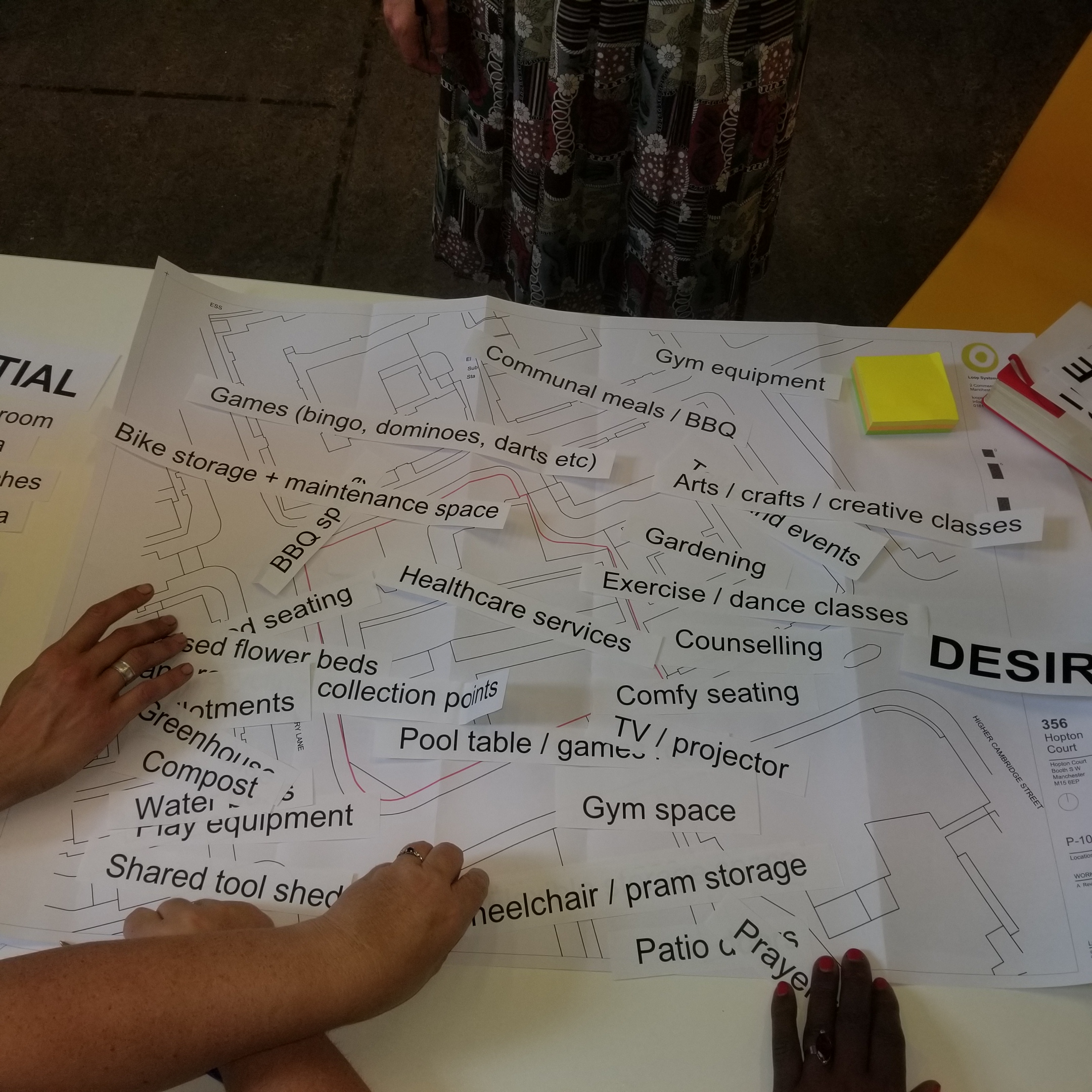
We established a partnership called Ageing Well in Place in Hulme looking at the needs of older tower block tenants in our neighbourhood. We have undertaken community research, door knocking, BBQs, drop ins, workshops, taught at universities. We have undertaken community exchanges and some of us have been lucky enough to travel to Africa! Endless meetings, meetings, and more meetings…!

In March 2021, One Manchester agreed to work with us to adapt the NORC model for our tower block, Hopton Court. Think of the “batteries not included” film. Hopton is a bit like that.
My understanding of NORC is a way of working with older tenants living in tower blocks. Tower block living is quite isolating and tenants have a set of very unique issues which needs a flexible and responsive approach which is inclusive towards the community it sits in.
Bringing this concept to us and other professionals is difficult. Many were unsure exactly what the NORC is. Rightly so, it is complex because it is about co-production and not always pre-determining the outcomes – letting them come out of the partnership work. The NORC model is adaptable, flexible, with constantly shifting priorities that ebb and flow depending on need. Its messy but that reflects the real lives of the people and the community.
Working with partners at the two universities, One Manchester, CLASS, and tenants, the first urgent need that was agreed was for an Independent Living Advisor. Manchester Local Care Organisation and One Manchester provided the funding for her role as a pilot for a year. Katie had a huge impact on the Hopton community people were getting the right benefits (pension credits is one of the most underclaimed), aids and adaptations, repairs in the block were now being delivered promptly, health and care workers were able to access their patients. Older people’s lives were being transformed. Unfortunately, a major restructure at One Manchester meant there was no-one leading on the project for six months and they missed the opportunity to apply for further funding for her role. She had her contract terminated after a year. What a bitter blow – the tenants were devastated.
We are still negotiating for One Manchester to fundraise through our partnership to finance a new Independent Living Adviser role but we have lost Katie now and all the relationships of trust she built up over a whole year of working with the tenants.
We have learned that no matter what they throw at us WE FIGHT BACK. We are a community under siege (on the edge of Manchester city centre and two constantly expanding universities) and understand how difficult it is to live with constant pressure. We’ve learned that pressure works both ways.
We now have a NORC development worker and community researcher who work at the block ensuring that the project is rolled out in partnership with tenants and ensuring decisions are informed by tenants. They have already undertaken research with tenants to determine the design and uses of our new community space. They are improving the lives of older people by holding weekly activities and providing support. Since they became employed, there is definitely a renewed energy about the place.
At times I got so lost in meetings, workshops, partnership agreements, I lost sight of why I was doing it.
I returned to Hopton every day and seeing the changes big and small keeps me grounded.
For anyone thinking about working in tower blocks: Just do it! All of this sounds so huge. But we started with a cup of tea. And that still remains one of the most important things we do. Being beside people combating isolation a brew at a time.
People think that you have to start at the top getting written agreements and permission: you don’t! Its why it’s worked in Hopton – as it comes from the ground up. We didn’t ask permission to start. We just did. The biggest thing I have learned is that PEOPLE DON’T GIVE YOU POWER, YOU TAKE IT.
My amazing sister Activist Gillian Edwards will share her thoughts on the community space.”
Gill Edwards:
“Yay we got the community space!”
“We have been through so many ups and downs with regards to the community space. We started out doing some research looking at what was happening to tenants at the block. There was so much isolation and people falling through the gaps in services. A new community building was one of our first priorities when CLASS supported us to get a ta dialogue going with our housing provider One Manchester.
Over the last three years there have been many obstacles to overcome. The first being to come to the agreement for the need for a community space and what form it should take. In 2021, we agreed to co-design a new purpose-built community building which would be installed in a corner of our shared gardens at Hopton Court. We agreed that tenants and the Ageing Well partnership would use the designs to raise money for the construction as long as there were no problems with feasibility.
We worked together with Manchester School of Architecture to get some ideas about what the community space could look like and we also undertook a survey of Hopton Court to find out what the residents wanted. We had over 50% of tenants complete the survey which was presented to One Manchester.
They agreed for us to go ahead and contract an architectural practice to work with us to get the design phase through to planning permission or “ready to construct” stage – we invested £16,000 of our own Lottery resources that we had through Community Savers to do this. The architects worked with all the tenants to co-design the new building and get all the ground surveys done ready to submit proposals to planning.

Everyone was so excited. Then a bombshell dropped when some of the staff we were working with left through a big restructure and One Manchester suddenly said they would not support the new building!
The heart had been ripped out of the residents of Hopton Court, but we kept up the fight and they have agreed to renovate a 3-bedroom ground floor flat into an alternative community space.
We have had to do all the surveys and consultations over again to get tenants views on what they would like to see in the space, but it is finally due to open in November of this year.
We have achieved a great deal but we have won the battle not won the war: the future is still uncertain. We have many obstacles to overcome as One Manchester have still not agreed a clear investment plan or project plan for the NORC pilot and our Community Development Worker started in post nearly a year ago. But we will keep up the fight because are a community that has a right to be here, a right to services, and a right to be heard. Our community has lost so much due to university expansion and ‘regeneration’ but we are not going to be forgotten or swallowed up. We will not give in or give up! We are Hulme!
Watch Roy Bennett sharing some of Hopton’s achievements in April 2023:
“Our achievements include:
- Hopton Court being designated an Over-50s block.
- An Independent Living Adviser supporting elderly and vulnerable tenants through one-to-one case work for 12 months.
- Replacement of our lifts and ensuring lifts stop on every floor (work to commence this year).
- A new ground floor tenant-managed community space.
- A new Community Development Worker in post who is working in partnership with us to make Ageing Well in Place at Hopton Court a reality including social events, gardening, and developing connections and partnerships with local services.
- Successfully opposing proposals for an 11-storey purpose built student accommodation block that a developer wants to construct right opposite our gardens which would block all our sunlight and put huge pressure on our local services which are already on their knees.
That struggle is not over but by working together through the Block the Block campaign and with all our supporters we will keep up the fight. We are still here with the strength of will and courage of a unified voice to stand up and say no. Our community is what has made us and what we will stand up for. We will not be beaten into submission by big corporations.
Do not underestimate the power of your communities and the voice you have as a collective. Anyone can achieve great things as a community so use what was given to you to improve yours!”
“You have the power!“
More Stories
Learning from East Marsh
Pride in Place Manchester
Neighbourhood Planning in Hulme
“When we know each other, we build each other” – the power of international exchange.
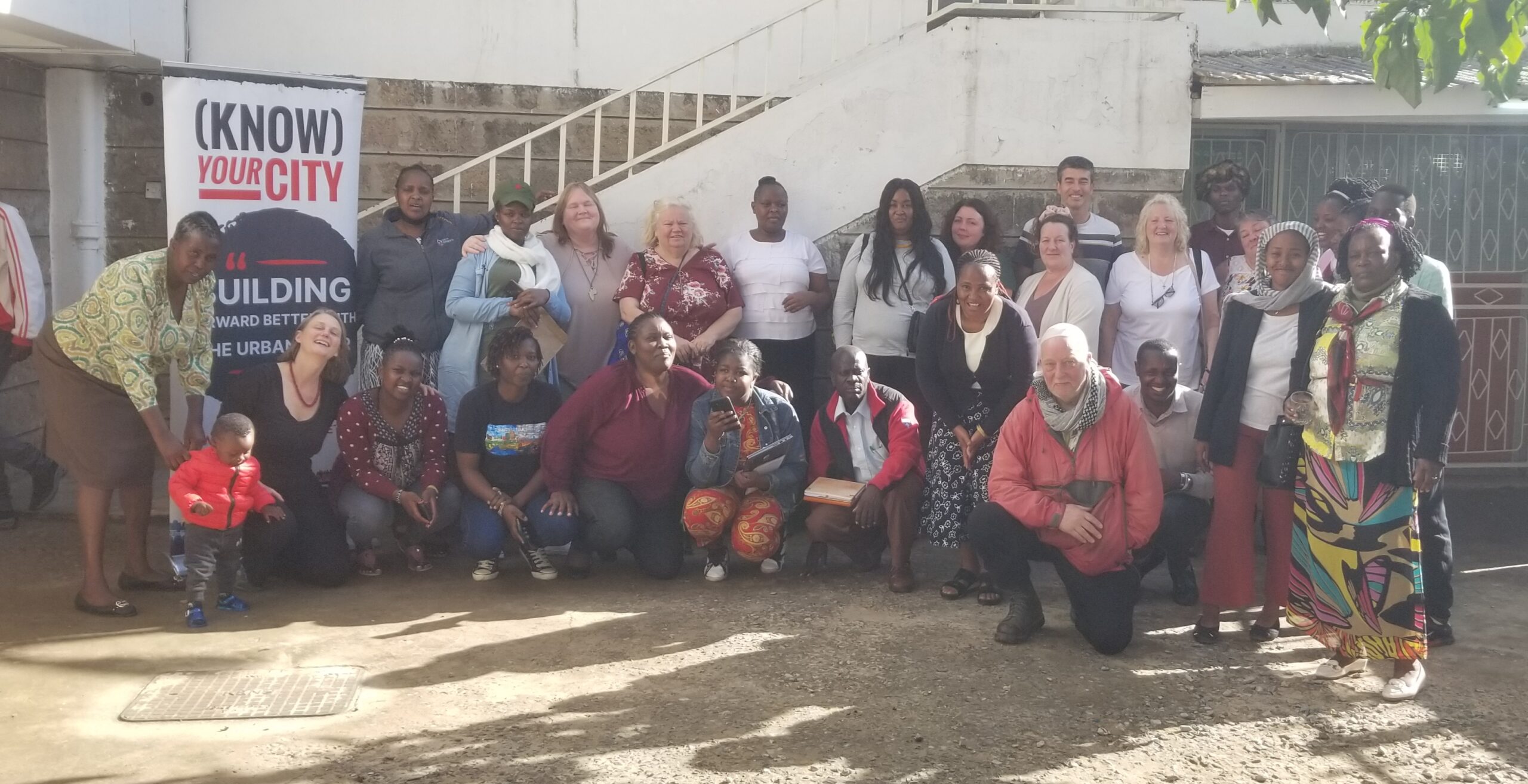
These were the words of Rashid, Chair of Muungano Wa Wanavijiji, at the opening session of a week-long international exchange in Nairobi between Muungano and Community Savers leaders from Manchester and Sheffield.
Rashid was sharing on the power of exchanges in the SDI tradition – a tradition that has been nurtured, tested, and adapted over more than thirty years, in 32 countries across the Global South.
November 2022 was a special month as Community Savers leaders were able to welcome activists from Nairobi here in the UK, share knowledge and learning on their adaptation of SDI/Muungano methodologies with postgraduate students in Manchester, and then travel to Nairobi to experience these approaches first hand; visiting settlements and exchanging learning with their sister federation.
Here we try to capture some highlights from a rich month of learning and inspiration…
“We Kenyans, and you from the UK, we are the same.”
Anastasia Wairimu is Chair of Akiba Mashinani Trust one of three organisations that make up the Muungano Alliance. After her second trip to the UK in November 2022 exchanging learning with Community Savers, she recognised that despite very different histories, low-income communities in the UK experience the same dynamics of exploitation and discrimination as informal settlement communities in Kenya.
Tina Cribbin is Chair of Aquarius Community Savers in Hulme, Manchester: these exchanges have enabled Tina and Anastasia to develop a strong relationship of trust and mutual respect, and Tina agreed with Anas’s observations. In particular, Tina noted the similarities in negative attitudes among those holding power and purse strings who judge low-income communities as criminal, as lazy, as a problem that needs fixing.

During her latest visit to the UK, Anastasia was shocked to see how older people are treated after visiting Hopton Court tower block in Hulme where 75% of tenants are aged Over-50 and many have long-term conditions, disabilities and mobility constraints. During their visit, the lifts were out of order again (a regular occurrence over the previous five years) and elderly people had been left with no way of getting out of the block or bringing food shopping up to their flats. Tenants shared how throughout the pandemic they had nowhere to meet with their neighbours due to the absence of a communal area at the block; and how elderly people are falling through the gaps between housing, health and social care services in ways which leave them unable to pay for food, heating or sometimes without appropriate end of life care.
During the Nairobi visit, Ellie and Sue from Miles Platting shared experiences of top-down regeneration and gentrification which resonated strongly with Muungano anti-eviction activists. Leaders reflected that although the extremity of the circumstances are very different the principle of top-down attempts to push lower-income groups away from the inner-city is the same.

During November, leaders from Miles Platting gave urban inequality students a tour of their neighbourhood. They explained to them how the Private Finance Initiative that was supposed to regenerate the area for the existing community has resulted in a net loss of approximately 500 social rental homes and the inflation of house prices and private rents far beyond a threshold that local working families can afford. This is leading to the breaking up of families and people on lower incomes being pushed out to other boroughs of Greater Manchester. Existing residents had agreed to the PFI (including compulsory purchase orders and demolitions) on the basis that a suite of community facilities would be built, including a joint services centre and leisure and retail facilities. In the end, none of this was delivered. The community are now calling on Manchester City Council to protect the public land that these community facilities were supposed to be constructed on for community benefit.

At our final reflection, Jonte shared how an elderly woman housing activist in Kambi Moto who has been involved in their community-led housing movement for over 30 years was amazed to learn that she can sit together with people from the UK, this developed country, and find that they are struggling against the same social issues and can learn from how communities have organised over land and housing in Nairobi.
“Saving is an act of resistance”
Community Savers have been holding learning exchanges with Muungano activists since 2017 and during November’s exchange in Nairobi, Tina explained to Anas that:
“What changed for me was about the savings: I used to feel like I don’t want to save, I want to spend. But you told me that every time you save it is an act of resistance and that has really changed it for me.”
Savings groups are the building blocks of a united and powerful community-led movement for poverty reduction and the transformation of urban social power relations. Tina’s group are now beginning to see the fruits of building power through savings as on return to the UK they had a meeting with the housing provider at Hopton Court (above). The provider issued an official apology for the experiences of older people at the block and announced that they will be replacing the lifts to ensure elderly people are never put in a situation of being trapped in the building again.

Aquarius Community Savers have also been able to build a new coalition of groups in their social housing estate who are coming together to form a new Aquarius Neighbourhood Forum including members of Hulme Tenants Union; Epping Park Warriors; Aquarius Tenants and Residents Association and Age-Friendly Hulme and Moss Side. They have worked closely with their local ward councillors to oppose a private development that would block the sunlight from Hopton Court gardens and put even more pressure on overburdened local services. They are now working with their councillors to request the rezoning of the Aquarius estate out of the city centre planning area and into the Inner South zone in support of a community-led plan for their thriving local community.
“Unity is our strength, Information is our power”
Muungano begin their meetings with call outs to their members “Unity? Is our strength! Information? Is our power!” During the final reflection at Muungano House on 25 November, Anastasia explained that:
“There are 43 tribes in Kenya, but at Muungano we know only two tribes: the haves and the have-nots”
Unity is critical to addressing this inequality.
We reflected on the importance of collective solutions and collective thinking. We discussed how in the UK people have become individual clients of government and service providers. Although it is good to have a social welfare system, it is provided in a way that has made people become passive. Tina observed that “it is given but it is never what you would have asked for. Now we are learning to ask for what we need.”
We reflected on the power of community data and also the value of university partnerships even though universities generally represent the “Haves”. Nicerah from Kibera shared how after she joined Muungano and began collecting data in her settlement, officials were asking her “How can you know how to make these survey questions on your own? What university did you go to?” Nicerah was able to tell them “My University is Muungano”.
Emily, a national leader from Mathare, explained how at the same time, Muungano has developed partnerships with university departments and their students. Students can help them to collect data and write up reports. This is not because the community cannot do it without their help, but it is about recognising that these students may be the next Planning Officer or Water and Sanitation official in the future: “If we teach them now, they may come back to us in the future”.
Validation is a critical step in the process: presenting the data collected back to the community through public meetings to enable them to correct inaccuracies and build a sense of ownership over the information and the change that the information makes possible.
Earlier in the week, as we began our learning exchange, Nancy explained that data collection underpins everything for Muungano: “we have to know ourselves” and this is the principle underpinning Know Your City TV…
Know Your City TV: “We can change the story”
One of the most inspiring engagements for UK activists during their week in Nairobi was with the Youth Federation leaders involved in data collection, advocacy, and Know Your City TV.
Through KYCTV young people are engaged in community action by creating opportunities for them to learn skills they are interested in like film-making and photography while leaders also engage youth through art, music and sports.
The UK team took home the principle of “Just One” – you only need one engaged young person to start a youth movement. That one person will be able to engage other young people.
UK delegates were inspired by their inclusive approach involving arts and sports and participatory approaches and tools for engagement and planning – especially the Tree of Transformation which enabled young people in Mukuru to come together for visioning of the changes they wanted to see and the conditions that they needed to foster to achieve those changes.

Georgie from Arbourthorne asked the youth leaders what made them engage with Muungano and KYCTV as it can be hard to engage young people in the UK who say “nothing ever changes”. They explained that they grew up in the settlements and they saw politicians come and go with promises that they never delivered on. They recognised Muungano’s message that we have the solutions and we know our community best. We were tired of all the negative representations in the media and decided that with the training they were offering we can change the story.
Younger youths were inspired and motivated by older youth mentors who they looked up to. The older leaders explained that they put their trust in the young people to carry out data gathering and document Federation processes; and importantly they show them love and nurture them. The leaders focus on what the young people themselves are interested in and what they want to learn and: “Give them a chance to be who they are”.
They advised the UK team: “try to spot the ones with ambitions, start with them, find the youth that want change, show them the opportunities, show them a better way of life”.
Exchanges such as these between grassroots communities across different international contexts are critical for enabling communities to recognise their expertise and the commonalities of their experiences, struggles and strength within global and urban systems which act to exploit and oppress them. Yet they resist, they organise, and they grow stronger, smarter, and more effective through global solidarity networks: when they know each other, they build each other.
More Stories
Learning from East Marsh
Pride in Place Manchester