


A City United for action on housing, climate, and health inequalities

At 11.59 pm on Monday 28th September, the tiny window of consultation on the latest version of the Manchester Local Plan closed. Held, as is so often the case, during August when most people are on holiday, and open for a short six-week consultation period with little to no public outreach, most citizens of Manchester will have no idea of the importance or existence of this critical piece of urban policy.
Fortunately, in Manchester, we have had a coalition of dedicated community leaders; community and faith groups; local and national charities and supportive professionals (yep that’s us folks!) working together relentlessly since 2023 (mostly unfunded) to ensure that at least eight communities across the city were able to make a submission to the Regulation 19 stage of the Manchester Local Plan consultation, as well as the SH4M Coalition.
Read the full SH4M Regulation 19 Submission here
One of our appeals to national and local policy makers has been for clearer use of language and specification of tenure types, so we should also be clear on this here:
When we say Social Rent below, we mean: low-cost, secure tenancies rented out by local authorities or housing associations to those deemed to be in priority need. Rent is set through the National Rent Regime in England at around 50% of market rents.
When we say Affordable Housing below, we mean: housing for sale or rent provided for people whose needs are not met by the private market. Encompassing Affordable Rented; Shared Ownership; Social Rent; Manchester Living Rent.
What is the Manchester Local Plan and why does it matter?
The Manchester Local Plan is a 15-year strategy setting out the council’s plans for land use and new development across different areas of the city. All local authorities must produce a Local Plan. It takes a long time to develop a new plan so they have lasting impacts (often for 15 years or longer) on what kinds of housing and other facilities can be developed, and where. The last Local Plan was published in 2012 and is still the current policy for the city despite rapid changes since then. Some aspects of city planning are still determined by the Unitary Development Plan that was published in 1995!
There are different stages to the consultation, starting with Key Issues, moving into publication of a first draft of the new plan called Regulation 18; this latest phase called Regulation 19,, which is the final draft for public consultation before the council prepares its submission to the planning inspectorate; and finally, something called an Examination in Public.
Regulation 19
Submitting objections at this stage has been important because those with objections (on tests of soundness for the needs of the city; appropriate justification for the plans made; effectiveness; and consistency with national policy) can request to be invited to the Examination in Public. This is when a Planning Inspector comes to hold a meeting with the council and all concerned stakeholders to hear the council’s defence of the plan, and any objections. The room is usually full of white men in suits and dominated by private developers e.g. screenshot of York City Council’s Local Plan hearing in 2018:

This is not what we want to see in Manchester! So, we are delighted that at least nine communities across North, Central and South Manchester have managed to submit Reg 19 responses and request a seat at the Examination in Public, including in Blackley, Clayton, Gorton, Harpurhey, Hulme, Irk Valley, Miles Platting, Moss Side and Wythenshawe Central.
If you know of any other communities who have submitted responses not listed above, we would love for you to get in touch with us so we have a full picture of all community priorities raised across the city.


Is it too late to get involved?
No! Please join the SH4M mailing list to receive all calls to action, and consider writing to your local ward councillor to ask them to continue to advocate for community priorities submitted under the Regulation 18 and 19 stages to be included in the final version of the Local Plan. That has to be signed off by full council before submission to the Planning Inspectorate in December 2026.
What can I do if I am a ward councillor?
As our elected representatives, please:
- Recognise that people want to attend the examination and be heard on the issues raised in their Regulation 19 submissions and the SH4M response.
- Ensure community priorities are in the plan, by advocating between now and December with the Planning Strategy team and Exec members.
Key priorities for Manchester
Affordable Housing: Given recent increases in central government grant and £2.5 billion committed to Greater Manchester for the immediate future, SH4M have argued that it should be possible to achieve 30% sustainable social rent and 20% of other affordable housing tenures in new developments of ten homes or above (i.e. 50% affordable housing in total). The council’s own 2026 housing needs assessment finds that 46% of the annual total of 3,533 homes that are to be built in Manchester should be affordable.
Communities across the city from Blackley to Wythenshawe have been reinforcing our own analysis drawing on the housing needs in their own local areas. Most communities submitting objections find that 30% sustainable social rent is a modest target in the face of a crisis with over 20,000 households on the waiting list and increased central government investment.
Housing Mix: Communities are concerned about the concentration of housing strategy on 1 and 2-bed flats, both historically and within existing ambitions. There is a major shortage of 3+ bedroom family homes leaving thousands of families on the waiting list, in poor quality temporary accommodation, sofa surfing or in overcrowded conditions. Manchester City Council and many housing associations are encouraging ‘right-sizing’, a strategy focused on older people downsizing into flats to free up family homes. This is a great idea in principle and more ecologically sustainable than new-build, especially when combined with investment in retrofit. However, this is a medium to long term solution and as well as the existing families waiting for a home, more people will be starting families who will also need larger homes. Right-sizing must be matched with sufficient new family homes.
SH4M and a number of communities have backed the GM Coalition of Disabled People’s evidence-based request for 10% of new-build to be to wheelchair adaptable standards rather than the 4% provided for in the Reg 19 version of the Plan. Disability charities and community coalitions like Wythenshawe Central Network are also calling for more supported living options for adults with autism and learning disabilities. Many can live independently with the right kind of support but are unable to leave their parental home due to a lack of this kind of provision.
Sustainable Design and Construction: SH4M are calling for 100% of new social rent homes to be built to zero carbon-ready standards. The current Regulation 19 version suggests that this will be dependent on viability assessments. We have called for clauses on viability in relation to zero carbon homes to be removed. All development applications will be assessed through the development management process in any case, and there is no requirement or need for the council to state this in the Local Plan.
Developer Contributions: SH4M have requested revised wording on Developer Contributions on the grounds that the current version of the plan is unclear on what will be expected from private developers and is weakly worded stating that the council “may seek contributions”.
The policy should instead state that ‘in line with the other policies in this plan, the Council will seek contributions from development. These contributions will be relative to the scale and impact of the development and will ensure that Manchester’s communities are not adversely affected by development.’ We have requested that there should also be a specific mention of how development will be expected to address the needs of the local community.
Specific community priorities
In our discussions with communities across the city we have listened to a wide range of issues of concern that would not otherwise have been raised. SH4M supports all of the submissions made by the communities we work in partnership with, and cannot reproduce all of these here. However, here is a summary of the key issues raised by community groups from North to Central and South Manchester:
The inclusion of the Aquarius Estate in Hulme within the boundary of the city centre without recognising the importance of the community and the implications for the scale and type of development. We are pleased that in response to representations from the Aquarius community, their estate was removed from the city centre boundary in Policy GL 2. However, the boundary line drawn at present does not incorporate the full residential area, and the Hulme community have collectively made further objections on this point.
The concerns of the Moss Side community about the spread of HMOs and short term lets as well as the encroachment of evening economy uses of Rusholme into residential streets. The community welcomed the changes to Policy H 5 relating to HMOs policy, but make some very telling points about the way that the definition of family homes excludes 2-bed properties which make up a significant proportion of the Moss Side stock.
Residents and community groups in Wythenshawe are concerned about the redevelopment of the Wythenshawe District Centre as set out in Policy GL10, and the extent to which it meets local housing needs, supports local businesses and is integrated with the local community. These concerns have only been partly addressed, and the community once more makes some telling points including on the need for supported accommodation for adults with learning disabilities and autism.
The Miles Platting community expressed their concerns about the net loss of social and affordable housing, and the failure of the Policy H 2 to address areas facing large scale redevelopment, including the provision of housing and social infrastructure and the protection of mature trees and local green spaces on the edge of the city centre where the community already experiences poor air quality and disproportionately high levels of respiratory disease.
Clayton and Higher Blackley highlight the absence of any Positive Preparation for their areas of North Manchester despite being ranked in the top 10 most deprived areas of the city. No plans have been made for addressing entrenched inequalities; lack of community and social infrastructure; and specific local housing need for social rent family housing to address widespread overcrowding and hidden homelessness.
Communities in a number of areas were particularly concerned about Policy H7 on Purpose Built Student Accommodation (see also here). This referred to the proposed location of student accommodation immediately adjacent to the core university areas, principally the Oxford Road Corridor without showing a boundary for the corridor leaving the position of Hulme and Moss Side unclear.
Friends of Irk Valley have specifically objected to the rejection of Vauxhall gardens/Bob’s Hill being designated Green Space status. The original application set out a clear evidence base and in addition, the alternative plans do not include any social or affordable housing compounding loss of nature with no net affordable housing gain for the local community.
Read our full response here.
Sign up to join the coalition here.
More Stories

“We Need to Gain More Trust”: What Nairobi Made Us See Differently About Community
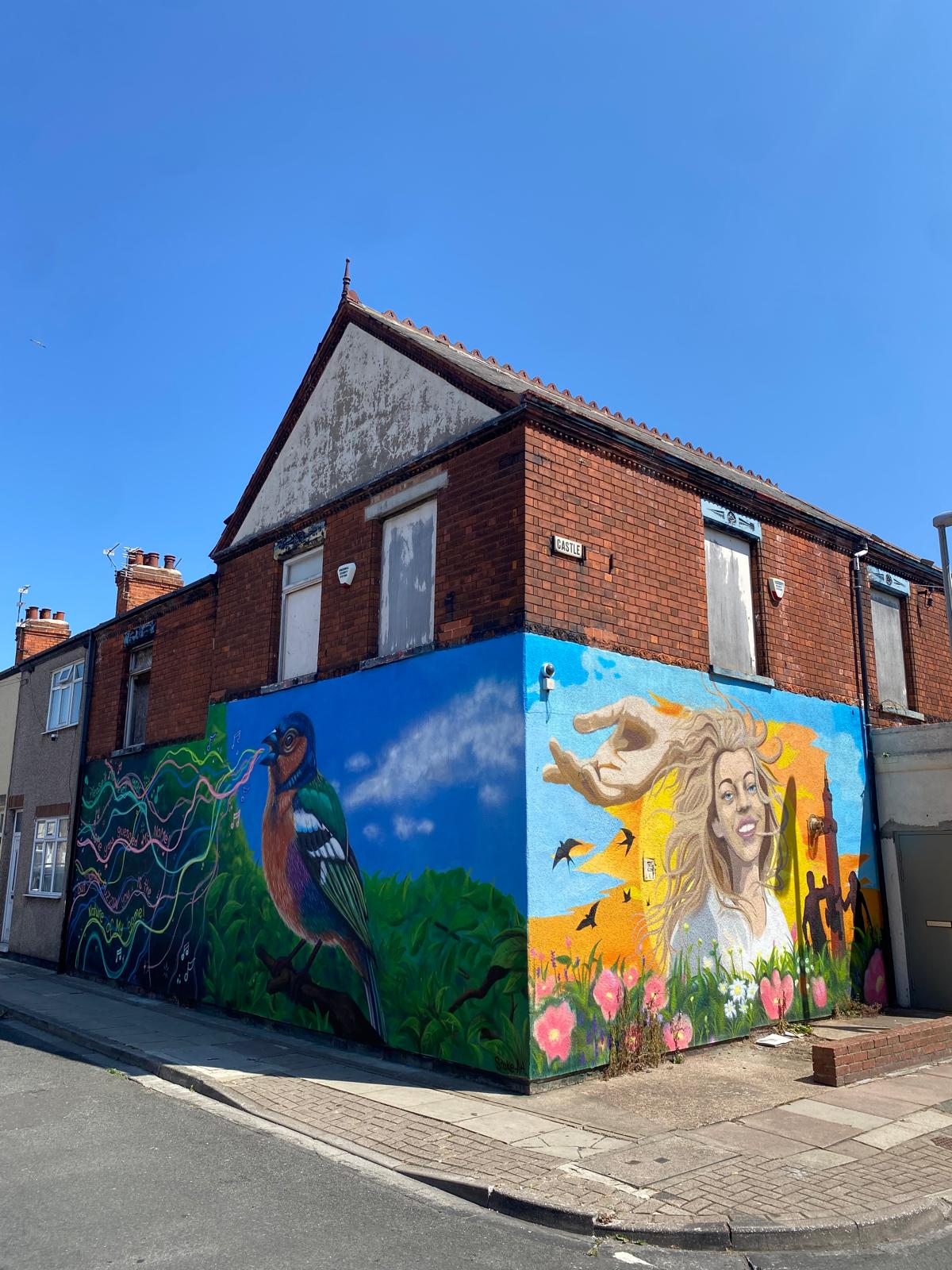
Learning from East Marsh
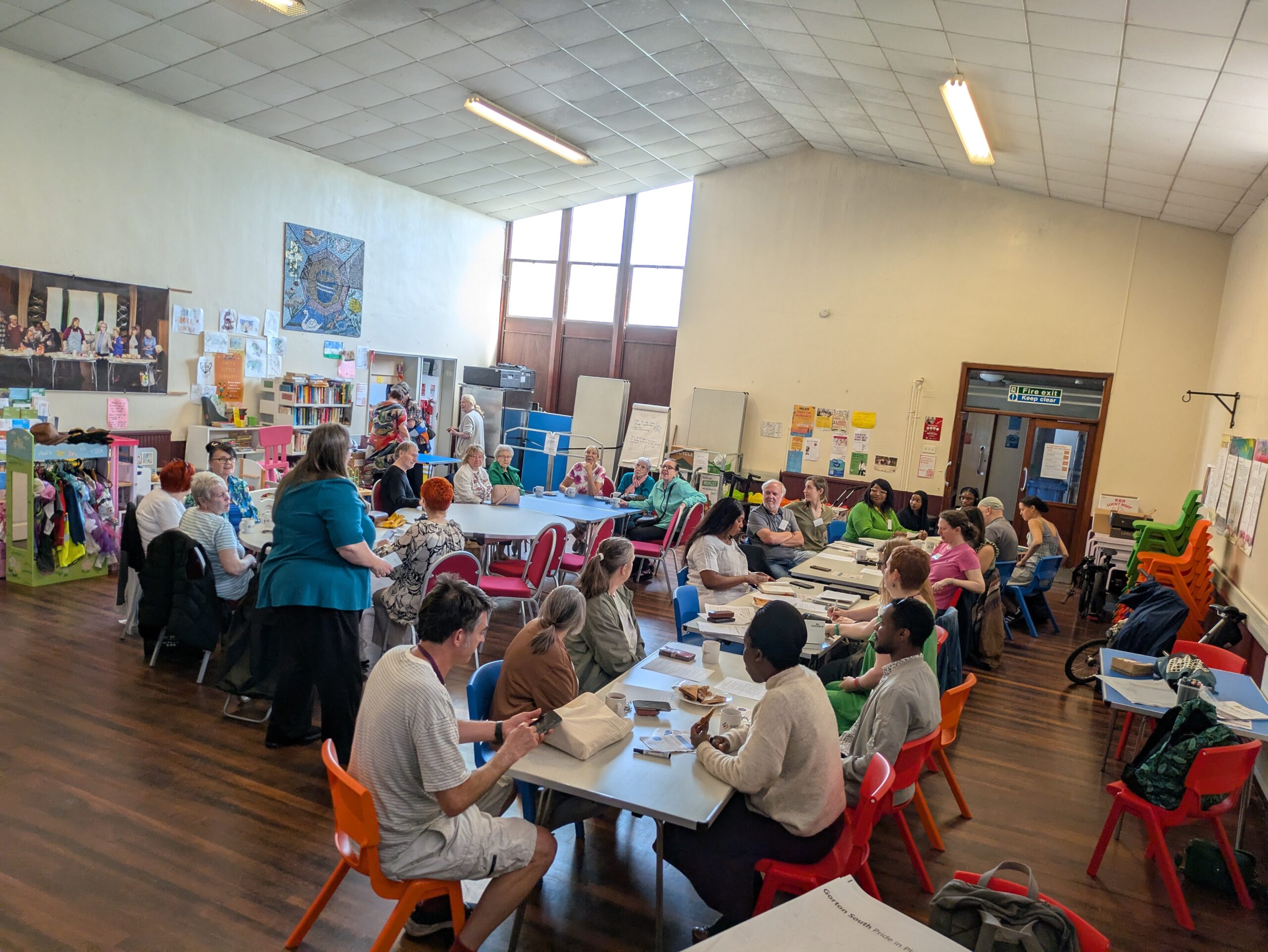
Pride in Place Manchester
Learning from East Marsh
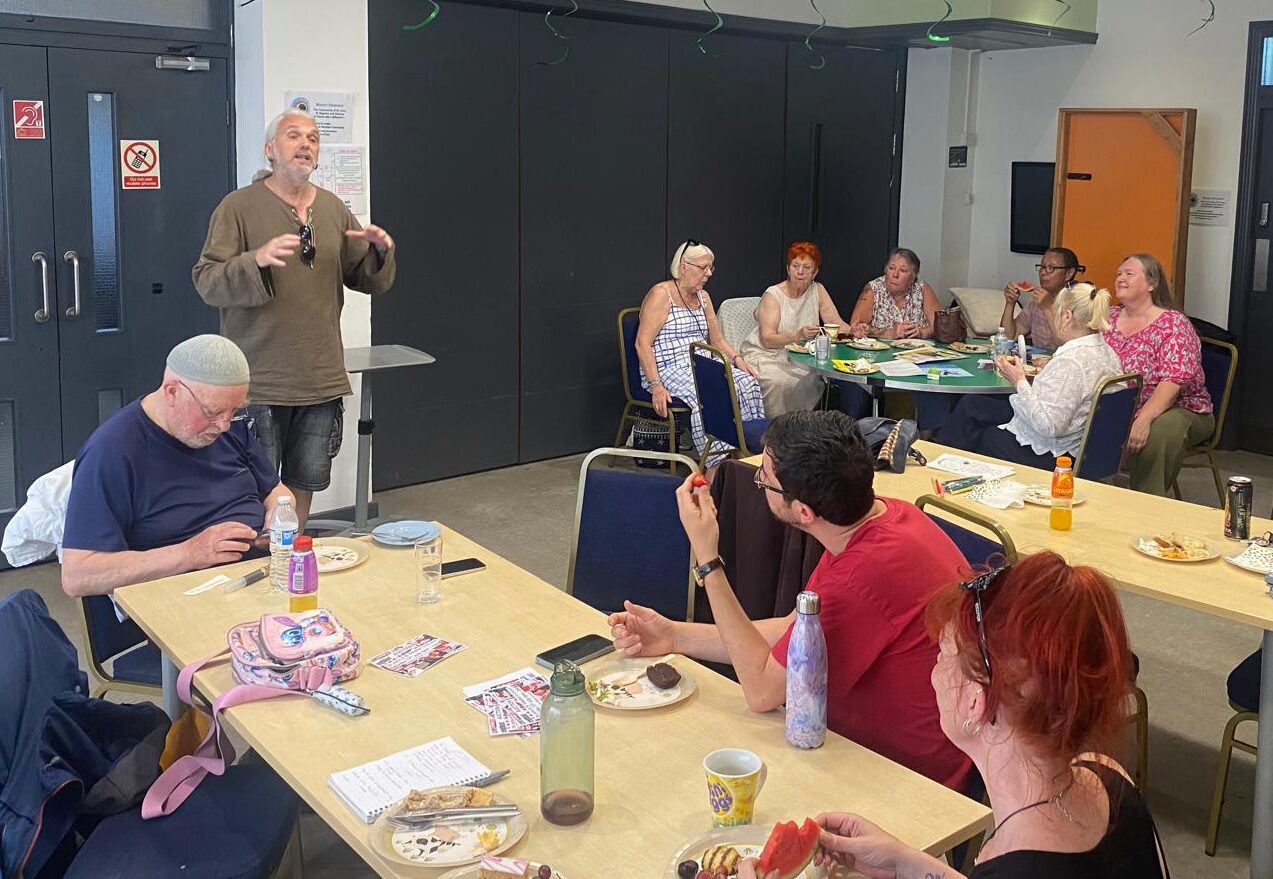
On 8th July a brilliant bunch of Greater Manchester community leaders from Community Savers affiliates and Middleton Cooperating travelled to East Marsh United to share learning on community-led appraoches to housing and climate mitigation.
This exchange followed on from a fantastic Community Powered Neighbourhoods event co-hosted by Community Savers, Social Homes for Manchester, Wythensahwe Central Network and the We’re Right Here campaign back in March this year.
Community Savers folk learned tonnes from the experience that they are now sharing through network relations and LOVED the brilliant blog written about the learning visit by James Luckham at sister organisation Middleton Cooperating over in Rochdale. They have kindly agreed for us to cross post…
Learning from East Marsh: Inspiration for Middleton by James Luckham
On Wednesday last week, I had the honour of being invited along to visit East Marsh United East Marsh United (EMU), a community group in a ward of Grimsby that shares the same name. Visiting EMU was a truly inspiring experience, seeing how they have crafted a beautiful strip of community out of what was once dubbed ‘Murder Mile’.
The driving force behind EMU’s work has been their CEO, Billy Dasein. To give you a glimpse into how EMU is run, one of Billy’s colleagues told me CEO in this case stands for anything from Chief Enthusiasm Officer to Chief Empathy Officer. Billy was born and raised on Rutland Street, the centre of East Marsh. Having left Grimsby for university, and then worked away, Billy returned to Rutland Street to look after his dad after his mum passed away. The local council had called a meeting in response to problems of crime and anti-social behaviour. Billy was originally reluctant to attend, but when a neighbour prompted that his mum would have gone, he went down to the meeting. This meeting was filled with the patronising, paternalistic approach typical of local councils, until Billy “got on [his] soapbox” with a clear message: if there was to be any change in the East Marsh, it had to come from the residents themselves.
What started with 30 people giving their details at that meeting has, about a decade later, transformed Rutland Street and the surrounding area. East Marsh United own 18 homes on the street, which are rented out at a price that would be completely covered by the minimum possible Housing Benefit, meaning no resident would need to go into debt to afford their home. EMU also run several community sessions in a local church, including dedicated sessions for young people and families. Thanks to a partnership with Create Streets, the corner plot by the church is being transformed into a community garden, giving residents opportunities to get involved in growing and taking care of nature. A few staff are employed by EMU (including a Chief Storyteller, another insight into the EMU approach), but the majority of their work comes from the residents themselves, covering projects on people and places, knowledge transfer partnerships, creativity, community roots, and much more. East Marsh United’s self-deterministic methods are a great inspiration to us at Middleton Cooperating, and we hope to harness the same community energy right here in Midd.
I was lucky enough to attend EMU, representing Middleton Cooperating, alongside a bubble of community savers from Miles Platting, Wythenshawe and Hulme. This was made possible thanks to the fantastic work of Community Led Action and Savers Support (CLASS – Community Savers), who brought these phenomenal people together. Community Savers/CLASS is a charity committed to supporting, developing, and facilitating majority women-led community and co-production processes focused on reducing poverty and inequality. What that looks like in practice is connecting everyday people in their communities to save small amounts of money and help build financial independence. CLASS’ work is completely in step with what we’re doing at Midd Coop, so much so that you might even see a Community Savers group popping up in Middleton in the near future!
If you’re lucky enough to live in M24, and for some reason you’re not a member of Middleton Cooperating yet, you can sign up Join us | Middleton Co-operating.
Regardless of where you live, you can keep up to date with everything we’re doing by following our socials; GMLivingIncome Official: Instagram, Facebook | Linktree). Just like East Marsh United, we’re making the changes we want to see for our communities, not waiting for anyone to come and save us.
More Stories
A City United for action on housing, climate, and health inequalities
“We Need to Gain More Trust”: What Nairobi Made Us See Differently About Community
Pride in Place Manchester
Savers uniting from Middlesbrough to Wythenshawe!
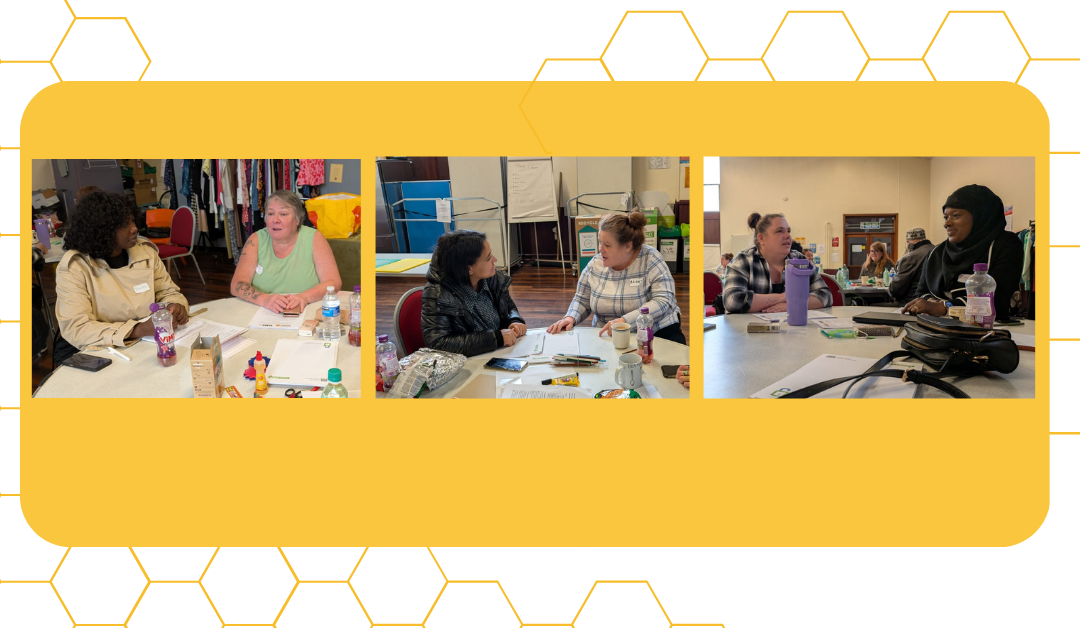
Community Savers leaders had another productive quarterly network meeting on Thursday and were delighted to welcome Rama, Fatima, and Mabintou from Middlesbrough!
Rama is coordinator for a CIO called Creative Minds Middlesbrough and is working with local women to learn from the Community Savers approach and set up their own savings group.
Leadership development, sharing learning and peer support are fundamental pillars of the Community Savers methodology and here Lina – a leader form Dandelion Savers and Wythenshawe Central Network shares on what Quarterly Network meetings are all about:
After a jam-packed morning full of Community Savers business affiliated savings groups from Brinnington, Miles Platting, Hulme and Wythenshawe shared their experiences of setting up and running savings clubs with our Middlesbrough guests. Bridget from MIles Platting Savers reflects on what she was able to share here:
Savings clubs are the building blocks of the Community SAvers approach and contribute significant impacts to financial and social inclusion and wellbeing. For example, our 2024 members survey revealed that:
· 85% of members feel more positive about life
· 81% feel less isolated
· 96% feel more community connection
· 96% saw improved mental health
Community Savers is about much more than saving money however. Through the savings clubs, local residents are able to come together to discuss local issues and soon begin developing their own local initiatives to address gaps and challenges.
Over time, the clubs become organising hubs for a wider network of groups and projects forming neighbourhood networks able to take collective action to reduce inequality and promote a better future for their local area.
For now though, Fathima, Rama and Mabintou will be focusing on getting the hang of getting their new savings club off the ground with support from a shared partner of Community Savers and Creative Minds Middlesbrough – Turn2us https://www.turn2us.org.uk/
Rama visiting from Middlesbrough talking about her experience of attending a Community Saver network meeting.
Fatima from Middlesbrough reflecting on the learning from the day.
More Stories
A City United for action on housing, climate, and health inequalities
“We Need to Gain More Trust”: What Nairobi Made Us See Differently About Community
Learning from East Marsh
Update on MPCAN’s Miles Platting Wildlife Corridor

Following the Climate Action group’s success in being awarded the Greater Manchester Green Spaces Fund, plans for the Miles Platting Wildlife Corridor are now well underway. Project lead Suzanne Walton from Groundwork alongside Dr Jenna Ashton from the University of Manchester have been carrying out initial consultations with local residents around 4 key sites in the area: Victoria Mill Park, Bollington Road Green, Holland Street Community Garden and Ridgway Street Community Garden.


iNaturalist pages for each of the four sites have now been set up, which allows any nature lovers and passersby to record their wildlife sightings and observations:
Victoria Mill Park: https://uk.inaturalist.org/projects/victoria-mill-park

Bollington Road Green: https://uk.inaturalist.org/projects/bollington-road-green

Holland Street Community Gardens: https://uk.inaturalist.org/projects/holland-street-community-garden

Ridgway Street Community Gardens: https://uk.inaturalist.org/projects/ridgway-street-community-garden

If you ever find yourself in and around these spaces, follow the iNaturalist links above to record your encounters and learn more about the different kinds of wildlife you find!
Following discussions with residents around these sites and additional green spaces, designs to enhance and improve biodiversity are being drawn up (diagrams above) to bring in new trees, wildflowers, and hedges around Miles Platting. Ten new trees were planted at Bollington Road Green in early March including two different types of birch.

Additional to the Wildlife Corridor Project, MPCAN Climate Action has also received funding through City of Trees for 30 new trees all along Ridgway Street which were planted just a couple weeks ago!
If you are a local resident of Miles Platting, Ancoats or Collyhurst and are interested in MPCAN’s Climate Action group, please email milesplattingcommunitynetwork@gmail.com to find out more and get involved!
More Stories
A City United for action on housing, climate, and health inequalities
“We Need to Gain More Trust”: What Nairobi Made Us See Differently About Community
Learning from East Marsh
Thank you

Thank you for your support.
Please follow us @CommSavers for news and updates.
More Stories
A City United for action on housing, climate, and health inequalities
“We Need to Gain More Trust”: What Nairobi Made Us See Differently About Community