





Community Commissioners call for urgent action on the housing crisis

The Manchester Social Housing Commission launched in July 2024 after Community Savers affiliates across the city called for urgent action to address the crisis where over 19,000 households are now on the waiting list for a social rented home in the city.
Today, the Commission launches its second policy brief: How to fund and deliver sustainable homes for social rent. The first policy brief and research report focused on an analysis of the housing crisis in Manchester and called for five urgent policy asks. This report sets out five key areas for reform that will make accelerated delivery possible.
DOWNLOAD HOW TO FUND AND DELIVER SUSTAINABLE HOMES FOR SOCIAL RENT
FIVE KEY AREAS FOR REFORM
1. Boost funding: A long-term government funding settlement for all social landlords through much higher levels of grant, access to cheaper government borrowing with longer repayment terms, and long-term rent settlement that is fair to both tenants and social providers.
2. Unlock land: Pursue options to unlock cheaper land for social housing delivery.
3. Reuse existing buildings: Make better use of existing residential and commercial buildings through the planning system to deliver social rent homes at pace.
4. Financial innovation: Support the development of alternative capital and revenue funding sources for social rent housing.
5. Transform supply chains: Invest in an alternative social housing supply chain to unblock the existing capacity barriers and reduce the cost of construction and retrofit.
Councillor Gavin White, Executive Member for Housing and Development at Manchester City Council and a lead member of the Commission said:
“Councils all over the UK want to spend more of their budgets on social housing, rather than temporary accommodation for those experiencing homelessness; this long-term and joined up financial investment in social housing is the way we will solve the housing and homelessness crisis and build the homes once again that our communities need.”
Zoe Marlow, Community Commissioner representing Wythenshawe Central Network was left with a 25% reduction in her housing benefit after her children moved out due to the bedroom tax. She has survived repeated evictions threats, court cases, and the stress of constant rent arrears despite actively wanting to downsize. Thankfully she has now been appropriately housed and continues to work hard to give voice to the experiences of tenants across the city through the Commission process including in Parliament in 2024. Zoe says:
“Throughout this time, I tried to move to a smaller home and free up my 3-bed to one of the thousands of families living in overcrowded housing, but I was not allowed to bid for another social home because I was in rent arrears. Thankfully, I’ve finally been able to move to a smaller home I can afford. A lot of people are going through this. And that’s why I’ve got involved in the Manchester Social Housing Commission to work with others to get the millions of homes for social rent we need and abolish the cruel bedroom tax. That is the only way to address under-occupancy and reduce over-crowding.”

The Manchester Social Housing Commission will continue to unpick the mutually reinforcing housing, cost of living, and climate crises and develop robust solutions for local, regional and national government through to December 2025. You can find all their publications here: https://www.socialhomes4mcr.org.uk/publications.
The Social Homes for Manchester Coalition will take forward the findings of the Commission over the next five years through to 2030. There are many ways to support these efforts. Please sign up to the mailing list or if you are a Manchester-based constituted group or registered organisation please consider joining the coalition.
More Stories
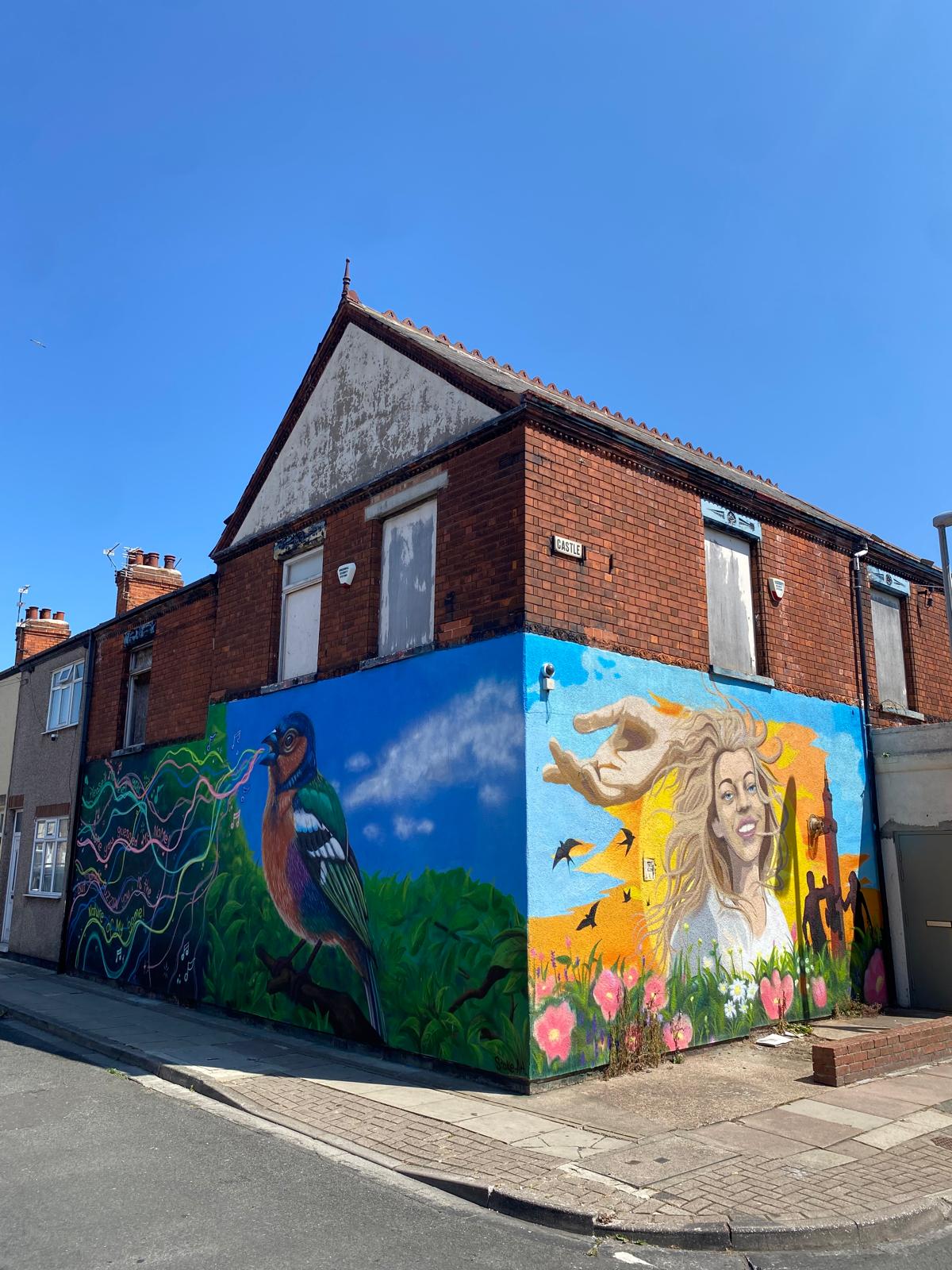
Learning from East Marsh
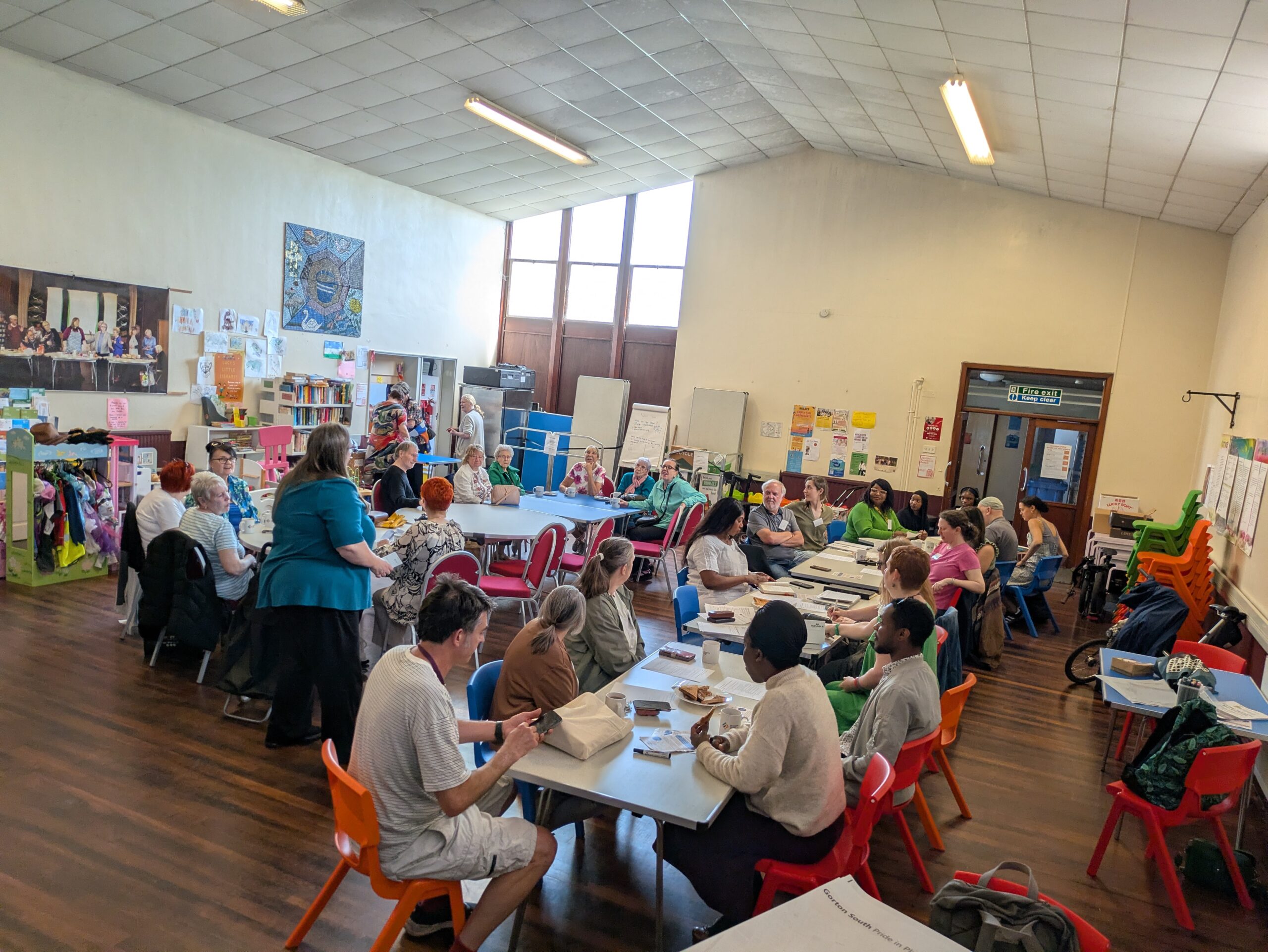
Pride in Place Manchester
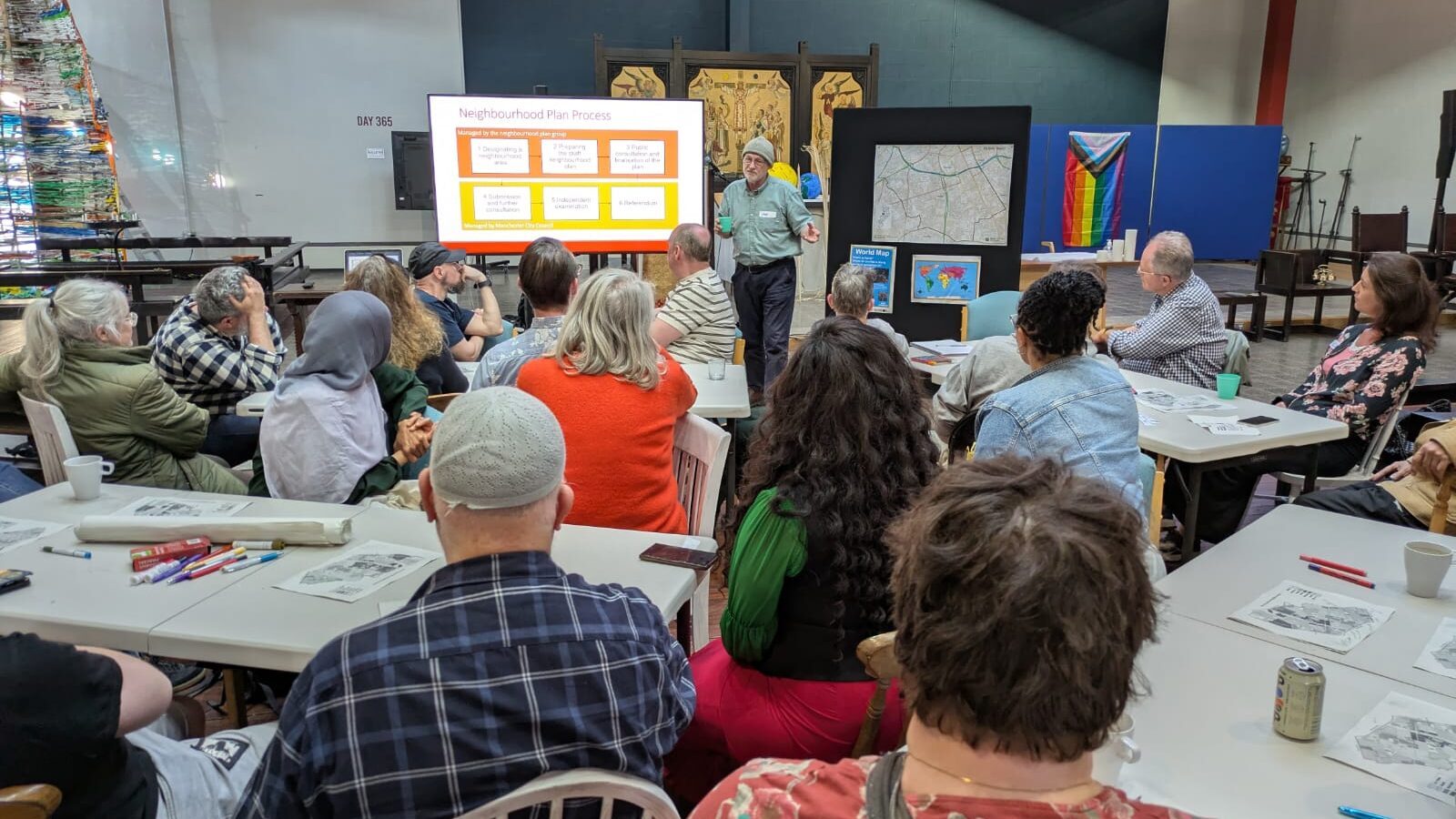
Neighbourhood Planning in Hulme
Launch of the Manchester Social Housing Commission

The Manchester Social Housing Commission held its first meeting in July bringing Community Savers leaders together with cross-sector experts to develop local and national proposals for addressing the housing crisis. The Commission is chaired by the Right Reverend Dr David Walker, Bishop of Manchester and supported by the Social Homes for Manchester campaign.
Community Savers representatives from Collyhurst, Miles Platting, and Wythenshawe advocated for 30% of all new housing developments of ten homes or more to be social rented homes that are climate and nature friendly. They also asked housing sector professionals to stop using the term ‘affordable housing’ and refer to housing for social rent or private rent. Communities often think affordable means social, and it prevents them holding developers and the council to account for building the social homes we need.
Zoe Marlow of Dandelion Savers and Women of Wythenshawe said:
“We need to stop blurring the line between social homes and affordable homes and just say which one is which. People are confused.”
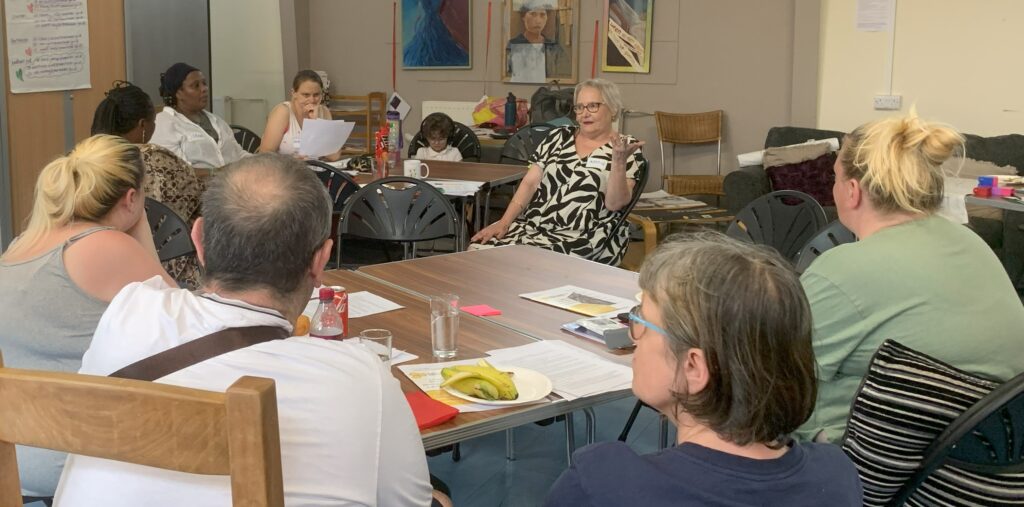
The lack of information provided at a community level about developer obligations, or ‘section 106’ contributions, was also raised and Commissioners discussed the need for a review of viability assessments which developers use to avoid these obligations on grounds of low profitability.
Sue Anya of Miles Platting Community and Age-friendly Network (MPCAN) said:
“We need to know where the section 106 money goes. It doesn’t seem to get invested in the community where construction is happening…We also need to have information much earlier – we never find out what is happening until everything has already been decided.”
Families in lower income areas of the city also depend on their own family and social networks for childcare and social care support but Sheila Davis of MPCAN highlighted how children and grandchildren of existing residents are unable to find a social rental home in the same area and can’t afford escalating private rents. Flats let at “affordable rents” cost 80% of market rent but there is no cap on market rent, so these offer no solution to people working for minimum wage or even the ‘living wage’.

Sheikha Omar of Moss Side Tenants Union called for the complete banning of Section 21 evictions, the application of Freedom of Information legislation to housing associations not just local authorities, an end to the sale of social housing to private equity companies, and better controls on rent increases for both social and private tenants.

The Commission will be making policy proposals to Manchester City Council and to the new national government administration in the coming weeks and will be developing the detail of their recommendations over the next 12 months. Community representatives on the Commission will be working closely with the Social Homes for Manchester campaign coalition to organise neighbourhood-based briefing sessions across the city, raising awareness about housing and planning policy and ways to work with local councillors to secure better outcomes for their local area.
Social Homes for Manchester is a coalition of community associations, charities, think tanks, academics and social justice organisations focused on accelerating the number of social homes that are created in Manchester by 2030 and ensuring this is done in an environmentally sustainable way.
More Stories
Learning from East Marsh
Pride in Place Manchester
Neighbourhood Planning in Hulme
Meredith Matters!

That Meredith matters and Meredith people matter is a thread that ran through all the work we have undertaken.
The idea that tenants can design research and evaluate their own issues and have the knowledge to solve them came from the work undertaken at Hopton Court where we used evidence from OUR own research to make dramatic changes in the block.
This was with CLASS/Community Savers, One Manchester and the University.
What we are trying to achieve is a NORC: a naturally occurring retirement community. This model was applied in Canada and New York where tower block tenants came together to make change.
There is something different about living in tower blocks. It’s more confined, more isolating, and evidence shows we are more likely to have physical and mental health issues. As the tower blocks in Hulme are in the inner city, Hulme has high pollution, and we live in a two tier system with the ever expanding university buildings and sharing scarce resources with a huge student population.
But as we are all Hulmites, we will not go quietly into the night. We are made of stronger stuff. Built through a lifetime of adversity.
Meredith people didn’t disappoint.
We began our work in autumn 2023 with support from Turn2Us and carried out the research in May/June 2024. We looked at access to social care and financial impacts of the care system. From the evidence gathered at Meredith, there were there 3 themes that emerged: the cost of living, health inequalities and social isolation. Issues that we will now work towards changing.

The experience of working with Meredith tenants was amazing. By being a Tenant myself, I was able to understand a lot of what the tenants talked about. This research was different to others, where it would be a professional coming to you with their own agenda and questions.
This works because we know our own. We know it’s more important to show respect and empathy. We know that tenants are more than a sum total of their problems. We also know their potential and their abilities. We know we are more than a box that some smart arsed professional puts us in.
That’s why it works through one cup of tea at time. Through building trust and having local knowledge.

It was amazing to see that change can happen quickly. Having the GP on site and a Money Mentor meant people accessed services they were finding hard to reach. Instantly benefits were applied for, and someone was able to see the doctor after suffering for years with a long term health condition.
Meredith is a culturally diverse community which brings amazing knowledge and different solutions to problems.
It’s been an absolute honour to work with Meredith. I can see already the shoots of change. I have already hear the stories, laughter, and a community determined to make change for all the residents in the block.
Big up Meredith! Our journey now begins.
Blog by Tina Cribbin, Hulme tenant and member of the Meredith Matters project team
More Stories
Learning from East Marsh
Pride in Place Manchester
Neighbourhood Planning in Hulme
Spotlight on Miles Platting Savers
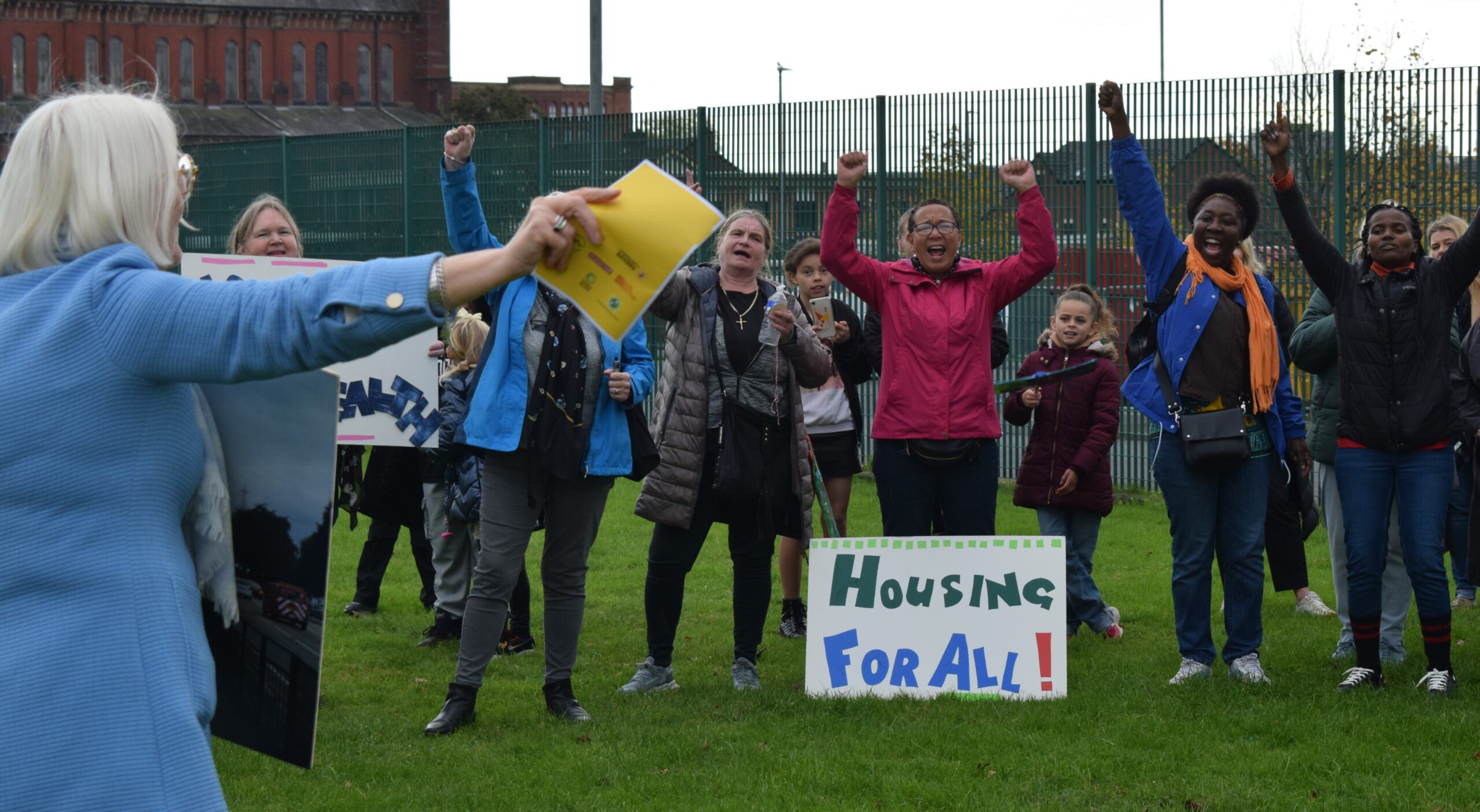
Read our interview with Dot, Committee Member at Miles Platting Savers, find out about one of the original groups in the Savers Network that is still going strong!

Can you tell us a bit about Miles Platting Savers? When did you start, where and how
often do you meet? How many members do you have?
About 5 years, we meet once a week at the coffee morning at the Church of the Apostles in
Miles Platting. We have about about 20 regulars and 30 savers in the group. We have a mixture of people who come to coffee morning, young and old.
As a group, what would you say are the main benefits for the individuals who save with
you?
It gives them a bit of extra cash to buy stuff they need, people are saving for uniforms,
Christmas and even holidays. I think most of the time you’re saving for something you think you
can’t have, then you realise if you save a little bit you can. There’s definitely a social side to it.
Most people are part of the coffee and some are visiting the social supermarket and they are
savers too. We definitely go in, have a cup of tea and have a chin wag and a catch up.
Has working with the other groups helped Miles Platting Savers to develop, learn, expand
or do things differently?
I think so, we see how other groups do theirs and then think if it works for us we can have a go.
I think it helps just to talk about what other groups are doing.
As well as the savings group, are Miles Platting Savers involved in any other community
projects and what are the impact of these?
We are members of MPCAN (Miles Platting Community and Age-friendly Network) – there’s loads of stuff going on thinking about the community building, the green spaces. I haven’t been to all the recent meetings due to my health but they let me know what’s happening.
What can we expect to see next from Miles Platting Savers next – does the group have
any plans for the future?
There’s a day trip planned to go to RHS Bridgewater so we can go there together in June. May
Fairweather from Talk about Money is going to come in to teach all ages from children to adults
how to save a bit and where to save. They are trying to get the people who use the community
shop (Social Supermarket at the Apostles) who have got kids to get involved, because I think if
you teach the kids the kids can teach the adults. I think that the Talk about Money sessions will
be a good way to get people to come in with the idea of getting the kids to teach their parents to
do a bit of saving.

To find out more check out the Miles Platting Savers page here: https://communitysavers.net/project/miles-platting-savers/
More Stories
Learning from East Marsh
Pride in Place Manchester
Neighbourhood Planning in Hulme
2023: A Year of Transformation and WoW!

Today we launch our Community Savers/CLASS 2023 Impact Evaluation!
Community Savers and CLASS are a cross-class alliance between a majority women-led poverty action network and a tailored professional support agency. We follow a learning-by-doing methodology (inspired by www.sdinet.org), where regular reflection and evaluation is critical. We conduct an annual impact evaluation between January and March each year; and this report captures our outcomes and learning during January to December 2023.
Here, we share some highlights.
VIEW OR DOWNLOAD THE REPORT
2023 IN NUMBERS

FINANCIAL RESILIENCE AND WELLBEING
The building blocks of the Community Savers movement are majority women-led and community-based savings clubs. Weekly savings collections create a space for our members to save small amounts while also accessing a range of other activities and information and discussing the issues facing their local community.
Here’s a snapshot of progress in 2023.


STRONGER COMMUNITIES
Leadership development and community-building is at the heart of the Community Savers methodology starting with the financial resilience and wellbeing of our individual members, moving up to confidence and skills development among group committees leading to stronger community associations, and networking community associations together for a stronger collective voice on the issues affecting their neighbourhood and beyond. We are proud of the solidarity and collective purpose and voice that emerged at local levels and across the whole network in 2023!
Women of Wythenshawe = WoW!
Women of Wythenshawe brought together 37 local women leaders from ten different community and service user groups across in 2023. The women are representing a broad range of interests and identities including Carers; SEND parents; women with autism and learning disabilities; women seeking asylum or recently granted leave to remain;survivors of domestic abuse; and women from diverse ethnic backgrounds.
Over the first 18 months, leaders have invested significant time in building trust and confidence and skills development, including through bi-lateral exchange visits between the groups, extensive storytelling and listening work, and the development of shared values. Women have coalesced around four priority areas for community action on gendered poverty in Wythenshawe (and Manchester more widely). These are:
- improving the way that public sector workers identify and respond to domestic abuse;
- achieving a higher ratio of ecologically sustainable social homes;
- building the capacity of Wythenshawe schools to provide good quality SEND support; and
- supporting the development of women-led social enterprise

“CLASS’s inclusive approach to convening the WoW network has been commendable. By actively involving women leaders from diverse backgrounds and communities, CLASS has created a platform where all voices are heard and valued.” WoW Support Worker
Miles Platting Community & Age-friendly Network (MPCAN)
MPCAN first formed in 2019 with support from CLASS following discussions with community groups about how residents did not fully understand the local developments taking place under a PFI initiative and how they were anxious about the future.
“MPCAN at the beginning had a formal purpose to facilitate and promote community action. The meshing of older and newer populations, lack of facilities, swimming pool and library- there was a sense that this was a bit bleak, so we needed to cooperate.” MPCAN Leader
MPCAN currently has three action groups and we share some of their brilliant achievements in 2023 below.
Climate Action: Members organised “Our Green and Pleasant Land” Climate Resilience Pageant in July and were delighted to then be one of the grantees for the Greater Manchester Green Spaces Fund. Funding was awarded to develop a wildlife corridor in Miles Platting with support from Dr Jenna Ashton, University of Manchester. Plans for the wildlife corridor are well underway. Project lead Suzanne Walton from Groundwork is carrying out ongoing consultations with residents around the four key sites to determine what kinds of additions they would like to see, from trees to wildflowers to hedging.
St. Cuthberts Communities Together: MPCAN have developed a partnership with the Parochial Church Council of St Cuthberts to re-imagine the church site working with Locality and Participate! as project managers. A community consultation has been carried out and initial concept designs developed, the Bishop of Manchester has put his support behind the project, and MPCAN and PCC have now applied to register a new charity to manage the project called St Cuthberts Communities Together. The vision includes a worship space, NHS joint services centre and a multipurpose social centre with a small amount of social housing. These were some of the infrastructure and services that were supposed to be delivered under the original PFI neighbourhood plan.
“The enthusiasm, the skill set that is being brought to meetings, the funding that has been attracted to the wildlife project and now for St Cuthbert’s. We have built up now into being a serious project that people are willing to fund.” MPCAN Leader
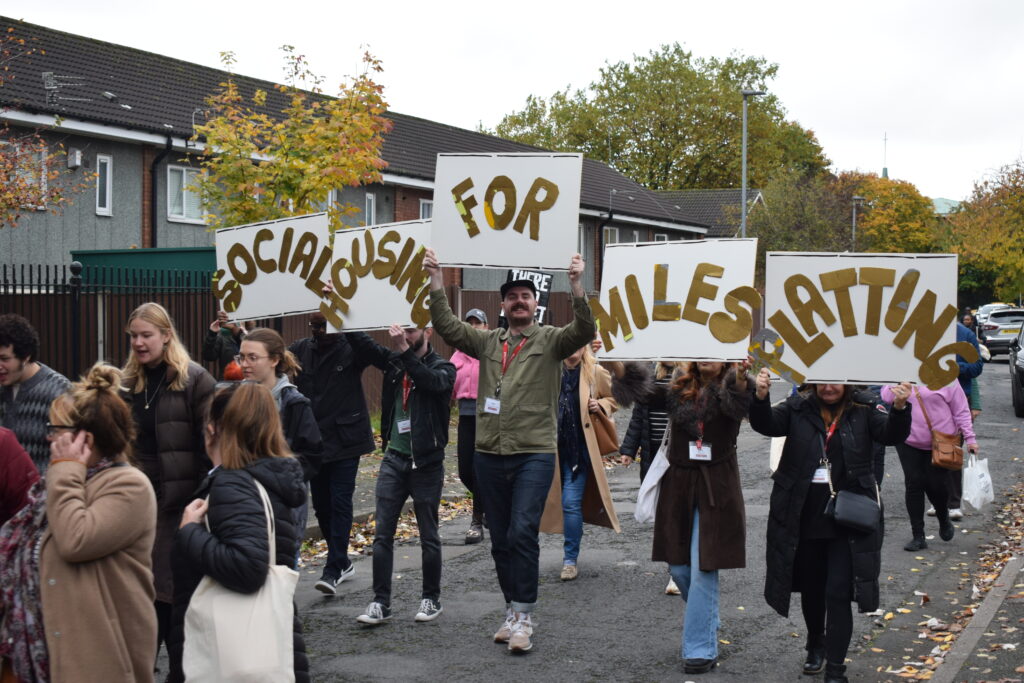
Social Homes for Miles Platting: MPCAN launched this new campaign in October, with a focus on claiming plots of public land that were earmarked for facilities and services for community benefit under the PFI. The current focus is a plot of land that was supposed to host a joint services centre and community hub. Over 200 people attended their consultation day which was followed by a march to the site and a demonstration on 28 October 2023. The Executive Member for Housing will meet residents to discuss the plot in June 2024.

“We look out for each other – if someone is poorly or down, we make sure they are ok. I like to have a sense of achievement – but that we’ve achieved together. It feels good when we get these small wins, and now we are going for much bigger ones! Twenty years ago, we wouldn’t have dared, we just fought for people to get their repairs done. Now, we are aiming high. And it’s good and it feels good. And to be honest, sometimes it goes over my head, but if I don’t understand stuff I say so, and I can also look on the internet now.” MPCAN Leader
Community design & build
A tenant-led community space in Hulme: Following two years of advocacy and partnership working driven by tenant leaders with Aquarius Community Savers, One Manchester Ltd have agreed to renovate a ground floor three-bedroom apartment into a community space. The space aims to combat social isolation and mental health challenges experienced by older and vulnerable people at Hopton Court tower block in Hulme, Manchester. The renovation is set to commence in summer 2024. Cornbrook Medical Practice evidenced during our research in 2021 that one third of Hopton Court’s tenants were suffering from anxiety and depression and the neighbourhood has some of the worst health inequality statistics for Older People living in Deprivation in England.
Beyond the St Cuthberts redevelopment, Community Savers & CLASS have continued to support two further community design and build projects in 2023. Leaders across the network have learned a lot from these processes including a large dose of patience as each initiative has experienced significant delays!
A women-led community space in Wythenshawe: Participatory design work to renovate a derelict Caretakers flat into a women-led social space began in 2019. Progress was slow due to COVID and long delays within the internal processes
of acquiring a lease from the Methodist Church. After agreeing the Head Terms for the lease in July 2022, Mums Mart and CLASS have learned a great deal from two years of further negotiation! We are delighted to have recently signed the lease and work is due to commence in June 2024.

The completed project will create a free to use community space for women’s groups across the Wythenshawe area for at least ten years. Our thanks go to the National Lottery Community Fund without whose support and patience this project would not have made it to the finish line! We would also like to
thank the Smallwood Trust and the Women of Wythenshawe assessment panel who
approved a small uplift grant to cover recent cost inflations.
MAKING MANCHESTER FAIRER

According to data collated by Shelter, there were 15,268 households on the waiting list for social housing, 3,926 children in temporary accommodation, and 7,773 people recorded as homeless in the City of Manchester in 2023. Yet, between 2012 and 2022 only 506 out of 23,364 new build homes were for social rent. Together with partners, we have formed a coalition of ten VCSE and activist/residents’ groups called Social Homes for Manchester which is making the following six requests of Manchester City Council as they prepare the new Local Plan for the city:
- At least 30% social homes included in all new developments of over 10 units to be enacted in local policy and enforced through the setting and enforcement of section 106 obligations.
- Stronger public accountability and scrutiny for the setting and enforcement of developer obligations to build new social housing.
- Establish a Commission on Social Housing for the City of Manchester.
- Develop a practical strategy for the promotion of Community Led Housing.
- Develop a practical strategy for the renovation/transfer of empty homes into homes for social rent.
- Ensure all new developments are climate and nature friendly.
ASK YOUR COUNCILLOR TO PLEDGE THEIR SUPPORT

Bishop of Manchester David Walker has agreed to chair the new Manchester Social Housing Commission. Our asks and the Commission itself are supported by the Deputy Leader and Executive Member for Housing at Manchester City Council; and we are in the process of recruiting Commissioners. The Commission will remain rooted in local campaigns and the process itself is aimed at mobilising resident/community coalitions across the city to hold local, regional and central government administrations to account for the recommendations that are developed. The other members of the coalition include: GM Community Led Homes Hub; GM Tenants Union, Greater Together Manchester, Shelter GM, Mustard Tree, and Steady State Manchester. We are excited to have also recently joined the national Homes 4 Us alliance.
FUTURE DIRECTION
In the main report you can also read reflections from the Community Savers leadership and our partners on progress, co-governance, and what we have learned about community action, as well as our plans for the year ahead, so don’t forget to:
VIEW OR DOWNLOAD THE REPORT
Excerpts from ‘What have we learned?’
“Community action is easier with the support of a whole network.”
“Community action brings people together, it can result in real change that is actually needed. Its powerful as it comes from within our communities as we are the experts we know what will work and what is needed. It feels really good when change happens from within our communities – it can bring pride and improve wellbeing and confidence. Community action can also be really uplifting and fun.”
“I’ve learned about the way the council operates… both the politicians and the officers.”
“The importance of bringing the groups together so we have a bigger, louder, voice. The more of us, the more voice we have, the more the decision makers have to listen.”
“I have also learnt a lot from some mistakes we have made e.g. don’t go to planning meetings and trust that the council is going to work with us with the openness that
we offer them.”
“Bringing together a knowledge of who to go to: that kind of intelligence is important… we’re getting a checklist of where is useful to go to.”
Excerpts from ‘Reflections on co-governance’
“I think it’s really good the way we co-govern and share the decision making. We feel like we
are listened to and more involved. We get to make them choices… We get all the reports and everything we need. If we can’t attend a meeting, we get all the updates.”
“It’s working well: everyone is happy with the decisions because it is equal – we have lots of
opportunity to talk about what’s going on and if we agree. Everyone’s voice is heard.”
“I have really loved representing Savers at the trustee meetings. I have learnt a lot about all the groups that CLASS supports and how the charity is developing. The leadership team is a great way of making shared decisions.”
“We work well with CLASS…You’ve taken time to get to know us all individually and you give us the support we need. Like me, people telling me I lack confidence. But I can do it. I’m good at what I do. I say it as it is and not everyone can cope with that, but CLASS has never had a problem with this. They take a personal approach they make sure you are ok that is all part of it as well. It’s like we are a big family.”
More Stories
Learning from East Marsh
Pride in Place Manchester
Neighbourhood Planning in Hulme
Manctopia: Reality TV in a journalism jumper*
“We want Manchester to be this cosmopolitan city…but at what cost?” Judith from Lifeshare in the trailer for Manctopia
The series trailer and episode lead-ins for this 4-part BBC Two documentary that concluded on Tuesday evening are suggestive of a series seeking to analyse the inequalities associated with Manchester’s “property boom”. Instead, this glossy reality TV entrenches a misguided message that uncontrolled investor-driven urban development is the only possible trajectory. Its winners vs losers framing negatively impacts those communities experiencing the pressures of gentrification on a daily basis.
Greater Manchester Savers have contacted the BBC today about their concerns regarding the Minnow Films production ‘Manctopia’. Many tuned into the programme hoping to see some serious national journalism interrogating the underlying issues that are increasingly fragmenting communities, displacing people to outer areas of the city-region and beyond, and ultimately costing lives on the streets and through a mental health crisis.
This is not what they received. This article attempts to give voice to some of the key concerns and responses of members of inner city savings groups and their networks.
Throughout the series the audience is presented with a version of reality where investor-led urban development is the only available option for local and national government and society more widely. There is no analysis of what alternative strategies a city like Manchester can decide to pursue or of any of the challenges that may be present in the approach that has been taken to date. There is no discussion for example of Planning Obligations which provide an under-enforced mechanism through which local authorities can ensure that communities are compensated for developments and that negative impacts are mitigated. Neither is there any discussion of approaches that have been taken in other cities to avoid the profits from development being extracted out of the city instead of being made to work for the social welfare of people and communities most in need of support.
In episode three, some airtime is given to Mayor of Salford Paul Dennett who is at pains to stress the urgency for new build housing and that the City of Salford and the Greater Manchester Combined Authority have a vision for affordable housing. However, at no point is there any breaking down of what ‘affordable housing’ means in practice even when Paul Dennett tries to bring this out by talking about ‘genuinely’ affordable housing. In reality, the term is used to refer to three different types of housing provision: shared ownership, affordable rents (set at 80% of market rent), and social rent (which works out at approximately 60% of market rent). For many existing residents of the communities featured in the programme, only social rented accommodation is affordable.
Here, some of the members of the GM Savers network share their responses to the programme in person:
Tina Cribbin in Hulme talks about stigmatisation, the absence of alternative strategies presented, and the poor diversity of experience covered by the programme.
Roy Bennett in Hulme wishes the programme could have looked at the way that development happens without any plans being made for how to protect sufficient land for community facilities and appropriate housing for older people:
Sue, Dot and Christine in Miles Platting and Collyhurst discuss how the programme failed to represent the experiences and needs of households and families like theirs currently living in social housing or to educate us about the reasons for so much housing becoming privatised and unaffordable.
Thelma McGrail, who appears in the programme briefly, is concerned about having been provided with a misleading explanation of what the programme was going to be about, and the stigmatising portrayal of the Miles Platting community during the programme.
Ellie Trimble, local resident and Church of England Rector in Miles Platting, who was engaged by the programme makers but became worried about their approach, shares her concerns about the unrepresentative and simplistic presentation of homelessness and temporary accommodation.
People have shared how important it was that Anne and Donna and other local residents were able to raise the profile of experiences on the Osborne estate under the Northern Gateway regeneration process in the final episode. However, Greater Manchester Savers feel that ultimately, there was inadequate analysis of the local, national and international factors that are shaping the current housing crisis and resulting in people being displaced from the city. Some history was featured but without any unpacking of the reasons behind those histories. The community leaders who have commented feel that the repeated presentation of various (sometimes deeply offensive) individual perspectives, with no qualification or discussion, when dealing with issues of such critical importance to people’s physical and mental wellbeing, is unacceptable. They feel most strikingly that disproportionate airtime has been given to the perspective of a single millionaire developer and a number of unrepresentative caricature features such as that on the wealthy fashion designer who needs extra bedrooms for her shoes.
At a time of national crisis, when the effects of ten years of austerity policies have combined with an as yet uncontrolled pandemic to exacerbate poverty and health inequalities in some of the most hard-hit communities in the city (and the country), Greater Manchester Savers consider the airing of this series to have been misjudged and the nature of its directorial narrative to be misleading and unrepresentative. The suggestion that the main focus of the programme may not have been properly and clearly explained to some of the individuals interviewed (see Thelma’s contribution) is also concerning.
In their editorial guidelines, the BBC commits to:
- covering subject matter in such a way ‘so that no significant strand of thought is under-represented or omitted’
- ‘always scrutinise arguments, question consensus and hold power to account with consistency and due impartiality’
- ‘offering our audiences choices about how to confront’ [the issues they are covering within their programming]
Greater Manchester Savers question whether these guidelines have been adhered to in the making of Manctopia.
*‘Capitalists in Anarchist Jumpers’ is a poem by Tina Cribbin published in her 2019 collection Classphemy. This article has been written by Sophie King at CLASS in consultation with, and on behalf of, members of GM Savers and their local networks in response to concerns they have raised about the programme.
More Stories
Learning from East Marsh
Pride in Place Manchester
Neighbourhood Planning in Hulme
Its the little wins

Tina Cribbin celebrates recent achievements of local residents and members of On Top of the World in Hulme.
In our tower block there was always a sense of hopelessness with the tenants just having given up after years of making no impact upon where they lived no matter how they approached. An example: it took three years to get a bench for residents to sit on. When I think back to all the energy that took!
But after On Top of the World and CLASS began to work together we work differently. We have had lots of little wins like new benches, mobility charging points, support for our digital inclusion work, and now we are developing a partnership with our housing provider One Manchester to look at ways to provide supported accommodation for older people in Hulme. I realised the importance of where you take your concerns and how to negotiate – someone at CLASS said, sometimes, we have to create a space for professionals to help us. It’s really stayed with me because previously I would have just blamed the professional for not listening to us and giving us a hard time. These little nuggets are the things I’m soaking up for myself and, more importantly, for my community.
Recently we had a meeting with the Director of Place at One Manchester about supported accommodation and we mentioned the laundry facility in the block being closed and how this impacted on the tenants. She was quite open with us as we now have built a relationship.
The other day, Jack who is 81 came to me smiling – ‘well Tina’, he says, ‘the laundry rooms now open’. I said that’s great. Then he said ‘in our next meeting, what we must do next, is make sure we get a new washing machine!’
This may not seem much but after working with these guys for over three years it is the first time they felt that had the power to make an impact. And the belief that his voice will be heard. How do you measure that?
Since we started up our savings group, I’ve also been able to buy myself a new sofa – it’s the first time in my life I’ve ever bought a sofa new – it’s like I said in our ‘story so far’ report – I was never taught how to manage money because we never had any.
If I could sum up the benefits of working with CLASS as a member of the Greater Manchester Savers network, this would be it…
Change and giving voice to the voiceless.
More Stories
Learning from East Marsh
Pride in Place Manchester