





Women Thriving: a transformative year for Community Savers

The announcement of the third national lockdown on 6 January 2021 was not the start to the year that anyone had hoped for… the rollercoaster ride of the COVID-19 pandemic, was, it seemed, still rolling on.
As the Women’s Budget Group find, COVID has had a disproportionate impact on low-income women for whom the pandemic has worsened already challenging situations ‘in terms of health, employment and unpaid work, resulting in increased levels of poverty, debt and mental health deterioration’.
Community Savers’ ability to support their communities through such profoundly challenging times in 2021 has been strengthened significantly by three grants from the We Love Manchester charity’s Stronger Communities Fund, and the Smallwood Trust’s Frontline Women (see April news) and Women Thrive funds.
We Love Manchester!
Manchester-based groups have been able to use the We Love Manchester funding to relaunch their savings meetings after the lockdown easing in March, enabling people to build up some savings again and improving mental health and wellbeing through an array of activities and events.
Mums Mart were able to relaunch their savings meetings in March and hold a fantastic AGM and family fun day in August benefiting over 100 local families leading to lots of new members. They have gone on to raise over £300 at their Christmas Fair this month where local residents were able to benefit from low-cost Christmas gifts.

Miles Platting Savers had a fantastic relaunch event in September attracting over 100 local residents and leading to an additional ten members joining. Participants celebrated with a community wall made up of drawings of the household goods and other items the Savers have been able to provide to 34 families this year through their small grants programme (via Henry Smith Charity). MP Savers are also active members in the Miles Platting Community and Age Friendly Network – MP-CAN!, which successfully merged MP Community Network and MP Age Friendly Neighbourhoods board in July this year. Members are now united behind an exciting vision for the area including a climate action plan and a community-driven social club development after the loss of many community facilities since 2007.
In Hulme, Hopton Hopefuls were able to use We Love Manchester funds to organise an “International BBQ” together with On Top of the World Project where Savers were able to share progress with tenants on their Ageing Well work for older tenants in the Aquarius estate which is driving forward a “Naturally Occurring Retirement Community” model. This has led to a new Independent Living Adviser post and will soon see recruitment of a new Development Worker to take forward the NORC model in partnership with tenants. The initiative has shaped One Manchester’s plans for supporting older tower block tenants across Hulme. Excitingly, the GMCA’s Ageing Hub has now taken up this work as a best practice case study and are exploring ways to roll out the model with housing providers across GM.

Beyond Manchester, Brinnington Savers and Arbourthorne Social Savers have done a brilliant job of keeping their savings meetings going throughout the year despite repeated challenges with COVID and a broken ankle to boot! Brinnington have been able to build on the work they have been doing supporting older residents with digital inclusion and savings accumulation to attract a £2,000 grant from Stockport Homes Community Fund – great news!
Retreat, Reflection… Recognition!
Since September, Community Savers have been on a transformative journey of retreat and reflection which was made possible by some generous donations from our fantastic supporters out there and a significant capacity-building budget from Women Thrive Fund. Thank you so much to all who have donated and to the Smallwood Trust for your ongoing faith and interest in our work!
Our two-day retreat in Snowdonia was a game-changer for the network (why retreats matter), building and strengthening relationships between women leaders (and with CLASS), deepening leaders understanding of each other’s visions and projects, celebrating our achievements, and taking home souls filled with inspiration and motivation.

This gave us the solidarity and shared purpose we needed for two really productive theory of change and strategic planning workshops with leaders in the final two weeks of September facilitated by our long-term cheerleaders Participate!

Together with all the amazing support members have provided in their neighbourhoods throughout the year, the retreat and workshops contributed directly to the wonderful recognition of our transformative potential from the Tudor Trust who have awarded Community Savers and CLASS an unrestricted grant of £40,000 per year for three years.
Savers have found dialogue with the Tudor Trust positive and enabling giving everyone an opportunity to shine. Thank-you Tudor Trust for your kind words of recognition:
“The trustees really liked the emphasis on women’s leadership and the deep recognition of community expertise which is at the heart of CLASS’s work, and which sits at the core of the Community Savers groups. They were excited by the trust, mutual support and vision for change held within the groups, and by the clear sense of connection between members of different groups […]
The trustees saw the need for an organisation like CLASS to provide the development and technical support which enables the groups to flourish and felt that governance arrangements had been carefully thought through to support genuine working in alliance with the Community Savers network. Above all there was a sense of real excitement about what the groups are doing for their communities, as well as a huge interest in seeing how things develop over the next few years. The rooted and radical nature of the work, and the group members’ ability just to get things done were also greatly appreciated!”
We look forward to getting a lot more ‘things done’ in 2022!
More Stories
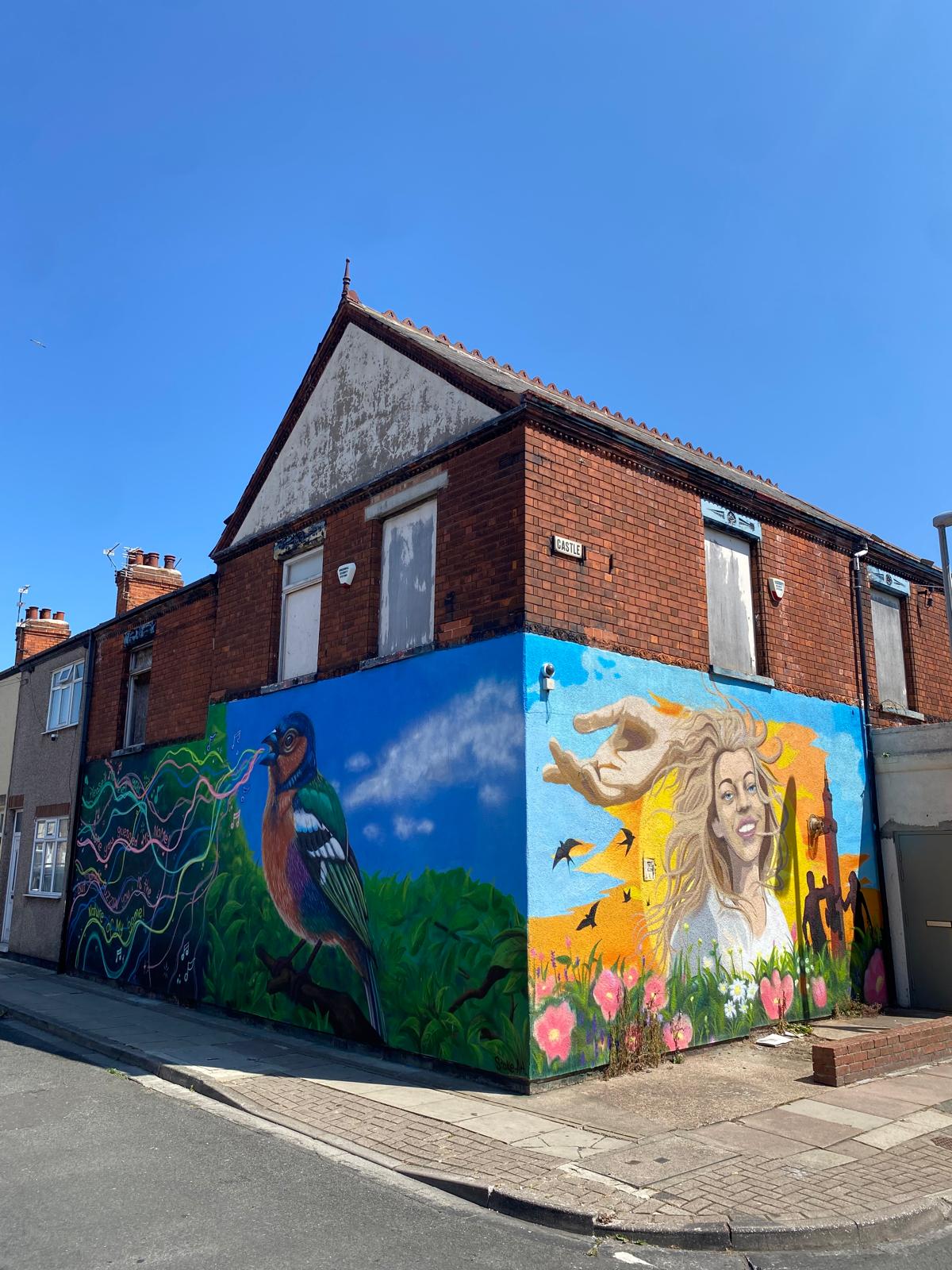
Learning from East Marsh
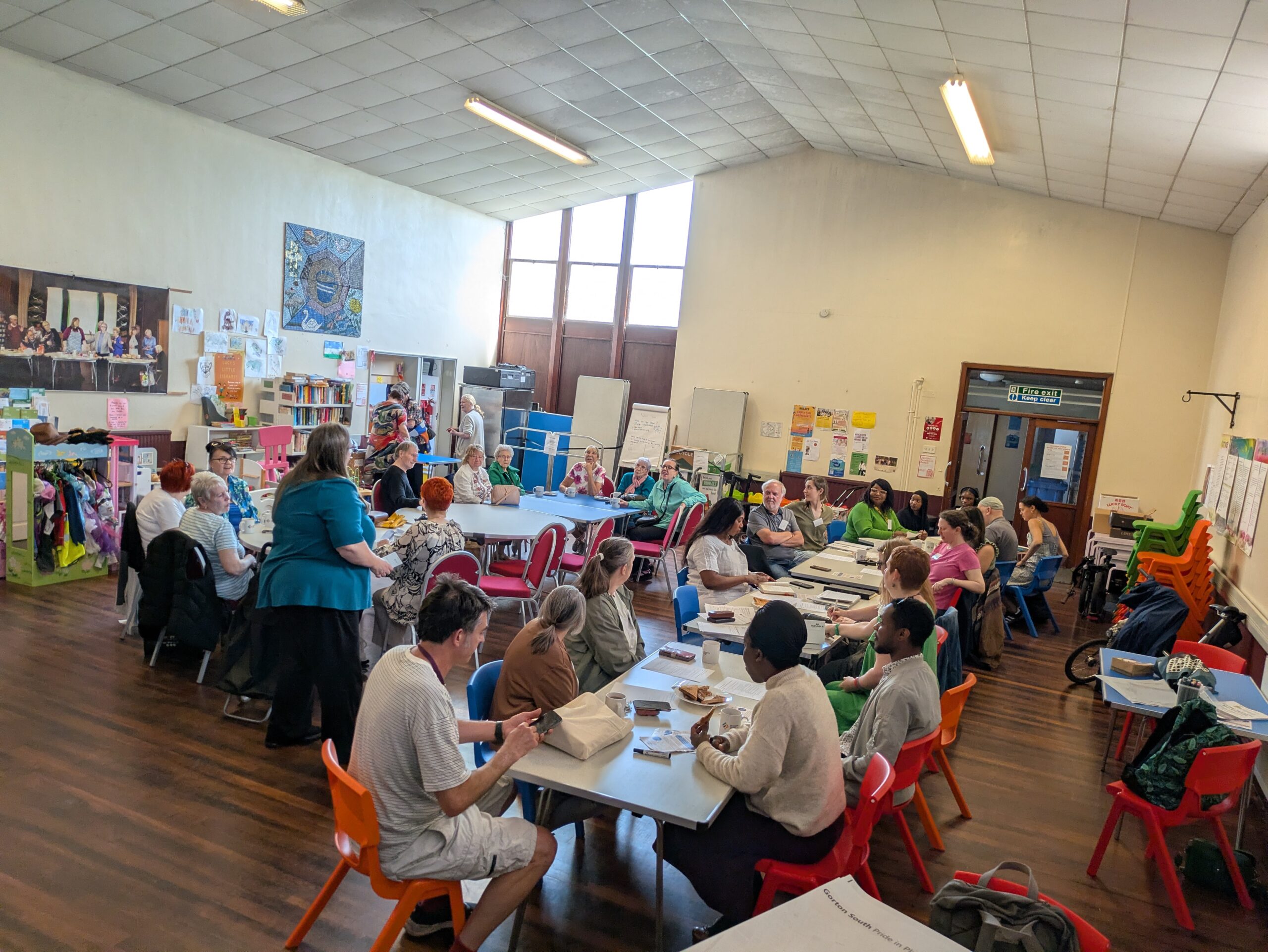
Pride in Place Manchester
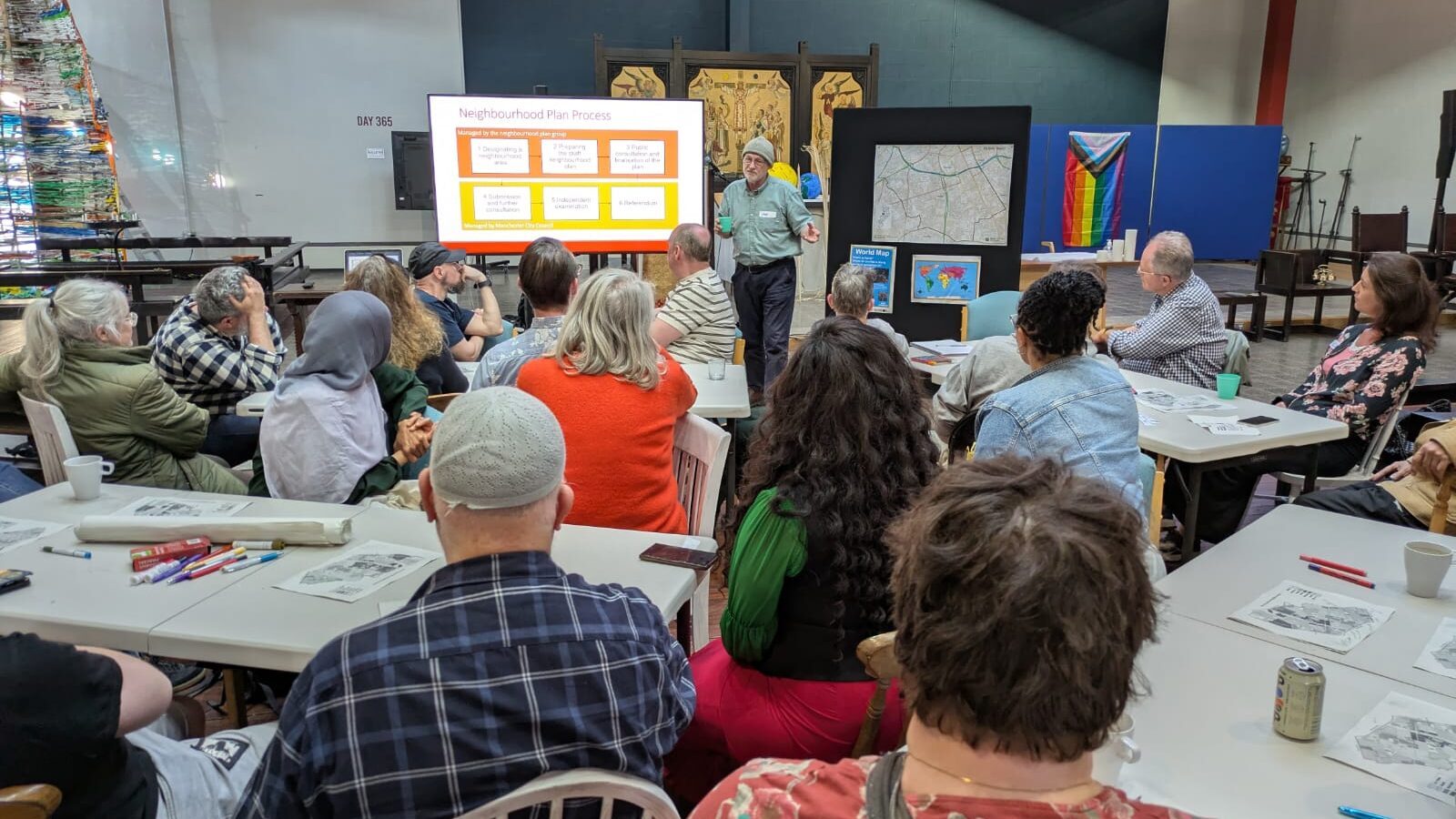
Neighbourhood Planning in Hulme
Digital inclusion, confusion and that Aha! moment

Tina Cribbin of Hulme Writers & Savers shares reflections on her digital skills-sharing sessions as part of GM Savers Go Digital! project – supported by the National Lottery Community Fund. Sessions are being run remotely through video call since the national lockdown was announced.
Just before Christmas, as usual, chaos reigned in the block. I felt overwhelmed with the number of crisis situations I was dealing with.
One resident who did not feel the need to “get involved in all that, its just not me”, phoned me in a state of crisis. I brought the tablet and set up our new Wi-Fi hub which was quite easy. We were quickly able to get the much-needed support she required.
In a crisis state, I didn’t push her to use the tablet, I just showed how it can be a useful tool. As things moved on, we worked on how to use the tablet as and when, for example, emailing agencies such as the benefits agency and social services. At first, she felt it was a hassle – I said “you need to trust me on this”.
We set up her email account and she sent her first email. When I showed her how it could be stored, she said “Aha I get it now! No-one can say I didn’t send it and them lot can’t mess me about!” I think she felt a sense of power for the first time where her life was being controlled by big institutions. This resident has so much stress and never gets any downtime, I showed her how to watch TV on it. “You mean I can watch stuff any time?” I said yes. That night she told me she watched the Housewives of Jersey but fell asleep after two episodes. I said “I’m not surprised” and we both laughed.
My other resident I’m sharing skills with is an older man, when I first brought the tablet into him he said “Get that thing out its neither use nor ornament!” I try and engage with him as and when. I know he loves reading, particularly Irish history. We ordered a book, and it came the next day. He was delighted. It was a picture history of his hometown, Donegal. Recently he’s had a tough time shielding and being very afraid of COVID 19. He received a letter of invitation to have the vaccine administered. The phone lines were impossible, so I was able to use our new tablet to book him in online. We got an appointment quickly and he said “It confuses me the way it works. But it does work!”
I’ve learned that older people are learning best when they learn by doing – when they gain something of importance to them about the engagement and for it to be very informal over a cup of tea. They also like it when I make mistakes on the tablet – the older man I noticed would then try and help me out with “What’s that button for? Could we try this?” and then a whole conversation would take place.
I am no expert and realise I am also learning by doing.
More Stories
Learning from East Marsh
Pride in Place Manchester
Neighbourhood Planning in Hulme
Manctopia: Reality TV in a journalism jumper*
“We want Manchester to be this cosmopolitan city…but at what cost?” Judith from Lifeshare in the trailer for Manctopia
The series trailer and episode lead-ins for this 4-part BBC Two documentary that concluded on Tuesday evening are suggestive of a series seeking to analyse the inequalities associated with Manchester’s “property boom”. Instead, this glossy reality TV entrenches a misguided message that uncontrolled investor-driven urban development is the only possible trajectory. Its winners vs losers framing negatively impacts those communities experiencing the pressures of gentrification on a daily basis.
Greater Manchester Savers have contacted the BBC today about their concerns regarding the Minnow Films production ‘Manctopia’. Many tuned into the programme hoping to see some serious national journalism interrogating the underlying issues that are increasingly fragmenting communities, displacing people to outer areas of the city-region and beyond, and ultimately costing lives on the streets and through a mental health crisis.
This is not what they received. This article attempts to give voice to some of the key concerns and responses of members of inner city savings groups and their networks.
Throughout the series the audience is presented with a version of reality where investor-led urban development is the only available option for local and national government and society more widely. There is no analysis of what alternative strategies a city like Manchester can decide to pursue or of any of the challenges that may be present in the approach that has been taken to date. There is no discussion for example of Planning Obligations which provide an under-enforced mechanism through which local authorities can ensure that communities are compensated for developments and that negative impacts are mitigated. Neither is there any discussion of approaches that have been taken in other cities to avoid the profits from development being extracted out of the city instead of being made to work for the social welfare of people and communities most in need of support.
In episode three, some airtime is given to Mayor of Salford Paul Dennett who is at pains to stress the urgency for new build housing and that the City of Salford and the Greater Manchester Combined Authority have a vision for affordable housing. However, at no point is there any breaking down of what ‘affordable housing’ means in practice even when Paul Dennett tries to bring this out by talking about ‘genuinely’ affordable housing. In reality, the term is used to refer to three different types of housing provision: shared ownership, affordable rents (set at 80% of market rent), and social rent (which works out at approximately 60% of market rent). For many existing residents of the communities featured in the programme, only social rented accommodation is affordable.
Here, some of the members of the GM Savers network share their responses to the programme in person:
Tina Cribbin in Hulme talks about stigmatisation, the absence of alternative strategies presented, and the poor diversity of experience covered by the programme.
Roy Bennett in Hulme wishes the programme could have looked at the way that development happens without any plans being made for how to protect sufficient land for community facilities and appropriate housing for older people:
Sue, Dot and Christine in Miles Platting and Collyhurst discuss how the programme failed to represent the experiences and needs of households and families like theirs currently living in social housing or to educate us about the reasons for so much housing becoming privatised and unaffordable.
Thelma McGrail, who appears in the programme briefly, is concerned about having been provided with a misleading explanation of what the programme was going to be about, and the stigmatising portrayal of the Miles Platting community during the programme.
Ellie Trimble, local resident and Church of England Rector in Miles Platting, who was engaged by the programme makers but became worried about their approach, shares her concerns about the unrepresentative and simplistic presentation of homelessness and temporary accommodation.
People have shared how important it was that Anne and Donna and other local residents were able to raise the profile of experiences on the Osborne estate under the Northern Gateway regeneration process in the final episode. However, Greater Manchester Savers feel that ultimately, there was inadequate analysis of the local, national and international factors that are shaping the current housing crisis and resulting in people being displaced from the city. Some history was featured but without any unpacking of the reasons behind those histories. The community leaders who have commented feel that the repeated presentation of various (sometimes deeply offensive) individual perspectives, with no qualification or discussion, when dealing with issues of such critical importance to people’s physical and mental wellbeing, is unacceptable. They feel most strikingly that disproportionate airtime has been given to the perspective of a single millionaire developer and a number of unrepresentative caricature features such as that on the wealthy fashion designer who needs extra bedrooms for her shoes.
At a time of national crisis, when the effects of ten years of austerity policies have combined with an as yet uncontrolled pandemic to exacerbate poverty and health inequalities in some of the most hard-hit communities in the city (and the country), Greater Manchester Savers consider the airing of this series to have been misjudged and the nature of its directorial narrative to be misleading and unrepresentative. The suggestion that the main focus of the programme may not have been properly and clearly explained to some of the individuals interviewed (see Thelma’s contribution) is also concerning.
In their editorial guidelines, the BBC commits to:
- covering subject matter in such a way ‘so that no significant strand of thought is under-represented or omitted’
- ‘always scrutinise arguments, question consensus and hold power to account with consistency and due impartiality’
- ‘offering our audiences choices about how to confront’ [the issues they are covering within their programming]
Greater Manchester Savers question whether these guidelines have been adhered to in the making of Manctopia.
*‘Capitalists in Anarchist Jumpers’ is a poem by Tina Cribbin published in her 2019 collection Classphemy. This article has been written by Sophie King at CLASS in consultation with, and on behalf of, members of GM Savers and their local networks in response to concerns they have raised about the programme.
More Stories
Learning from East Marsh
Pride in Place Manchester
Neighbourhood Planning in Hulme
Its the little wins

Tina Cribbin celebrates recent achievements of local residents and members of On Top of the World in Hulme.
In our tower block there was always a sense of hopelessness with the tenants just having given up after years of making no impact upon where they lived no matter how they approached. An example: it took three years to get a bench for residents to sit on. When I think back to all the energy that took!
But after On Top of the World and CLASS began to work together we work differently. We have had lots of little wins like new benches, mobility charging points, support for our digital inclusion work, and now we are developing a partnership with our housing provider One Manchester to look at ways to provide supported accommodation for older people in Hulme. I realised the importance of where you take your concerns and how to negotiate – someone at CLASS said, sometimes, we have to create a space for professionals to help us. It’s really stayed with me because previously I would have just blamed the professional for not listening to us and giving us a hard time. These little nuggets are the things I’m soaking up for myself and, more importantly, for my community.
Recently we had a meeting with the Director of Place at One Manchester about supported accommodation and we mentioned the laundry facility in the block being closed and how this impacted on the tenants. She was quite open with us as we now have built a relationship.
The other day, Jack who is 81 came to me smiling – ‘well Tina’, he says, ‘the laundry rooms now open’. I said that’s great. Then he said ‘in our next meeting, what we must do next, is make sure we get a new washing machine!’
This may not seem much but after working with these guys for over three years it is the first time they felt that had the power to make an impact. And the belief that his voice will be heard. How do you measure that?
Since we started up our savings group, I’ve also been able to buy myself a new sofa – it’s the first time in my life I’ve ever bought a sofa new – it’s like I said in our ‘story so far’ report – I was never taught how to manage money because we never had any.
If I could sum up the benefits of working with CLASS as a member of the Greater Manchester Savers network, this would be it…
Change and giving voice to the voiceless.
More Stories
Learning from East Marsh
Pride in Place Manchester