





New impact evaluation now available!

Reflection, learning and generous leadership are at the heart of the ComSavs/CLASS approach. We find our way by feeling the stones and we can only do that by pausing regularly to take stock and think about what we are achieving, how, why, what needs to change, and what new directions and opportunities should we be exploring?
For the last two years we have been supported in this deeper work by the brilliant Nifty Sustainability CIC whose latest independent annual impact evaluation report is now available!
READ AN EVALUATION OF OUR WORK IN 2025 HERE
Key highlights include:
- Achieving an increase in Manchester’s social rent housing targets from less than 5% to 21% social rent in all new developments of ten homes or above through Social Homes for Manchester including “What is the City but the People?“community reporter documentary and film screenings.
- Supporting community-led dialogues and evidence development for joint submissions from local area teams to the Manchester Local Plan Regulation 18 consultation including achieving the rezoning of the Aquarius estate in Hulme out of the city centre.
- Supporting the formation and development of Arbourthorne Community Network in Sheffield and Wythenshawe Central Network in Manchester with ACN now organising around Housing in the footsteps of SH4M and WCN now with 22 organisations and over 130 local residents in membership and organising collectively for a stronger voice for women and families in new local regeneration programmes.
- £27,731 of new deposits across the network, a STAR award for Brinnington Savers, and a new savings group launched in Middlesbrough!
- Network wide action to save and create new community assets including launch of Mums Mart’s new community space in Benchill (free to use for local groups for ten years); St Cuthberts Communities Together’s redevelopment for a worship space and community hub; and Aquarius Community Savers joinining Friends of Aquarius to save the Aquarius Community Centre for community benefit.
- Expanding the leadership (to 54) and Leadership Team (to 8) and deepening our work on diverse and inclusive leadership and organising.
- One of our leaders was so excited about progress she made her own reel!
Happy reading!
More Stories
Learning from East Marsh
Pride in Place Manchester
Neighbourhood Planning in Hulme
It’s Time for a Social Rent Revolution!

The winds of political change were felt through the Council Chamber at Manchester Town Hall on Friday afternoon as the Manchester Social Housing Commission launched their final report and recommendations to a room of over 100 housing and planning professionals, councillors, officers, housing activists, residents and communities.
You can watch clips of different sections of the event using the links at the bottom of this article.
Chaired by The Right Reverend Dr David Walker, Bishop of Manchester, and opened by Cllr Bev Craig, Leader of Manchester City Council, the event began with powerful community testimonies. One single mum wept as she described her experiences of fleeing domestic abuse with her two disabled and asthmatic children only to find herself stuck in poor quality damp and mouldy private sector accommodation having to carry her wheelchair-bound child up and down the stairs several times a day to use the toilet in a house with no aids and adaptations.
Vicky Leigh, a Commissioner and Assistant Principal of Manchester Academies Trust, described the experiences of families supported through their At Home project through which they have supported over 300 families. Vicky talked of a family who have been able to stay together in the same community in secure tenancy social rent accommodation in an area where many families have been and continue to be displaced because of the lack of decent and affordable homes. Vicky described Clare as “one of the lucky ones”. She has one daughter in year 10 living at home with her, and two older daughters, one living with her, and another living nearby with her own family in their own secure social rent home. Living close together means they can all support each other with school runs and childcare. On their journey to this situation however, they had lived in such poor-quality social housing that their ceiling collapsed and the bathroom from the flat above fell through into their home.
Lina Dowouna and Reverend Kate Gray of Wythenshawe Central Network shared their experiences of tokenistic resident involvement and consultation processes in the latest wave of regeneration in Wythenshawe Town Centre. Reverend Kate explained that Wythenshawe Central Network know their own communities and know what kinds of tools and techniques work best, yet barely any local representatives have attended the workshops and meetings WCN have organised to gather the community’s views and priorities and share inspiring ideas for the future. This needs to change to rebuild trust:
“It really matters that this isn’t being done by the council. That makes a difference to people who feel excluded and done to. And I am sad to say that in the conversations that we have had in Wythenshawe, many local councillors are consistently absent from those conversations. And I want to challenge you to attend, and listen, and take part. That will help build active trust.”
Pledges to action
Bernard Sudlow of Hulme Community Forum and Sue Thomas O’Flaherty of Lifted Carers and Wythenshawe Central Network put a series of asks to key stakeholders who had agreed to participate as panellists at the event.
All panellists including Steve Fyfe for GMCA; Cllr Bev Craig, Leader of the Council; Cllr Gavin White, Executive Member for Housing and Regeneration; Matt Jones, interim Chair of the Manchester Housing Providers Partnership and Charlie Norman, Chair of the GM Housing Providers Partnership pledged to work with Commissioners to establish a Social Homes for Greater Manchester Scrutiny Panel focused on ensuring the Commission’s recommendations are taken forward in Manchester and across GM, that will meet quarterly until the next General Election.
Bishop David thanked Afzal Khan MP and Hannah Spencer MP for their attendance (despite having to leave early for constituency surgeries) and explained he will be personally following up with the Greater Manchester All Party Parliamentary Group of MPs to explore how to advance the Commission’s national policy recommendations.
In addition to participation in the scrutiny panel, Matt Jones Interim Chair of the Manchester Housing Providers Partnership and Charlie Norman, Chair of the GM Housing Providers Partnership expressed their full support and pledged to work with partners to ensure repairs are being carried out in a timely fashion and investment is made to remove dangerous damp and mould; and to ensure that providers are limiting demolitions to cases of last resort.
Cllr Bev Craig and Cllr Gavin White acknowledged that there was more work to do to ensure Manchester City Council works in collaboration with communities when planning for local areas. In addition toparticipation in the scrutiny panel, they committed to working with Social Homes for Manchester to co-create a policy on Community Led Development and expressed their political commitment to achieving a target of 30% social rent in the new Local Plan for Manchester.
Cllr White said:
“When we go to Regulation 19, we need that feedback: give us that evidence to present to the inspector to ensure that we can get the Local Plan through. It is the political aspiration to get 30% social rent entirely but that’s what we need in Regulation 19.”
Addressing inequalities
Dr Cordelle Ofori, Director of Public Health for Manchester City Council, who was invited to share her expertise on the links between health and housing inequality said:
“I am really supportive of this because the Right to Health and the Right to a Home go hand in hand. In Manchester […] between the poorest and the most affluent parts of the city, for boys it’s a 9-year gap in life expectancy and for girls it’s a 7-year gap. That’s completely unacceptable …But the things that make the biggest difference to health inequality are the things that sit outside of health services, and housing is a really important part of that […] If all of your money is going on keeping a roof over your head, you haven’t got much left for everything else. It’s also important for children’s education, it’s important for being able to get more training to move up the job ladder and get a better job, it’s important for so many things.”
Cordelle highlighted Making Manchester Fairer’s three key focus areas of (i) Shifting power to communities; (ii) Tackling poverty including fuel poverty; and (iii) Tackling racism and discrimination. Cordelle highlighted how racially minoritised groups are more likely to live in social housing, more likely to live in poor quality housing, and more likely to be in housing that is overcrowded; and the need to address the particular housing needs of disabled families. She called on all partners engaged in taking this work forwards to think about: what are the implications specifically for different population groups in Manchester amidst these recommendations; and how can we ensure these inequalities are addressed in the actions that are taken.
Celebrations and next steps
Several contributors celebrated the approach that has been taken by the Commission which you can read about in the concluding pages of the main report which shares detail on the methodology, challenges, and success factors as evaluated by Commissioners.
Bishop David thanked colleagues at Manchester City Council for their support and engagement without whom the process would not have been possible and added:
“This has been a really exceptional engagement for me. I have sat on a large number of housing commissions over a large number of years…and yes, you have meetings and you visit a few places, and you produce a report and present your recommendations, and yeah we’re doing all of that. But the distinctive thing about this, is the extent to which it’s been the voices of people living in social housing or living in estates around the city who have driven the process forward. That has been unique. I’ve long been committed to what they call coproduction and codesign, but I’ve never seen it done so determinedly as the Manchester Social Housing Commission has done it.”
The SH4M coalition is the legacy structure which will now take forward the Commission’s findings and recommendations and seek to maximise implementation, working always in partnership with community leaders across Manchester, Greater Manchester and England. The coalition will publish an annual progress tracker each year at least until the next General Election.
Together, Commissioners have met with Ministers, ministry teams, representatives of the All-Party Parliamentary Group on Greater Manchester, and special advisers; have submitted written evidence to successive national consultations and audit committees; and have presented evidence to Lords and MPs. Partner organisations such as Mustard Tree met directly with Angela Rayner in 2024 to share on the extent and impacts of the housing and homelessness crisis in Manchester in advance of the April 2025 budget.
Importantly, throughout these engagements we have developed new connections and relationships that have supported ongoing advocacy, parliamentary questions and ministry negotiation on community rights in planning, and new opportunities for joint working, including: the Women’s Budget Group on the gendered impacts of the housing and climate crisis; and the Lloyds Local Collaborations programme.
A key request to the GM APPG is to work with SH4M to establish a working group to advocate for the reforms needed nationally to enable accelerated delivery of ecologically sustainable social rent homes across Greater Manchester. We look forward to working with Manchester City Council and partners across Greater Manchester through the new Social Homes for GM Scrutiny Panel and a wealth of other legacy projects. These include: new neighbourhood planning processes in Hulme and Moss Side; work to explore Community Land Trust pilots in Miles Platting and Wythenshawe; a network of organised communities with a deeper understanding of housing and planning systems and potential community led placemaking innovations just as five Manchester Pride in Place areas have been announced; and a new transparency and accountability data portal project with GMCA. A new Social Homes for Trafford coalition has also launched; and we are keen to share learning with groups across the city-region and nationally.
To stay informed, you can sign up to the Social Homes for Manchester mailing list.
CLIPS OF THE LAUNCH EVENT
More Stories
Learning from East Marsh
Pride in Place Manchester
Neighbourhood Planning in Hulme
Introducing… Hannah and Menna!

Hannah Berry – Social Homes for Manchester Project Lead
Social Homes for Manchester (SH4M) has accomplished a lot since it was launched in 2023 by Community Savers leaders, and a coalition of partners including GM Tenants Union, Greater Together Manchester, Shelter, Mustard Tree, and Steady State Manchester. Not least, an 18 month long Social Housing Commission, which is about to launch its final report and recommendations.
All this has been achieved by people volunteering their time, so having had the fortune to be employed by CLASS as a dedicated project worker for the campaign, I’m eager to see how I can help build momentum and fulfill all the ambitions of the influencing plan!
I fell into community engagement work by accident in 2002, while on a sabbatical from Ethical Consumer magazine, and one job has led to another, culminating in my current role. I set up and coordinated Manchester Women’s Network (bringing together community groups), Manchester Women’s Design Group (to lobby and influence on planning issues), and co-directed a ‘popular education’ organisation which ran workshops in low income areas of Manchester and Salford. More recently, at GM level, I worked for the ‘Ambition for Ageing’ neighbourhood development programme, and the GM Equality Alliance, where I learned a lot about city-wide and regional policy making.
Until last month I was based at Fuel Poverty Action, a straight-talking member-led organisation which fights for warm homes and clean, affordable energy, under the control of people and communities (I really like SH4M’s environmental focus for this reason). I was the Operations Lead, but like CLASS, we were a small team, so I picked up useful campaign skills.
Being involved in GM Housing Action (GMHA), and our community-led housing project, GM Housing Futures (whose legacy SH4M is taking forward), was also a pretty good grounding for this role. What feels exciting, is meeting all the wonderful activists and leaders in the Community Savers network, through whom the campaign already has roots in many wards and neighbourhoods, and the structures and expertise needed to extend its reach. I look forward to posting regular updates on the SH4M news page, and activating the mailing list, as I continue to work alongside the SH4M Steering Group, Community Team and lovely colleagues at CLASS.
Menna Hassan – Independent Living Worker, Ageing Well in Place in Hulme
I began work as the Independent Living Worker on the Ageing Well in Place in Hulme project in March. Working with older adults is incredibly meaningful to me. Every day I have the opportunity to support individuals in maintaining their independence and confidence in their own homes and communities. Sometimes this support involves helping someone access services or navigate housing and wellbeing systems, and other times it simply means listening and making sure someone feels seen and supported.
A key part of my role is also ensuring safety and wellbeing through risk assessments, safeguarding processes and Duty to Refer when appropriate. My goal is always to make sure people feel secure, respected and empowered to make decisions about their own lives.
More Stories
Learning from East Marsh
Pride in Place Manchester
Neighbourhood Planning in Hulme
Community Powered Neighbourhoods

Over 70 residents, community leaders, council officers and public provider stakeholders attended the amazing #CommunityPoweredNeighbourhoods event on 17 March 2026 cocreated by Wythenshawe Central Network, Social Homes for Manchester (SH4M) and the We’re Right Here campaign as part of this years’ #GMLiveWellFestival.
It was an absolutely brilliant day full of excitement, hope, innovative ideas and grassroots solidarity!
We were welcomed by John Hopkins Co-Chair of Wythenshawe Central Network who explained our objectives: to bring community-led projects and initiatives together with communities across Manchester and GM – and especially new Pride in Place areas – to share learning, build relationships, and explore potential ideas for their own local areas, including through the launch of two reports:
- We’re Right Here’s Blueprint for Community Powered Neighbourhood Governance; and
- Manchester Social Housing Commission’s Alternative Models for Social Rent
Andrea Lowman, Director of Development at Wythenshawe Community Housing Group and Commissioner welcomed us to Wythenshawe and shared WCHG’s commitment to supporting community-led innovations in the area.
Anoushka Deighton then told us all about the We’re Right Here campaign calling for new rights and powers that would change where power lies in English planning including the Community Right to Buy and a new approach called a Community Covenant. Anoushka told the story of how she had worked together with other local residents and community leaders to take ownership over Stretford Public Hall and how their next steps are to draw up a Community Covenant with Trafford Council.
She handed over to the inspiring team at Market Drayton Community Covenant who are the first pilot of this approach. We heard from Melanie France, Public Health Principle, at Shropshire Council; Judith James, Parish Councillor, Moreton Saye Parish; and Iana Jacobson, Chair of the Ukranian Community Hub. Three representatives of the Market Drayton and Rural Parishes Community Covenant which has now been operating for 18 months with over 17 member organisations. “This is an authentic, power-sharing group working collaboratively with Shropshire Council and the local community to make decisions that are decided by us, for us!”
This is a pilot project testing the model of Community Covenants and Neighbourhood Governance funded by Power to Change. A Community Covenant is basically a power-sharing agreement between the local council and a network of local community groups and representatives and you can read the Market Drayton Community Covenant here.
We also heard from Dave Baxter at Wigan and Leigh Community Charity who told us all about his experience of working to bring five villages together in a former coal mining community to create Abram Communities Together Neighbourhood Plan. This is a mechanism for the local community to make their own plan for their area that becomes enacted as a legal policy instrument within the wider national and local planning framework and sets out the parameters for what kinds of developments can take place. Dave explained that it is a long challenging journey requiring several battles with the council, extensive community consultation, and lots of support from planning policy experts but has resulted in the community having their own local policies for their neighbourhood in Abram Ward.
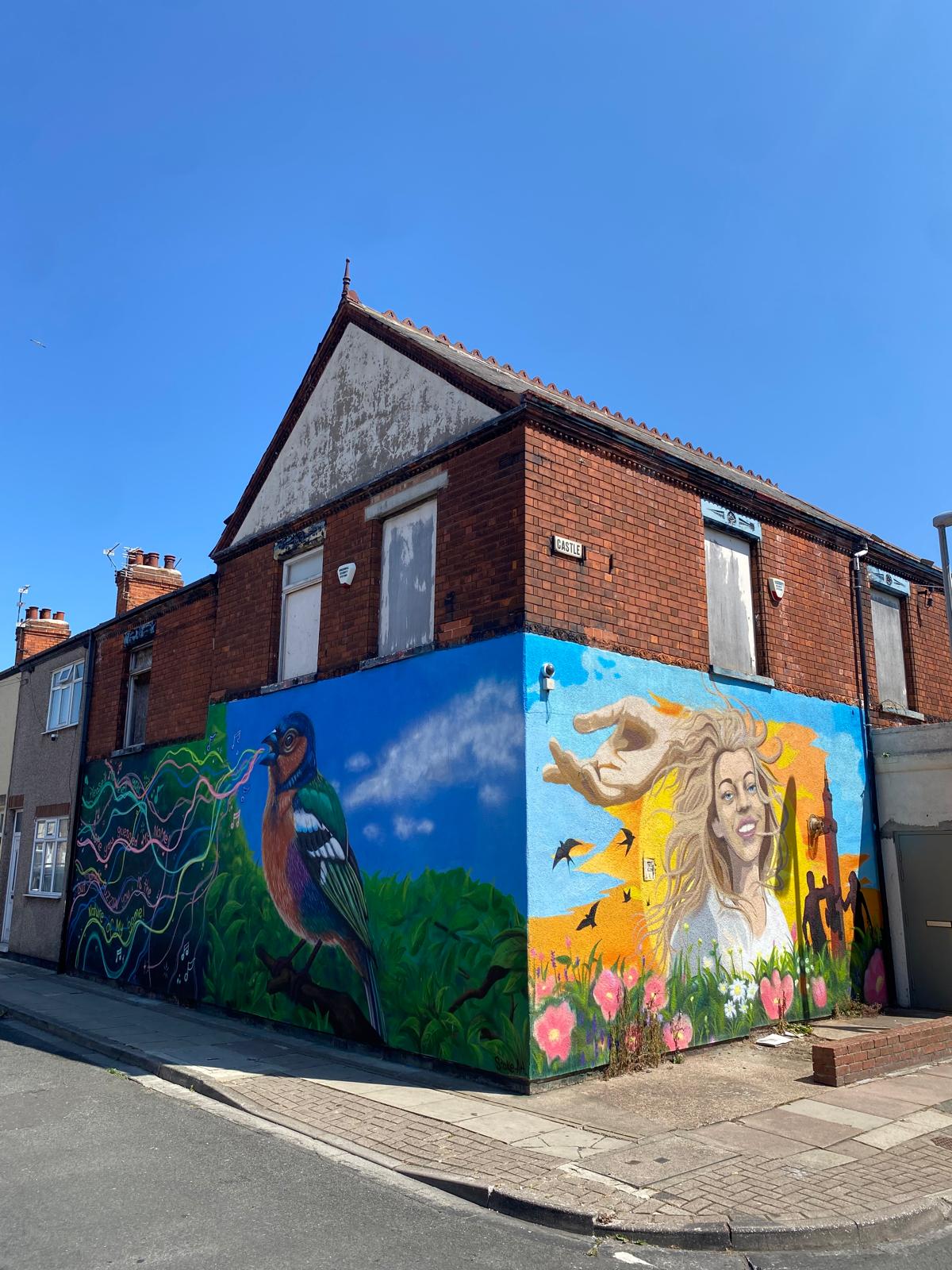
Many participants were excited to learn from East Marsh United who had set up their own Community Land Trust and taken ownership of some houses that had fallen into disrepair in an area of Grimsby known locally at the time as “Murder Mile”. Together, local community activists had brought the community together to mobilise around climate resilience (the area is actually marshland) and to demonstrate how to be an ethical landlord amidst so much poor quality private rented sector and run down social housing. Find out more about East Marsh United here.
We also heard all about Our Sale West; Middleton Cooperating; and about Community Land Trusts and Community Led Housing from Rachel Summerscales at GM Community Led Homes and the SH4M Steering Group; and Tom Chance, CEO of the National CLT Network and Commissioner for the Manchester Social Housing Commission who launched the Alternative Models report setting out how Manchester City Council can create a more enabling environment for Community Led Development.
Community land trusts – or CLTs – are democratic, non profit organisations that own and develop land for the benefit of the community. They typically provide affordable homes, community gardens, civic buildings, pubs, shops, shared workspace, energy schemes and conservation landscapes.
The network highlights how CLTs are:
- Run by ordinary people: They are community organisations run by ordinary people who want to make a difference to their local community, putting control of assets into the hands of local people. They can be set up by the community or a landowner, developer or council.
- Protect community assets forever: They ensure that their homes are permanently and genuinely affordable. CLTs act as long-term stewards of land and the assets on it. They ensure that it is put to the benefit of the local community, not just for now but for every future occupier.
- And a worldwide movement: Started by black leaders in the civil rights movement and others in the peace movement in the USA, CLTs are now a worldwide movement. In both urban and rural areas, CLTs are a key part of the future of land, affordable housing and community facilities.
Find out how CLTs are giving people control over land and buildings across England.
Information is power
After everyone’s five minute elevator pitches we moved into a marketplace event where residents from different communities including Benchill Pride in Place area were able to network with all these brilliant initiatives and take away learning for their own local community.
The reflections and feedback at the end of the day were overwhelming and there was a sense of new beginnings in the air.
Janice, from Tone and Trim community gym, said:
“I’ve lived in Wythenshawe all my life … I work with young people from aged 3 to working with people from 80, 90 plus. I believe in my area I’m very proud to be from Wythenshawe and Benchill… I’m really proud also to be part of the Dandelion who have supported me to run my own project and I’m also proud of the people where we live because we’ve had to struggle round here to get this (Pride in Place) so I hope this becomes a reality, because it sounds really good. My passion is for the young people, give them what they need, and let us as we get older take the lead and show them the way. And hopefully with support from some of you guys, we can get more information and ideas behind our passion and our vision for our area. I’m really pleased I came today because I didn’t know about half the stuff that was being created already so that’s made me excited”
Joe and Tom had travelled across from Trafford to get ideas for their newly formed coalition Social Homes for Trafford.
Joe said:
“Today’s event has been absolutely brilliant because its an opportunity to network with other people working towards the same goals as us”
Tom said:
“It’s also been really useful to hear from people who are further into their journey because it’s quite early days for us and we’ve been able to go away with new ideas”
Rev Kate Gray from the United Reform Church said:
“In my little group we found out about Pride in Place. We hadn’t heard about what that really means and how that connects with other areas like Abbey Hey and Gorton so we got out the maps and talked about that and made a plan for this weekend to share that with our faith community….And then I really loved hearing about the project East Marsh United and the specific things about housing, being an ethical landlord and also about Community Covenants and Neighbourhood Plans. I loved the reality of it: it took ages! It’s really helpful to hear that. Its gritty, its long-term work. So, ok, “sticking power”.’
There was a consensus that this event was just the beginning and plans are already afoot for:
- a joint trip by groups from Middleton, Miles Platting, and Wythenshawe to travel over to East Marsh United
- a community-led Pride in Place networking event for all five Manchester areas
- and a GM gathering of grassroots-led initiatives focused on innovative means for ensuring community control over neighbourhood planning, housing, land use and community assets.
Please sign up to the Community Savers mailing list and to the Social Homes for Manchester mailing list or email contactus@class-uk.com for more information.
More Stories
Learning from East Marsh
Pride in Place Manchester
Neighbourhood Planning in Hulme
Latest Commission report calls for renewed commitment to community-led housing

The fourth and final policy brief from the Manchester Social Housing Commission explores the benefits of community-led models for social rent and regeneration and will be launched at Wythenshawe Central Network‘s GM Live Well festival event today.
Manchester Social Housing Commission is calling for a major expansion of community-led housing and regeneration to bring Manchester up to speed with other major cities.
The Commission’s latest policy brief, “Alternative Models for Social Rent,” argues that giving residents a stronger role in designing, developing and managing homes could increase the supply of genuinely affordable housing while strengthening communities across the city.
The report highlights how community-led models – including housing cooperatives, cohousing, and community land trusts, can rebalance power relations between landlords and tenants, enabling communities to have a more meaningful voice in local decisions and improving health and social cohesion. It urges policymakers to make these approaches a central part of Manchester’s housing strategy. Despite Manchester’s history as a pioneer of cooperative housing, the report finds that Manchester has fallen behind other major cities like Leeds, Liverpool, Bristol and London with community-led housing currently representing a tiny share of the city’s homes.
David Rudlin, Commissioner and one of the founders of Homes for Change housing coop in Hulme said:
“Manchester has a long tradition of residents coming together to provide homes for each other,” the report states. “But these approaches play almost no role in our current housing strategies, despite strong evidence that they have delivered both affordability and wider community benefits in Manchester and across the country.”
Healthy lives – not just bricks and mortar
The report argues that the current housing system treats residents primarily as ‘customers rather than citizens’ with no meaningful voice in decisions about their neighbourhoods.
Community-led housing models change that balance of power by giving residents direct roles in ownership, governance, or management of housing developments. Evidence cited in the report suggests these models can deliver:
- High-quality and responsive housing management
- Lower rent burdens relative to household income
- Improved public health and reduced loneliness
- Greater social cohesion and local participation
- Protection against displacement and gentrification
Community-led developments also protect land and assets for community benefit in perpetuity, reinvesting profits locally and maintain long-term affordability, helping safeguard homes for future generations.
Four opportunities for Manchester
The Commission identifies four key ways community-led housing could grow at scale in Manchester:
1. Community homes within large developments
Major regeneration schemes could allocate a proportion of homes to community-led organisations, allowing residents to co-design or manage housing within large projects.
2. Communities as partners in regeneration
Neighbourhood organisations such as community land trusts could play a formal role in regeneration schemes, helping ensure development benefits existing residents and protects communities from displacement.
3. Development on small public sites
Small parcels of publicly owned land could be made available to community-led groups, following models already used by other UK cities.
4. “Socialising” existing homes
Community organisations could acquire and refurbish empty or poorly maintained properties, bringing them back into use as social housing.
The report also highlights the role that regional bodies such as the Greater Manchester Combined Authority and local authorities including Manchester City Council could play in enabling these approaches through policy, funding and land disposal.
Building on Manchester’s cooperative legacy
The Commission notes that Greater Manchester was the birthplace of the cooperative movement and once played a leading role in community-led housing innovation. Today, however, community-led homes account for a very small proportion of housing in the city.
With housing need continuing to grow, the report concludes that empowering communities to play a larger role in housing delivery could help Manchester build not just more homes, but stronger and healthier neighbourhoods. Andrea Lowman, Commissioner, and Executive Director of Development at Wythenshawe Community Housing Group who will open today’s launch event said:
“At WCHG, we are keen to explore how community-led housing can enable residents, councils and housing providers to work together on regeneration that addresses the housing crisis while also creating healthier, more connected communities. As this report states, “If Manchester truly wants to be a city built on collaboration, these models provide a practical way to make that vision a reality.”
Wythenshawe Central Network will launch the report in partnership with Commissioners and the Social Homes for Manchester coalition at a joint GM Live Well Festival event 3-6pm, Tues 17th March, at St Andrews Methodist Church in Wythenshawe today.
Header image credit: Homes for Change housing cooperative in Hulme, Manchester.
More Stories
Learning from East Marsh
Pride in Place Manchester
Neighbourhood Planning in Hulme
Making Waves in Wythenshawe

It’s been a busy few months for the Wythenshawe Central Network!
October
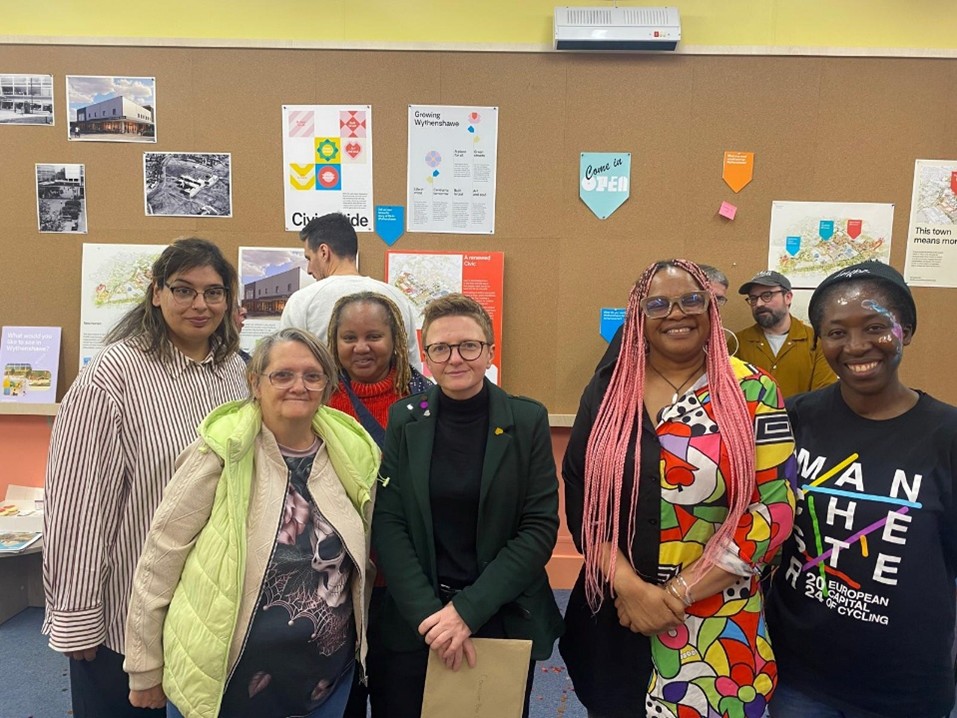
Leaders from Wythenshawe Central Network (WCN) attended an event at the Open Space in Wythenshawe Civic held by Manchester City Council and MUSE. They met Leader of the Council Bev Craig and spoke to her about the network’s three main asks for the Civic Regeneration:
- Increasing the number of social rent homes to be included in the redevelopment
- Working with the community to explore shared governance options for the Culture Hub
- Calling for more transparency, accountability and meaningful community partnership in the Wythenshawe Town Centre regeneration process
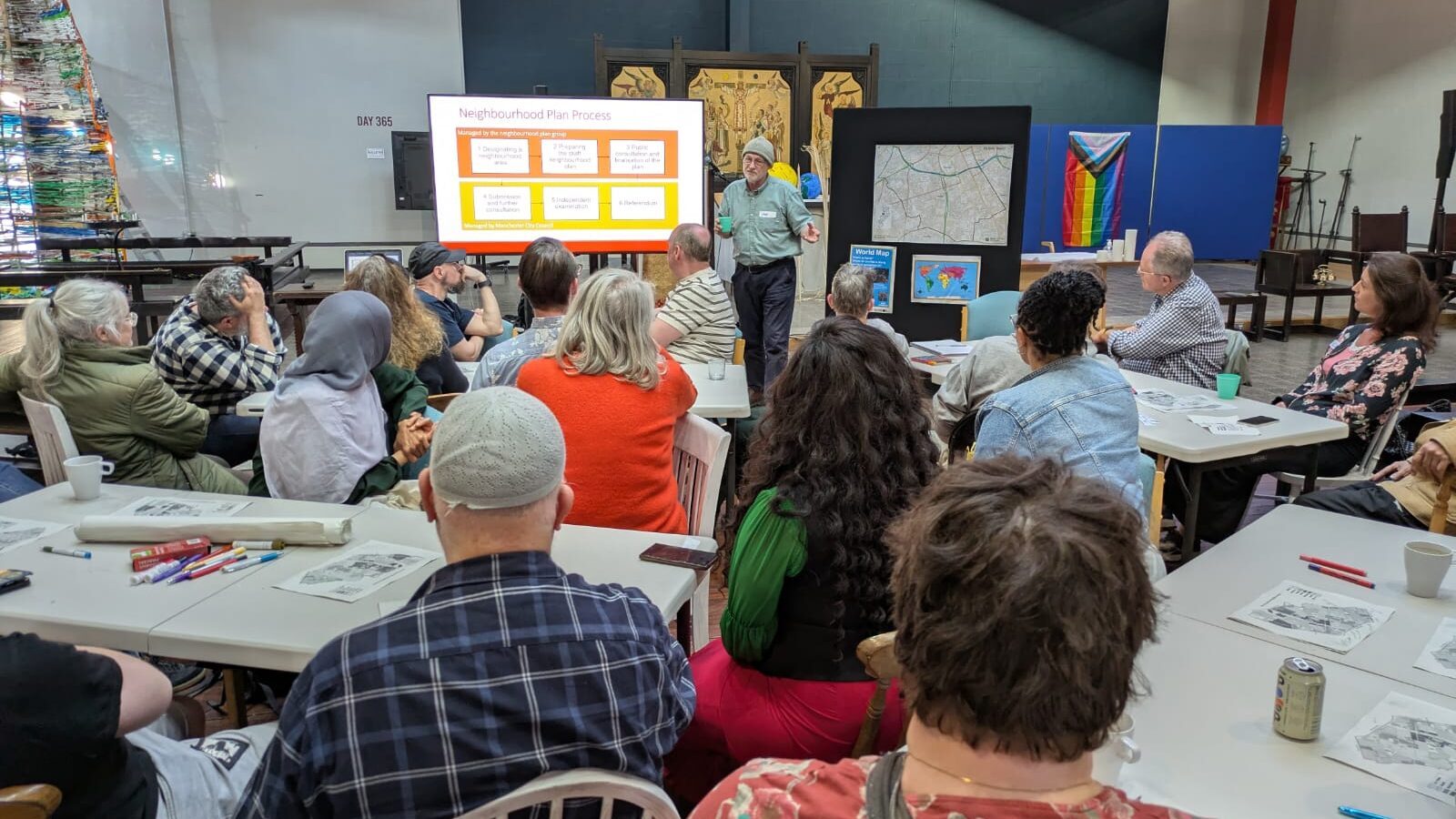
WCN also hosted a workshop bringing together councillors, community / faith groups and representatives from Wythenshawe Community Housing Groups to learn about different governance models as a possibility for the new ‘Culture Hub’ in Civic. We heard from Tom Chance, CEO of the Community Land Trust Network, about examples of successful community-led housing schemes across the country. This opened up useful conversations about whether such options could be explored for Wythenshawe. In case you missed it, presentation slides from this workshop are available for viewing here: https://www.wythenshawecentral.org.uk/wcn-voices-and-presentations/
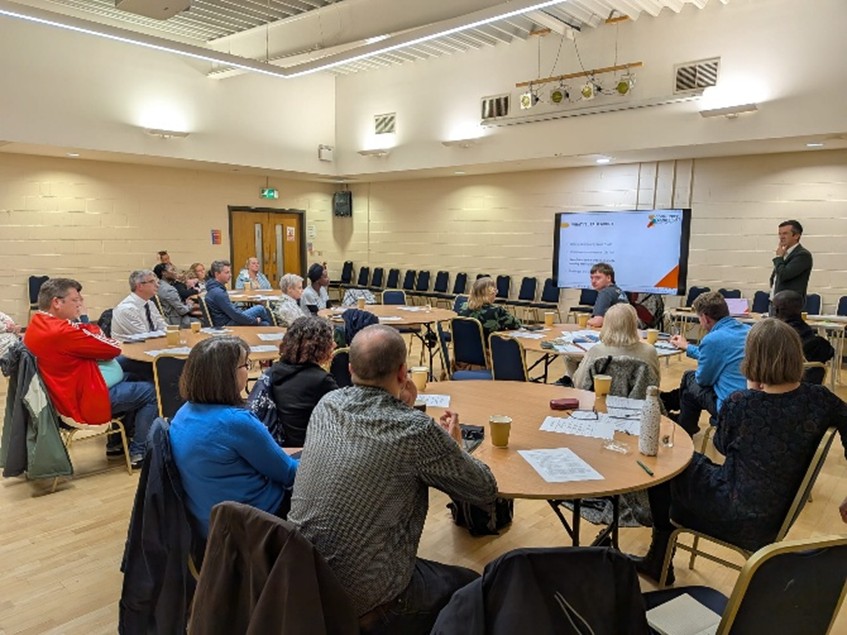
November
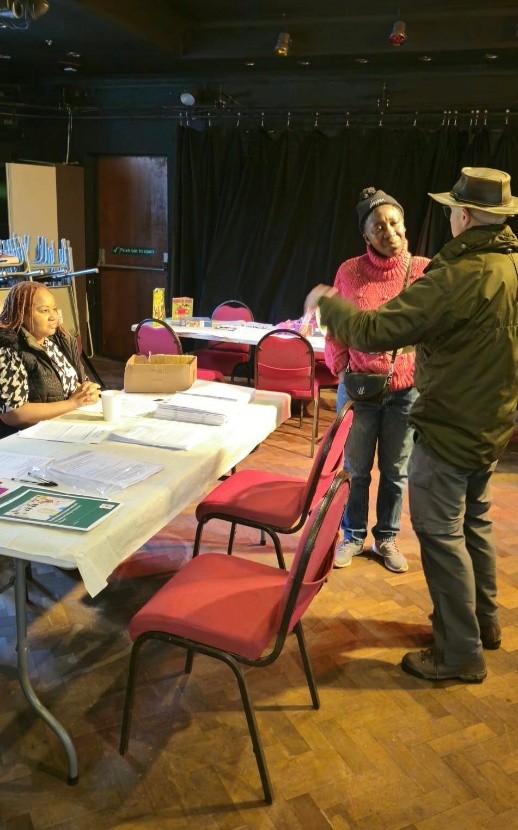
By hosting stalls and community events, including a ‘Meet, Munch and Mingle’ at Brownley Green Methodist Church Hall, WCN leaders have been increasing their membership through regular engagement with local residents. Asking critical questions such as “Will new leisure and retail facilities be affordable for the existing community?”, WCN have held spaces for important conversations about local developments. From building new connections and relationships, notably over some delicious food made by Joy from Know Africa, the network now has over 20 organisations and 100 individual residents among its’ membership.
January
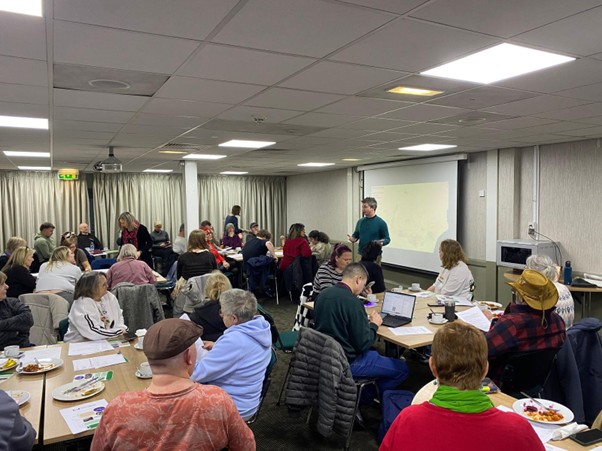
The network held another open meeting which brought together members, local residents and representatives from a range of community groups and local organisations to learn more about the new “Pride in Place” funding.
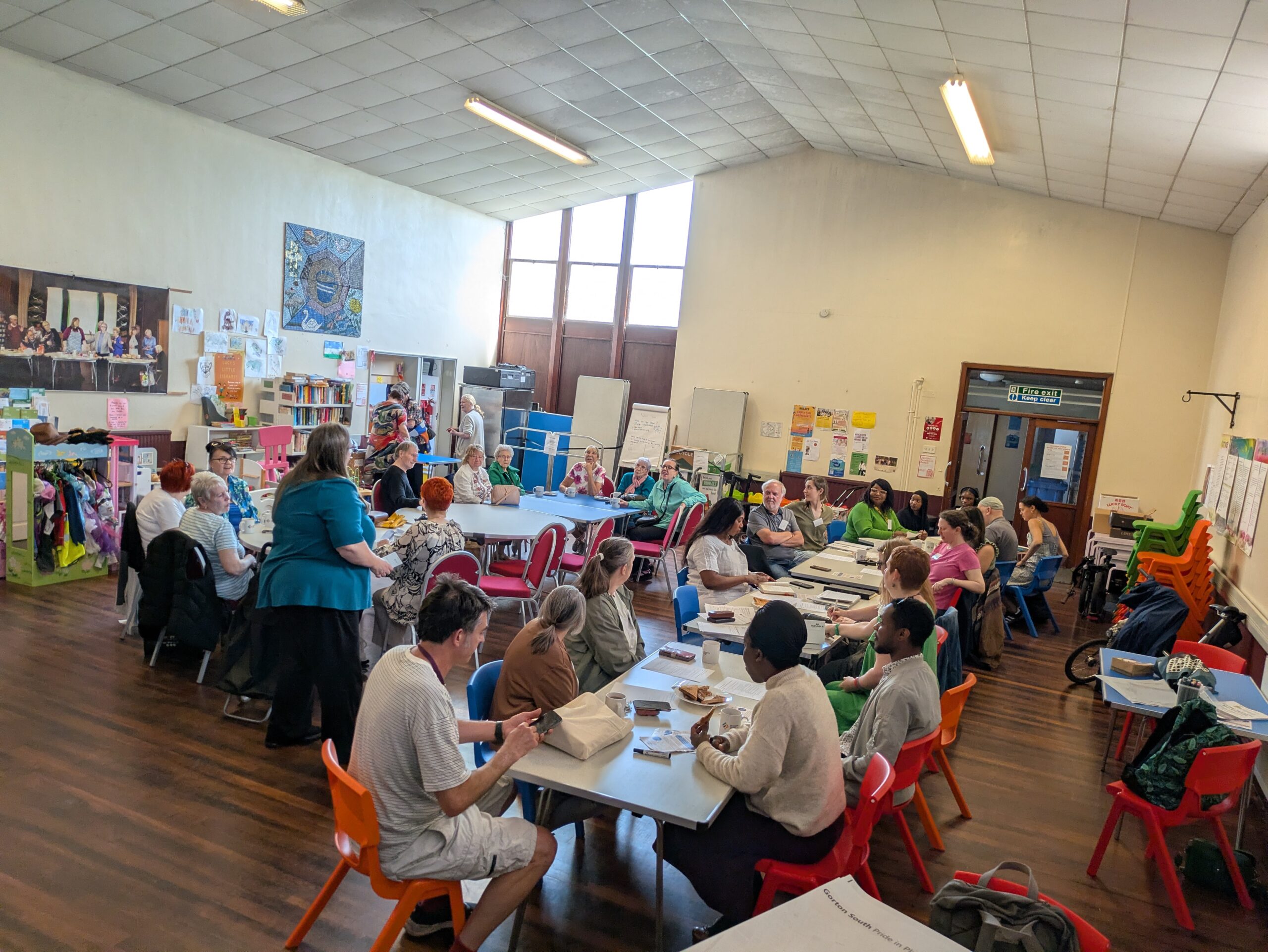
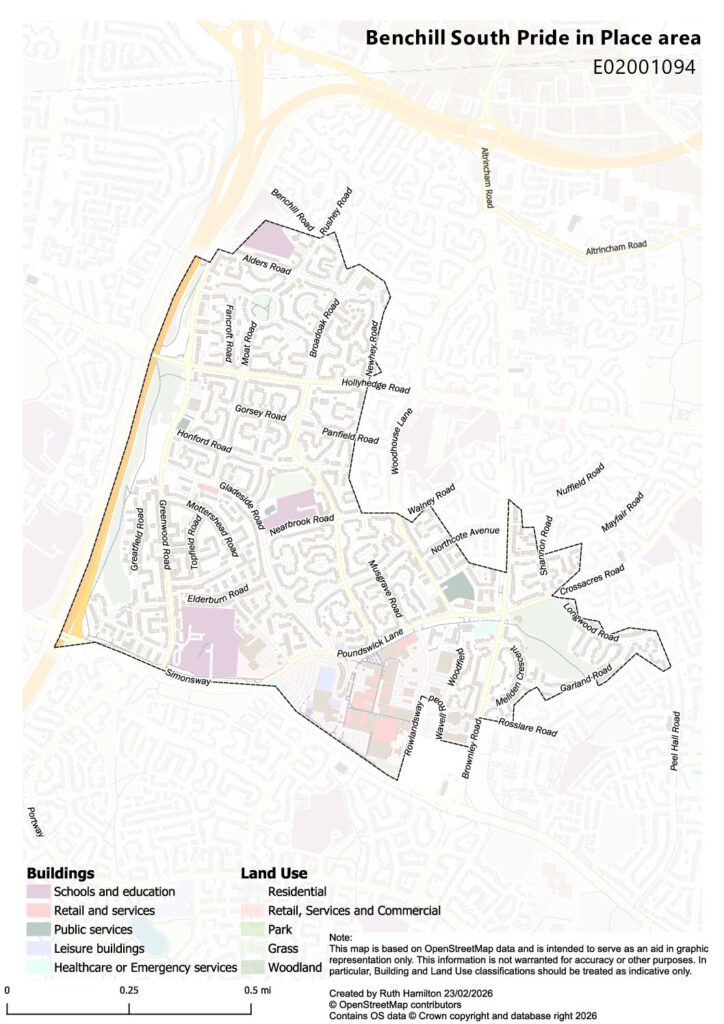
This new initiative announced by the Ministry of Housing, Communities and Local Government will award £20 million of funding over the next 10 years to Benchill South and Wythenshawe Central (see map below) alongside other areas across the UK, including Gorton South and Clayton Vale in Manchester. The funding will be managed by a neighbourhood board and aims to give power directly to local people to reshape their communities.
Meeting attendees were invited to share their hopes & fears about the initiative through open group discussions. We spoke about the importance of ensuring local voices are involved in decision-making so they can have a genuine influence throughout the process. Gavin Evans, Neighbourhood Manager from Manchester City Council presented on the most recent guidelines for the funding and to answer questions from local residents. WCN are hoping to receive funding to carry out further consultations and engagement to gather local priorities about how the Pride in Place funding process should be managed.
Coming up…
WCN is excited to be hosting a joint event on Tuesday 17th March with Social Homes for Manchester and We’re Right Here as part of the GM Live Well festival (9th-23rd March), called “Community Powered Neighbourhoods”.
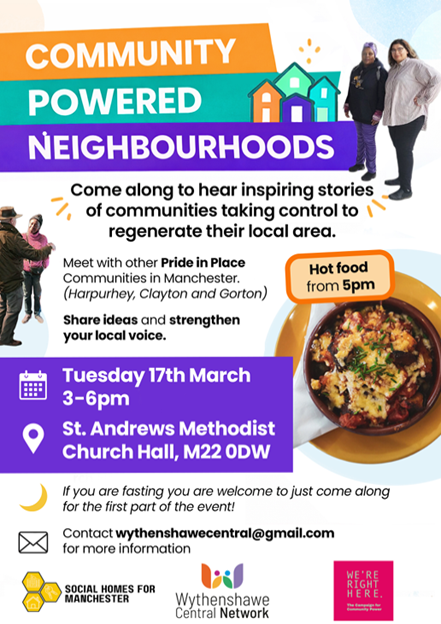
The event is focused on inspiring examples of community- powered neighbourhood governance, bringing groups across Greater Manchester together to share stories and exchange learning. Representatives from Community Covenants, Neighbourhood Plans and Community Land Trusts will present and there will be time for networking around project stalls showcasing exciting projects and campaigns. Residents from the different Pride in Place areas will be able to network in the ‘Pride in Place’ corner as well as ask questions to City Council representatives. We will also hear about key reforms that coalitions of communities and national groups are campaigning for to create more power for communities.
Lots of exciting developments happening in Wythenshawe and WCN are looking forward to supporting community-led projects as they unfold!
Follow WCN on Facebook: https://www.facebook.com/wythenshawecentralnetwork/
See WCN’s website: https://www.wythenshawecentral.org.uk/
More Stories
Learning from East Marsh
Pride in Place Manchester
Neighbourhood Planning in Hulme
Aquarius Community Savers – 2025!

At Community Savers, we believe that the people who live in a neighborhood are the best experts on what that neighborhood needs. This year Aquarius Community Savers (ACS) has proven that principle tenfold. Here is a look at what we’ve achieved by working together with many other local partners.
Protecting the Heart of Hulme: Aquarius Community Centre
The Aquarius Community Centre is more than just a building; it’s a lifeline. With One Manchester’s lease ending in 2027, the Friends of Aquarius Community Centre campaign has been working to ensure it remains a community-led hub.
We are thrilled to share that Odd Arts has submitted a formal proposal to take on the lease. Their plan isn’t just about management—it’s a commitment to a “community-led decision-making” model that keeps the power in the hands of residents and local partners.


Housing Justice: The Social Housing Commission
Our members, Bernard Sudlow and Sally Casey, have been the voices of the Aquarius estate on the Social Housing Commission. Their advocacy is moving the needle on systemic change:
- A Win for Social Housing: Thanks to persistent advocacy, the target for social rented homes in new developments has jumped from less than 5% affordable or social rent to 21% social rent in the draft local plan. We continue to push for the 30% goal advocated for by Social Homes for Manchester.
- Defending Our Neighbourhood: We successfully secured recognition of the Aquarius estate as a residential area in the new draft Local Plan for Manchester, a vital step forward in protecting our facilities from being swallowed by city centre expansion.
Knowledge is Power: Training & Exchanges
Building a resilient community requires skills. This year, ACS members completed training in Conflict Management, Financial management, and Fundraising. In July, a highlight was our learning exchange to https://ambitionlw.org/Ambition Lawrence Weston in Bristol. Seeing their success with community-led renewable energy and asset management sparked fresh ideas for what we can achieve right here in Greater Manchester.
Ageing Well in Place in Hulme
The Ageing Well in Place initiative is transforming how we support our older and more vulnerable neighbours in Hopton and Meredith Court.
- New staff members: We welcomed Roísín, our Development Worker, in 2025, and we are excited to appoint an Independent Living Worker in Spring 2026.
- Health Integration: Our new partnership with Cornbrook Medical Practice ensures that health services are integrated directly into our community work.
- The “Naturally Occurring Retirement Community” (NORC) Model: We are bringing services to the people, making it easier for residents to stay independent and connected.
A New Space for Connection
After five years of campaigning, the Hopton community space is finally under construction! While planning delays have shifted the opening date, the vision remains clear. The space will be managed by the newly formed Hopton and Meredith Tenants and Residents Association (HMTARA).

Planned activities include:
- The Breakfast Club: Already serving 23 people every weekend (with deliveries for those who can’t leave their flats).
- Wellness & Skills: From Tai Chi and music workshops to IT clubs and DIY sessions.
Savings and Safety Nets
Aquarius Community Savers continued to support our community to put away small amounts for particular goals throughout 2025. We now have 35 regular members in the savings club who deposited a total of £7,152 in savings in 2025! We also continue to manage a Crisis Fund for those in urgent need. Whether it’s fuel top-ups, a weekly food shop, or essential furniture, our committee is here to help. Referrals are handled with care and can be kept anonymous.
We are looking forward to continuing this progress in 2026!


More Stories
Learning from East Marsh
Pride in Place Manchester
Neighbourhood Planning in Hulme
More Power for Communities? We’re working on it…
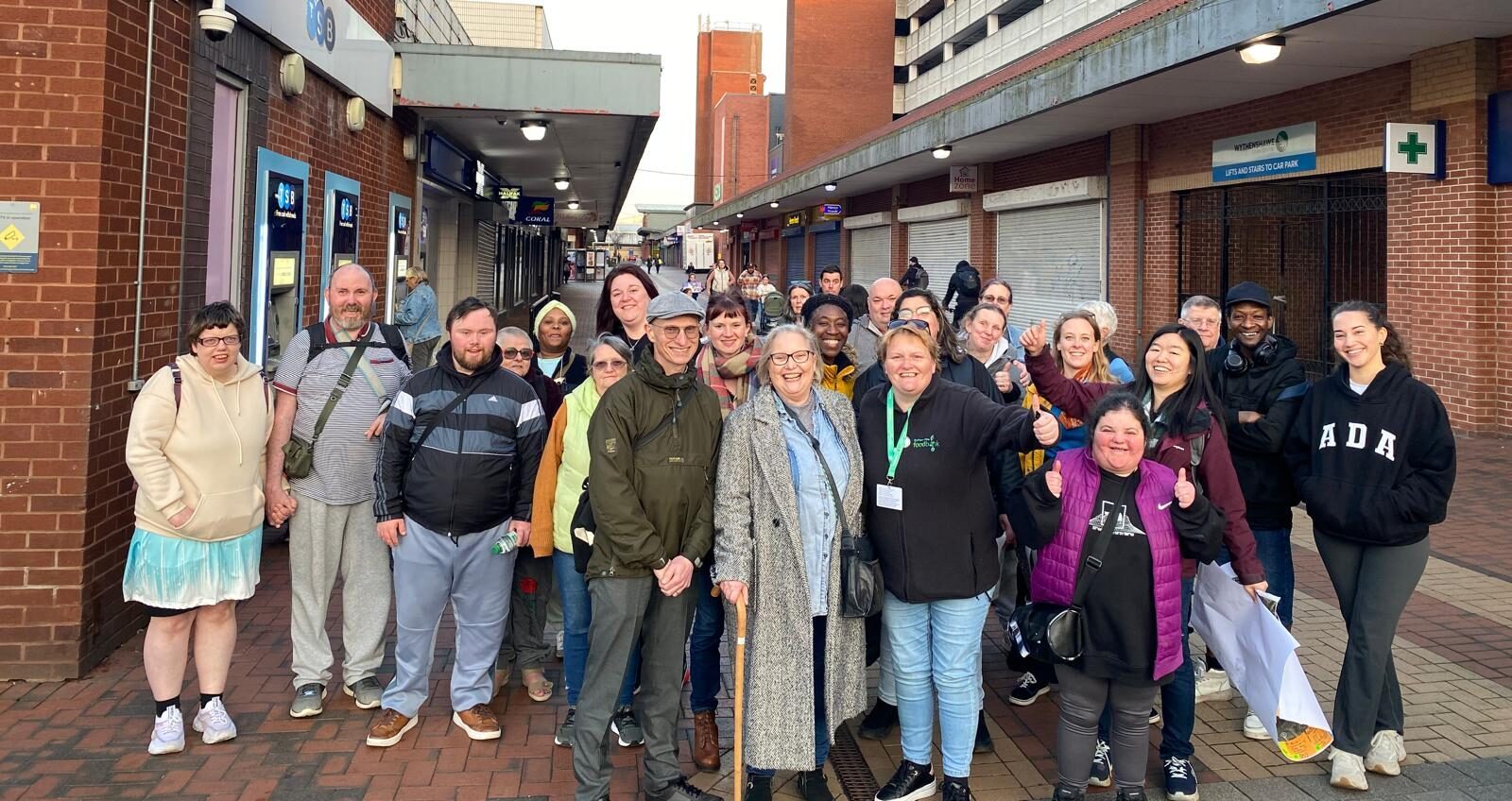
Its a busy time for community action with important changes in motion.
Below, community leaders from North, Central and South Manchester share the priorities they have organised around through the Manchester Social Housing Commission process and to ensure their voices are heard within the draft Local Plan for Manchester – after something called the ‘Regulation 18 consultation’ closed yesterday. We are also working closely with a coalition of groups in Moss Side who are now looking to establish a neighbourhood forum and create their own Neighbourhood Plan!
At the same time in parliament, MPs are debating amendments to the English Devolution and Community Empowerment bill this week that would include: # Establishing a community ownership fund to enable voluntary and community organisations to purchase assets of community value; # Strengthen options for community stewardship of land and assets; and # Introduce a statutory requirement to assess government performance against its duty to provide:
(i) access to a clean and healthy environment;
(ii) access to land or space to play, roam, and swim;
(iii) access to land for food growing;
(iv) the ability to contribute to and challenge decisions made at a local level;
(v) access to, use of, and ability to propose acquisition of assets of community value.
Community Savers are working with @We’reRightHere and @RightsCommunityAction to advance these forms of #CommunityPoweredPolitics nationally; and also amplifying our community voices across the City of Manchester within the consultation process for the new Local Plan in coalition with @SocialHomes4Mcr.
Collyhurst & Miles Platting
Residents, community groups, churches, and projects have been joining together across Ancoats, Collyhurst and Miles Platting since 2019 through Miles Platting Community & Age-friendly Network or ‘MPCAN’. MPCAN launched the Social Homes for Manchester campaign in October 2023 on the site where they were calling for new social rent homes after a net loss of over 500 homes following a PFI-led regeneration gone wrong. They are delighted that social rent homes will now be built on three of the sites they had been calling to have developed for this purpose and to have achieved an increase from 5% social or affordable rents to 21% social rent in city council policy together with the Social Homes for Manchester coalition.
Sue Anya, Miles Platting Savers and St Georges Youth and Community Centre on social rent housing targets:
MPCAN’s priorities also include:
30% social rent homes as a minimum across the 15,000 homes to be delivered in total through the Victoria North development framework in a context of over 4,600 children living in Temporary Accommodation across the city. And a new district centre to be developed at the crossroads between Ancoats, Collyhurst and Miles Platting including:
- A multi-purpose community and social centre, community-led housing, and health and wellbeing joint services centre on the St Cuthberts Church site along the lines of that which was to be delivered under the Miles Platting PFI. Manchester City Council could work with the community and the GM Live Well programme to look at the possibility for a GM Live Well Centre on the St Cuthberts site and help to facilitate NHS partnership for a joint services centre.
- Healthy and affordable food retail is desperately needed in the area with a volunteer run social supermarket the only way for residents of Miles Platting to access healthy nutritious fruit and vegetables without taking two buses to the nearest supermarket.
- Health and wellbeing leisure facilities such as a leisure centre and library to replace that which was demolished.
- Health infrastructure is desperately needed to address rapidly increasing population including GPs surgeries, dental practices, and specialist clinics tailored to local needs.
- Investment in the improvement and protection of green spaces and development of green spaces into active lifestyle zones including through outdoor gyms and community gardens and allotment spaces.
- Improved transport infrastructure to enable older, disabled, and people with long-term conditions or mums with lots of children to easily travel between local locations and to food retail and healthy lifestyle venues.
- To reconsider plans to build on Vauxhall Gardens which is an important heritage site for the local community
- Protection and improvements to existing Gypsies, Travellers and showpeople sites
The Aquarius Community
Tenant organising in the Aquarius estate has a long and rich history dating back to the Hulme Alliance in the 1970s. Most recently Aquarius Tenants and Residents Association, Aquarius Community Savers, Hulme Tenants Union, On Top of the World Project and residents across high rise social housing blocks owned by Guinness Partnership and One Manchester have joined together in their calls to have their neighbourhood recognised as a residential area that is distinct from and requires different forms of planning and housing interventions to the City Centre and Oxford Road Corridor. They are delighted to see their estate has been marked as outside the city centre in the new draft Local Plan but the boundary is currently in the wrong place.
Bernard Sudlow, Aquarius TARA and Aquarius Community Savers, on rezoning the Aquarius estate:
Aquarius tenants and residents and their community associations are also asking for:
- The inclusion of Hopton Court and Cooper House tower blocks within the rezoned Aquarius estate as key residential buildings linked to the estate.
- For a clear policy statement that: ‘all new homes should be safe in relation to the risk of fire; all new homes should have access to natural light; all new homes should demonstrate how they will be resilient to a changing climate; all new homes should be free from unacceptable and intrusive noise and light pollution; all new homes should not contribute to unsafe or illegal levels of indoor or ambient air pollution and must be built to minimise and where possible eliminate, the harmful impacts of air pollution on human health and the environment; and all new homes should be designed to provide year-round thermal comfort for inhabitants’.
- For a policy of at least 30% homes for social rent in all new developments of ten homes or above including a fair proportion of larger family homes not just one and two-bedroom apartments in a context of 4,600 children living in Temporary Accommodation across the city
- For stronger wording on developer contributions in line with the National Planning Policy Framework stating that: “the Council will seek contributions from development. These contributions will be relative to the scale and impact of the development and will ensure that Manchester’s communities are not adversely affected by development.’
- And, for a new policy on Community Involvement from the pre-application stage that gives communities a meaningful influence over the developments that shape their neighbourhoods and determine their health outcomes.
Wythenshawe Central
Diverse Wythenshawe women have been coming together to identify their priorities for poverty action since 2022, initially through the Women of Wythenshawe initiative, which saw community and faith groups taking action for systems change on Domestic Abuse, Housing and SEND. Now, through Wythenshawe Central Network which to date brings together over 130 local residents and 22 community and faith groups for a stronger voice over their needs and priorities for their own neighbourhood.
Mariam Karim, Better Things Ambassador, presented Wythenshawe Central’s priorities to the Manchester Social Housing Commission in December 2024 which have since been further developed and submitted this week as their ‘Regulation 18’ consultation response. Here, Mariam shares on that experience of participating in the Commission process:
Zoe Marlow, emerged from her community leadership roles with Women of Wythenshawe and as Housing Commissioner to be successfully elected as a local ward councillor for Woodhouse Park in September. Here, she speaks about what it was like to represent Wythenshawe Central Network on the housing commission for the preceding 18 months:
Wythenshawe Central Network’s priorities for the Local Plan are principally focused on the Wythenshawe Town Centre redevelopment within which they are calling for:
- At least 600 of all new homes to be for social rent within the Wythenshawe Civic Centre regeneration area to meet genuine local need and to tackle Manchester’s housing crisis.
- A fair proportion of low- and mid-rise, family-friendly social rent housing. This is particularly important given that the first three housing developments will be, in the majority, one and two bedroom apartments.
- Requirement for leasehold and governance arrangements on new retail, leisure, enterprise and community infrastructure/facilities, which can control the cost of these facilities for local residents both in terms of use (entrance fees/tickets etc) and potential hire or lease such as for small businesses and young entrepreneurs from the local area.
- Accountable governance structures for new community facilities to ensure these reflect local priorities and needs long into the future.
- Proactive provisions to protect long-term residents from displacement as investment and housing markets change.
The Local Plan process continues. Next year a second draft of the Local Plan will be published and come out for a Regulation 19 consultation and then there will be an examination in public.
For more information or to get involved please visit https://www.socialhomes4mcr.org.uk/get-involved.
More Stories
Learning from East Marsh
Pride in Place Manchester
Neighbourhood Planning in Hulme
Whose City? Whose Plan? Local Plan Consultation now open
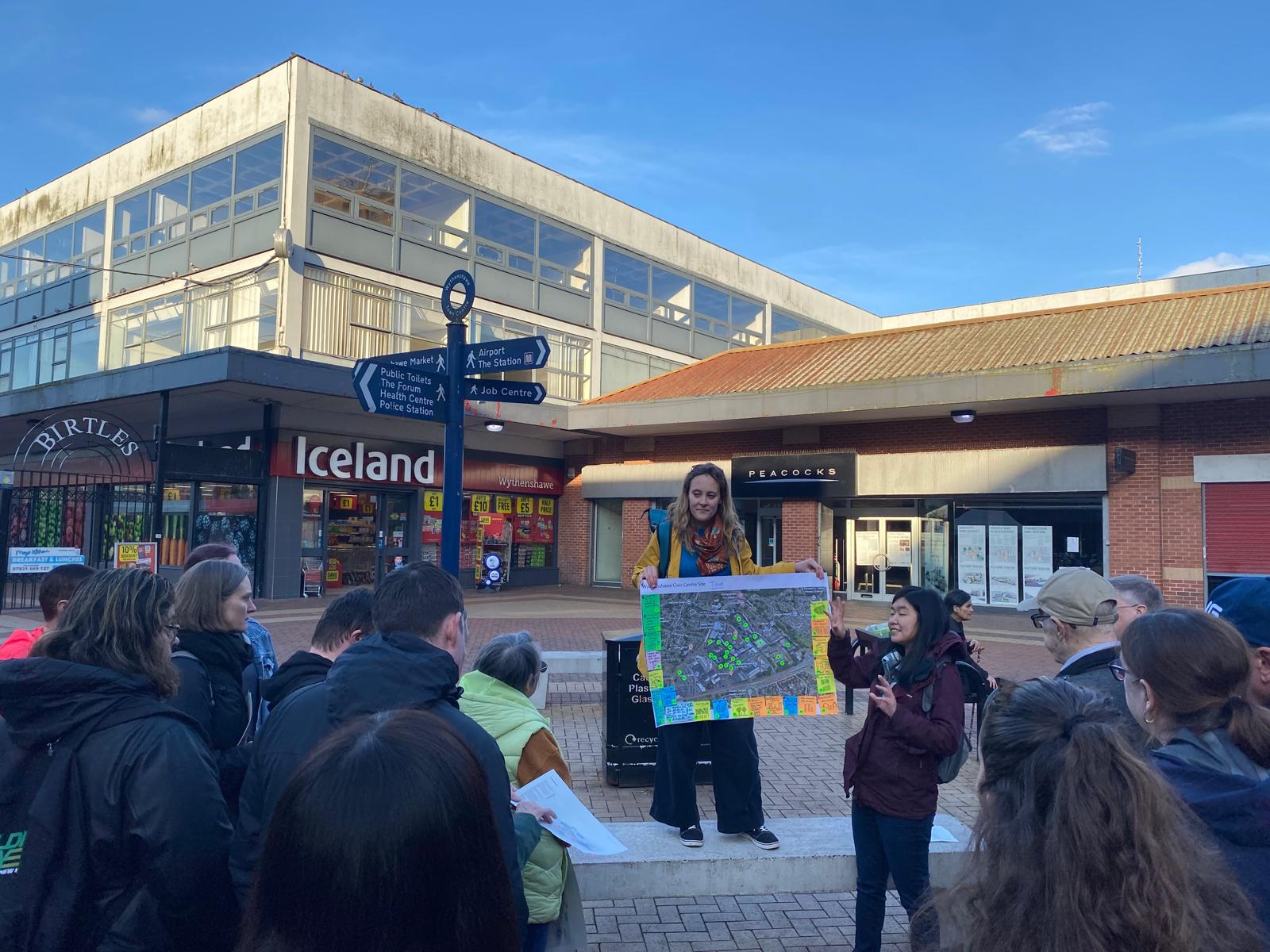
Manchester’s Draft Local Plan out for 10-week consultation
Manchester City Council released their draft Local Plan for a 10-week consultation period on Monday 22nd September. You can access the draft plan with full supporting documentation and submit a consultation response here.
The Council will be holding the following consultation events:
- Wednesday 22nd October, 4pm-7pm – Gorton Hub, 27 Garratt Way, M18 8HE. The hub is on Hyde Road at the junction with Whitewell Way.
- Tuesday 28th October, 4pm-7pm – North City Library, Rochdale Road, Harpurhey, M9 4AF.
- Wednesday 29th October, 3.30pm-7pm – Wythenshawe Forum, Forum Centre, Simonsway, Wythenshawe, M22 5RX.
- Thursday 6th November, 11am-2pm – Central Library, St Peters Square, City Centre, M2 5PD.
- Thursday 6th November, 4pm-7pm – Central Library, St Peters Square, City Centre, M2 5PD.
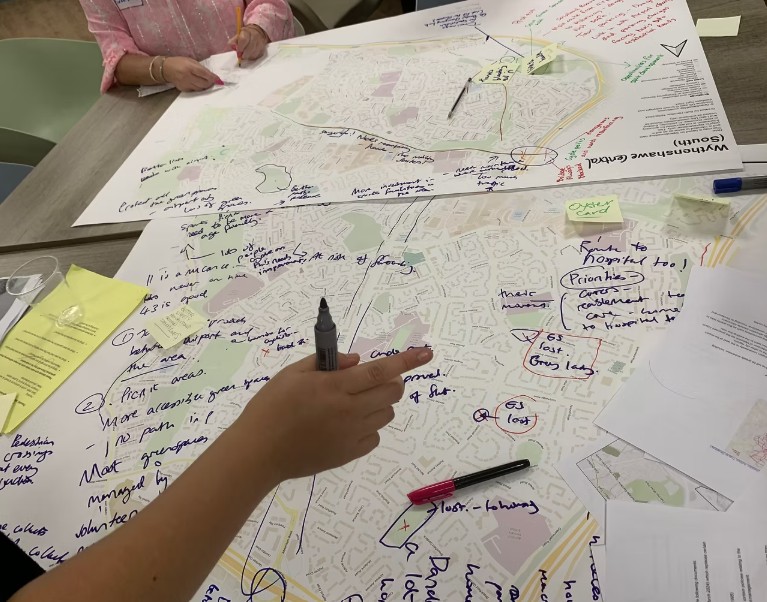
What is the Local Plan? Why should I care?
All Local Authorities must produce a Local Plan. Topics that Local Plans usually cover include housing, employment, green space, and retail. They also identify where development should take place in a city and where development should be restricted.
If you want a say in what can be developed in your local area and the city – you need to know about this!
Local Plans have a long life-span because they take so long to review each time. The last Local Plan in Manchester was published in 2012 and is still the current policy for the city. Some aspects of Planning are still determined by the Unitary Development Plan that was published in 1995!
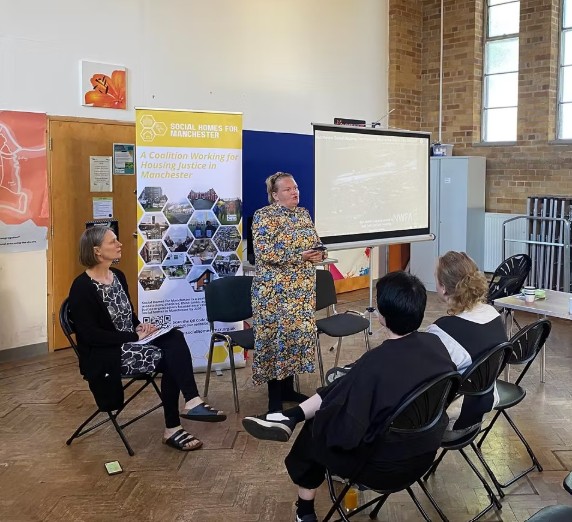
This new Local Plan is likely to continue to shape what kinds of housing (and other facilities) can be developed, and where, for at least the next 10 years.
Why is it so important for Manchester communities to submit a response?
Manchester is at the sharp end of the housing crisis in both availability and affordability. There has been a net loss of more than 16,000 social rent homes to Right to Buy alone since 1979. There are now approximately 20,000 households on the waiting list for a home in Manchester. From 2015 to 2023, the city experienced an 84% increase in the average house price paid and a 61% increase in the average monthly private rent (much higher than the England average). These increases far exceed the 18.7% growth in median hourly earnings in Manchester over the same period, contributing to a situation where 1 in 5 households in Manchester are living in fuel poverty.
While the new Local Plan does introduce some welcome increased targets for affordable housing and housing for social rent, it does not go far enough to address the housing crisis amidst a supportive national and city-regional political and funding environment where £39 billion has been invested in affordable and social housing of which SH4M have learned that approximately £2.5 billion will be invested in Greater Manchester.
It is also important to submit any objections to the plan now to be able to participate in later stages of the decision-making process. The process for passing the Local Plan into policy has several stages. After this initial consultation (called a Regulation 18 consultation) there will be a second version published which will also go out for consultation (a Regulation 19 consultation). Then there will be an Examination in Public.
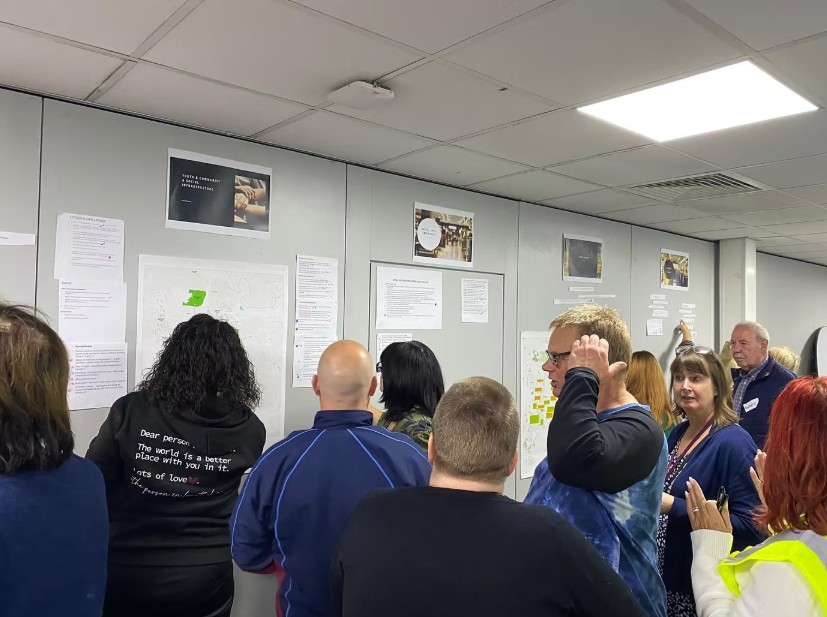
This is a chance for community representatives to address the national Planning Inspector directly at a public event. Only those who have submitted objections during earlier stages of the process will have the right to attend and speak at the public examination of the plan.
At the end of the process, the Inspector will make a recommendation on the Main Modifications required for the Local Plan to pass inspection and be adopted.
As an example, you can view clips from Days 1-5 of an examination of York City Council’s Local Plan from 2018 here. Notice all the white men in suits? This is not what we want to see in Manchester!
But what can I do, really?
This can all feel very technical. You have the power to work together with others and your local councillors to advocate for your community’s priorities for your own local area and for the city. SH4M can help.
Residents and community groups are coming together across the city, within their own neighbourhoods, and to join forces across neighbourhood boundaries, to share their priorities for the homes, communities, and the city they want to live in and co-create.
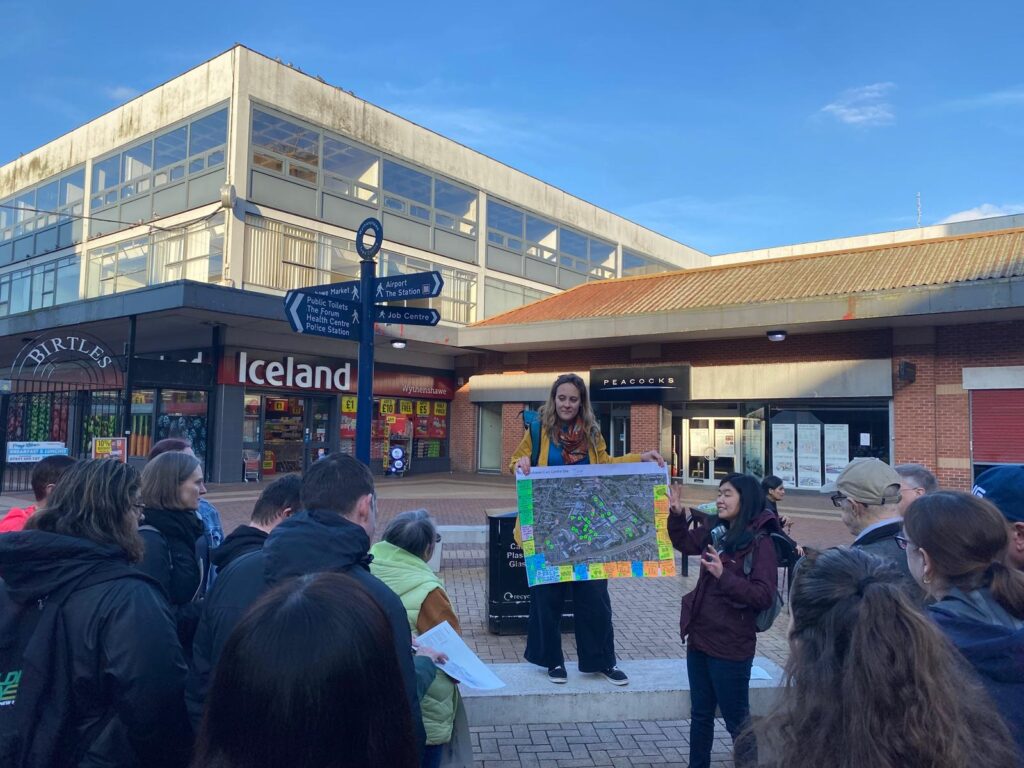
SH4M’s headline request is for Manchester City Council to include a minimum target of 30% social rent in all new housing developments of ten homes or more in the Local Plan. Research evidence tells us this is the minimum amount we need to address the housing crisis. This is possible to do. Other similar cities are setting targets of 40% and 50% social rent.
Here are some suggestions for how you can get involved and advance your own local priorities:
1. Join the campaign: you will receive information, calls to action, and updates on the process.
2. Invite us to run a workshop in your local area: socialhomes4mcr@gmail.com.
3. Engage your ward councillors: they may be interested to work with you to organise a local meeting to discuss priorities for your local area and represent these through a submission to the Local Plan Consultation when it opens.
4. Submit a response to the Local Plan consultation when it opens. There is more information on the MCC website here: https://tinyurl.com/2h7hc46c.
We will be publishing our own local plan consultation response on here soon. If you are signed up to the mailing list we will share this with you in case you would like to support similar asks in your own response.
More Stories
Learning from East Marsh
Pride in Place Manchester
Neighbourhood Planning in Hulme
Wythenshawe Central Network – Summer 2025 update
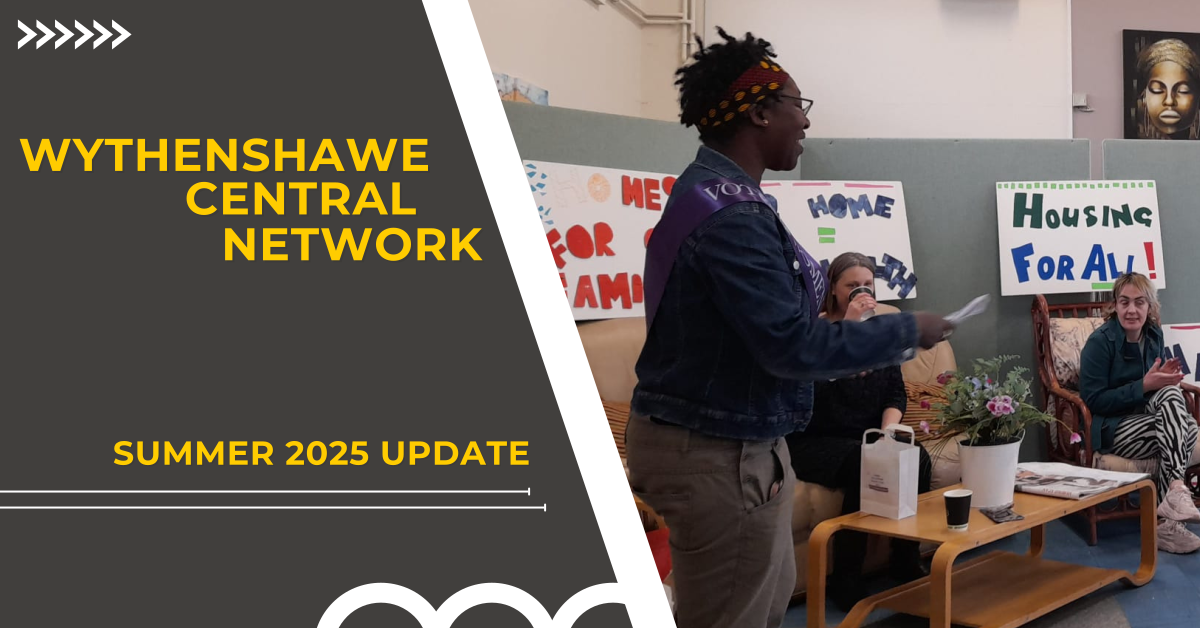
Wythenshawe Central Network (WCN) is a women-led neighbourhood forum, constituted in July 2024 to bring together residents and groups to develop a stronger, collective voice on local issues in Wythenshawe. WCN recently affiliated with Community Savers, and includes Dandelion Savers and Mums Mart amongst its membership.
WCN is a legacy of Women of Wythenshawe (WOW) – a three year women-led community action initiative focused on achieving place-based systems change on gendered poverty, funded by the Smallwood Trust. Diverse women’s groups from across the Wythenshawe area joined together to identify the most pervasive issues holding women in poverty locally. Leaders achieved impressive impacts on a range of issues including addressing the crisis in housing, special educational needs, and domestic abuse provision. Women’s groups identified the redevelopment of Wythenshawe Town Centre as a critical moment to ensure that the priorities of women, families and young people, including those with learning disabilities, are put at the heart of local decision-making.
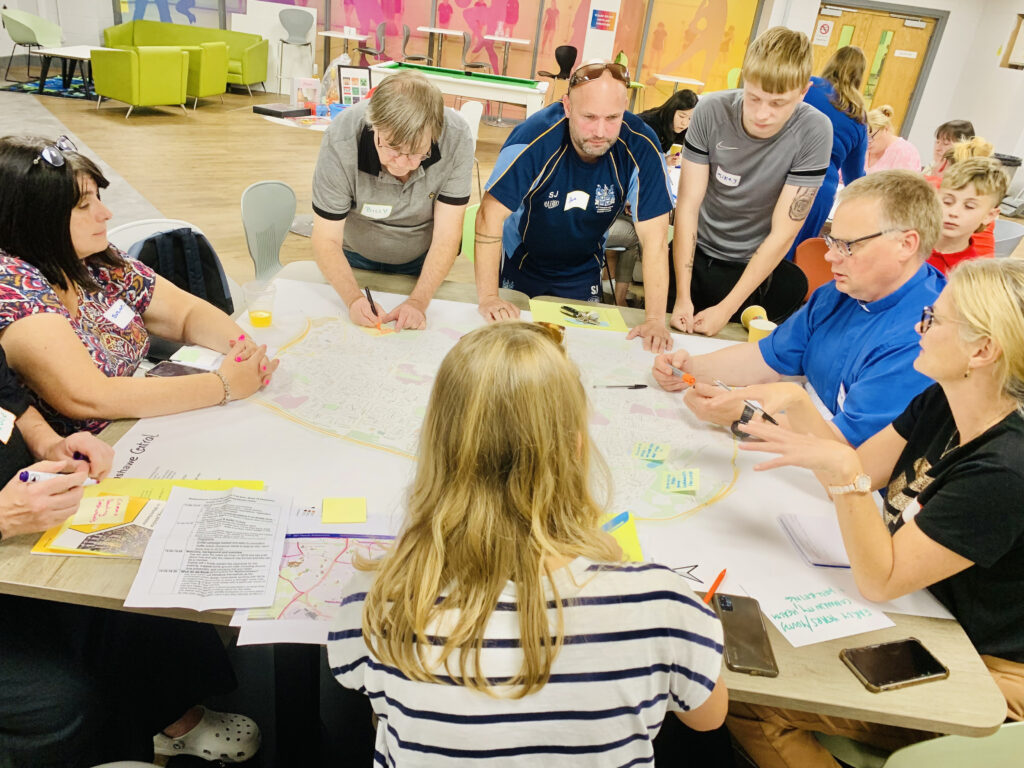
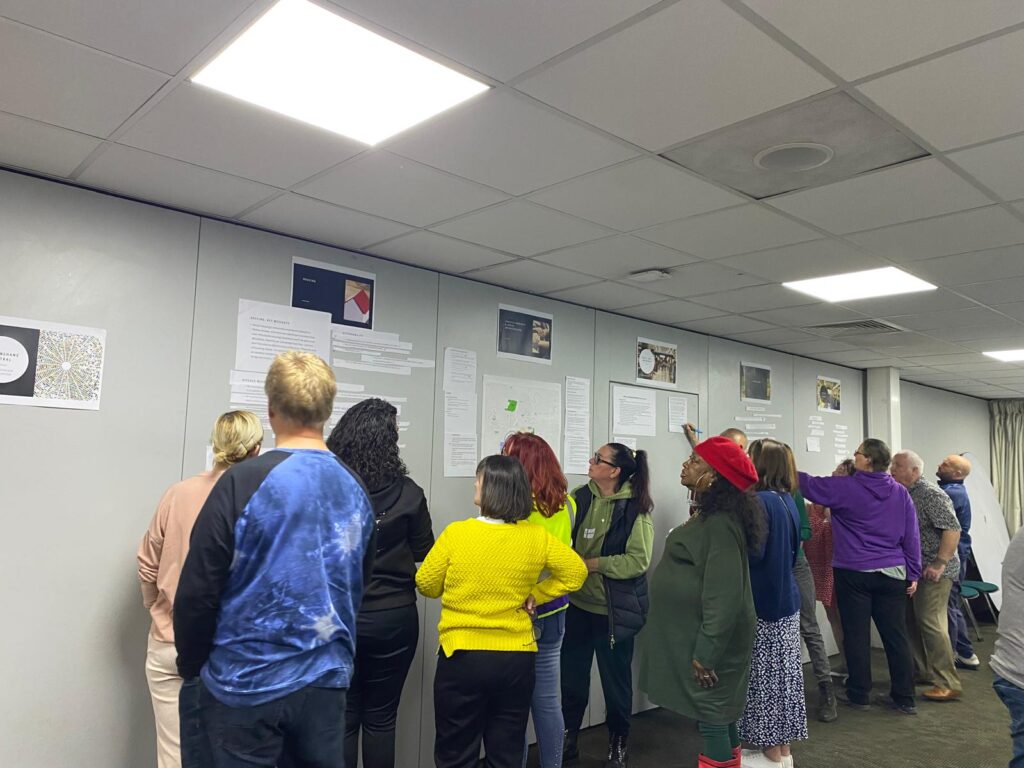
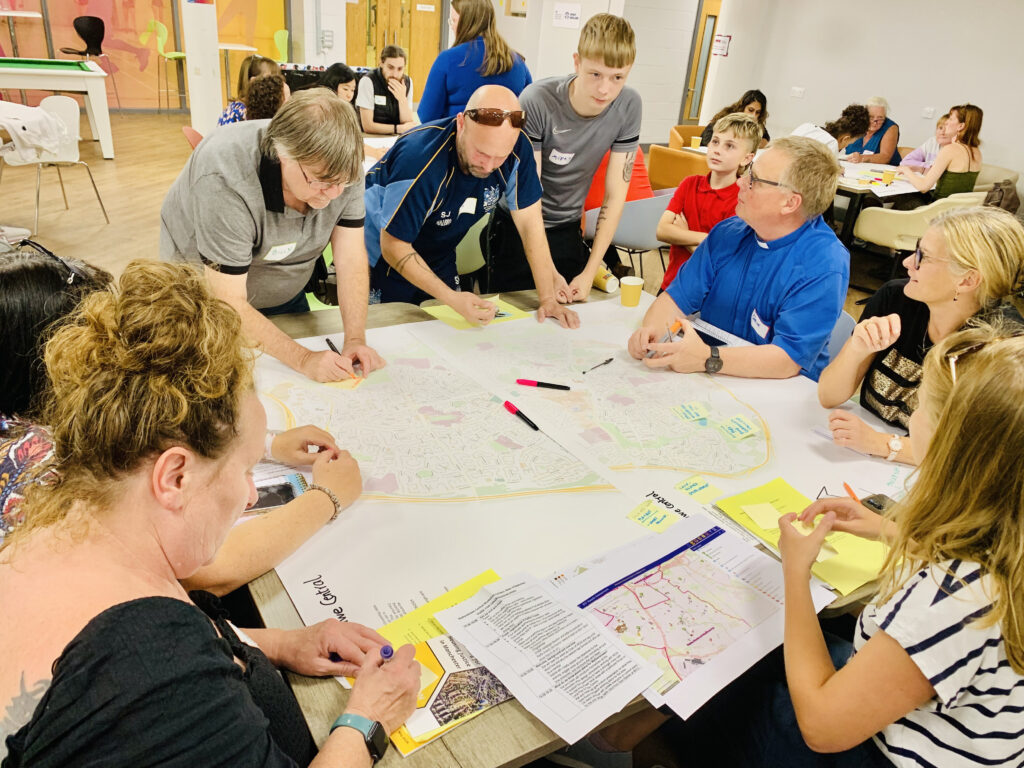
From September to November 2024, WCN held three community workshops inviting residents to have open discussions and share their views. These were some of the top priorities:
- Maximise the percentage of social rent homes with provision for a diverse range of tenants, including people with disabilities, older people, overcrowded families requiring larger 3- and 4-bed homes, and women & children fleeing domestic abuse.
- Increase the availability and maintenance of better quality & accessible green spaces
- Affordable retail and leisure facilities & capped rental prices for local businesses
- Training, apprenticeships and job opportunities for young people
- A community transport system and increased parking spaces
- Increased health, welfare and social care provision to match the increased population
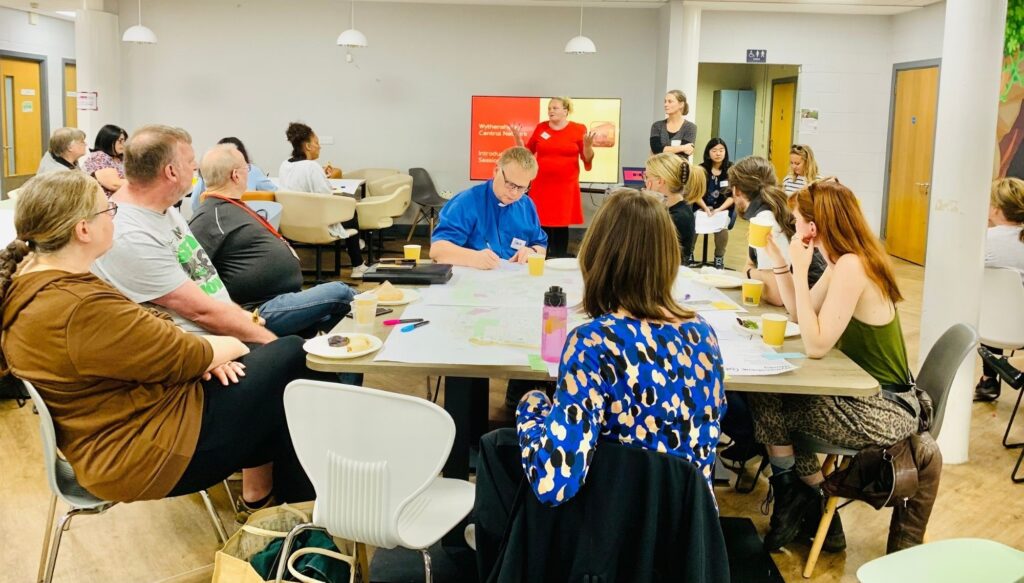
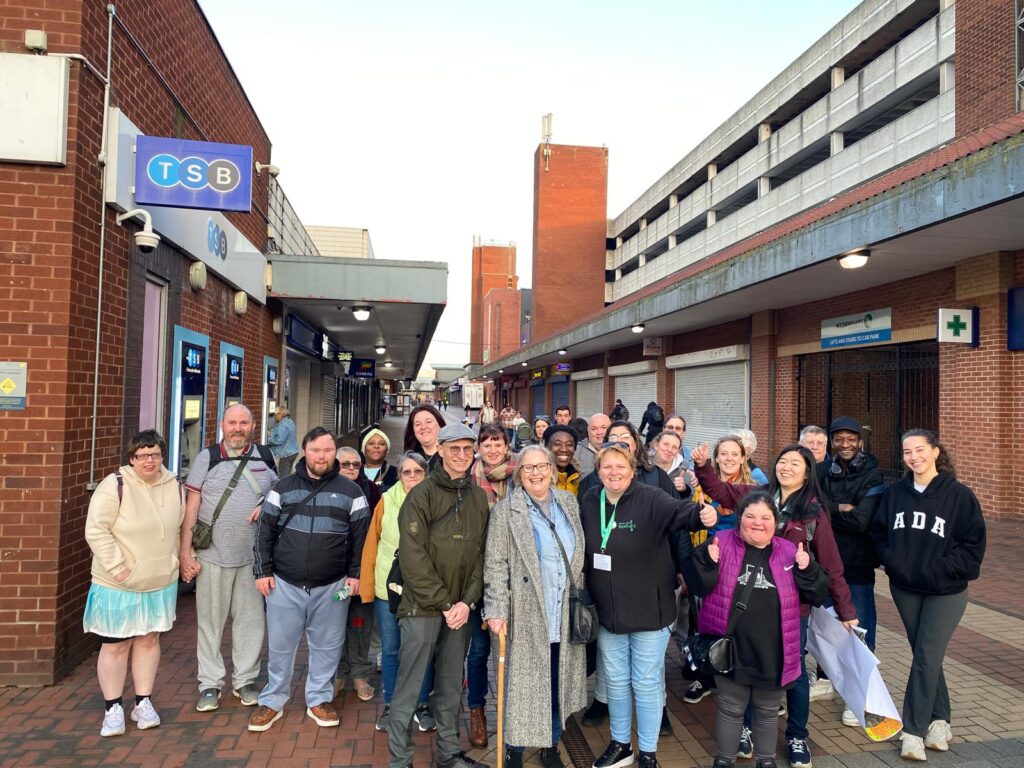
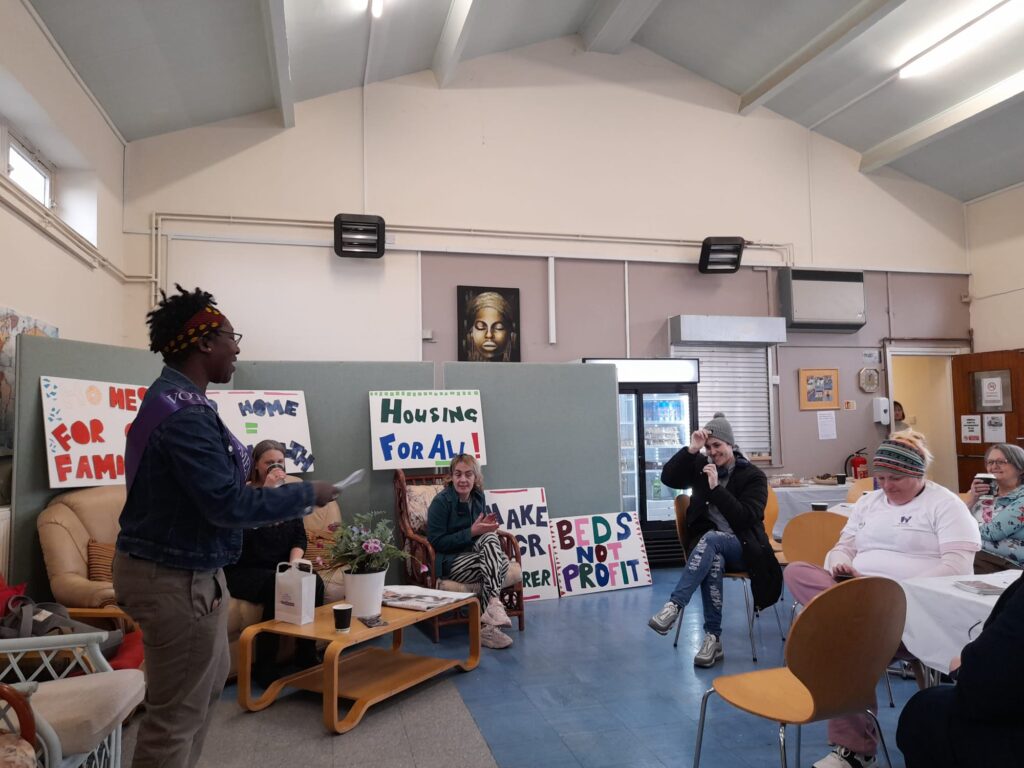
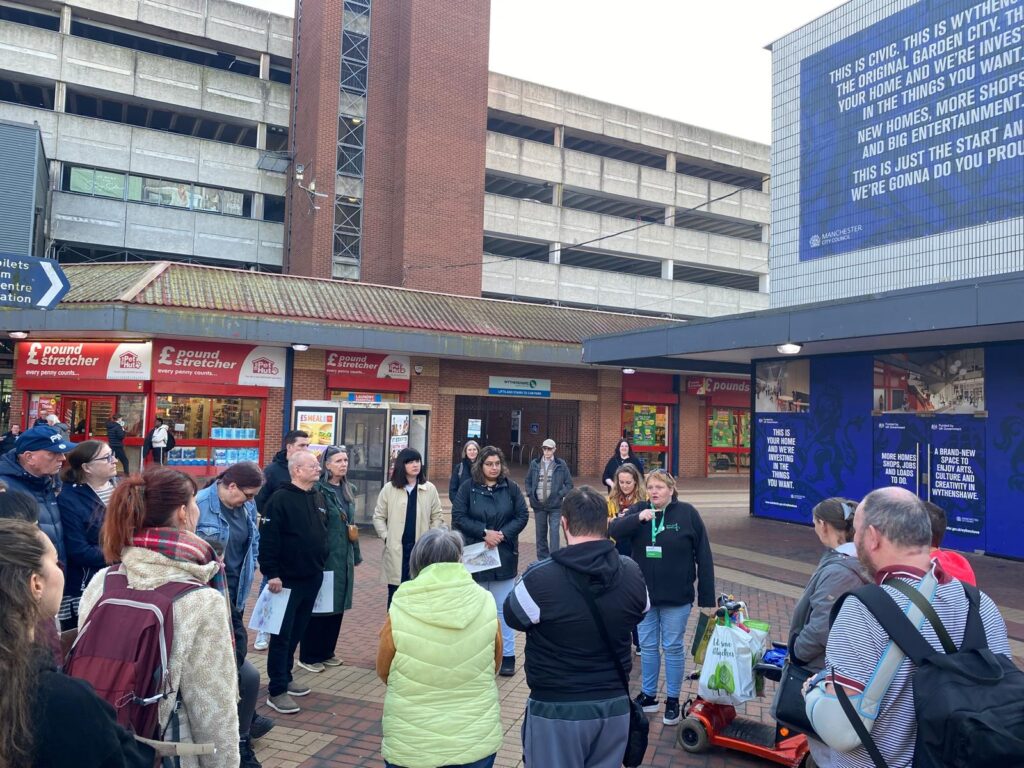
Manchester City Council and the appointed developer MUSE have agreed to meet with WCN leaders in August to listen to their priorities, including for a more inclusive and participatory development process. WCN members are working with urban design consultants to better understand how the development process works and advocate for meaningful community influence.
Wythenshawe Central Network now represents over 20 resident-led and user-led community groups and more than 100 local residents. And they are also working in alliance with Churches Together Wythenshawe who have 15 churches in their membership. WCN are committed to ensuring women, families and young people are at the heart of local plans, and people of all gender-identities and backgrounds are encouraged to get involved. Membership is open to all residents, groups and projects living, working or running activities in the Wythenshawe Central area – please email wythenshawecentral@gmail.com to find out more or if you wish to become a member. You can also sign up to the mailing list to keep informed about upcoming workshops and events.
More Stories
Learning from East Marsh
Pride in Place Manchester