





Social Homes for Miles Platting Now!
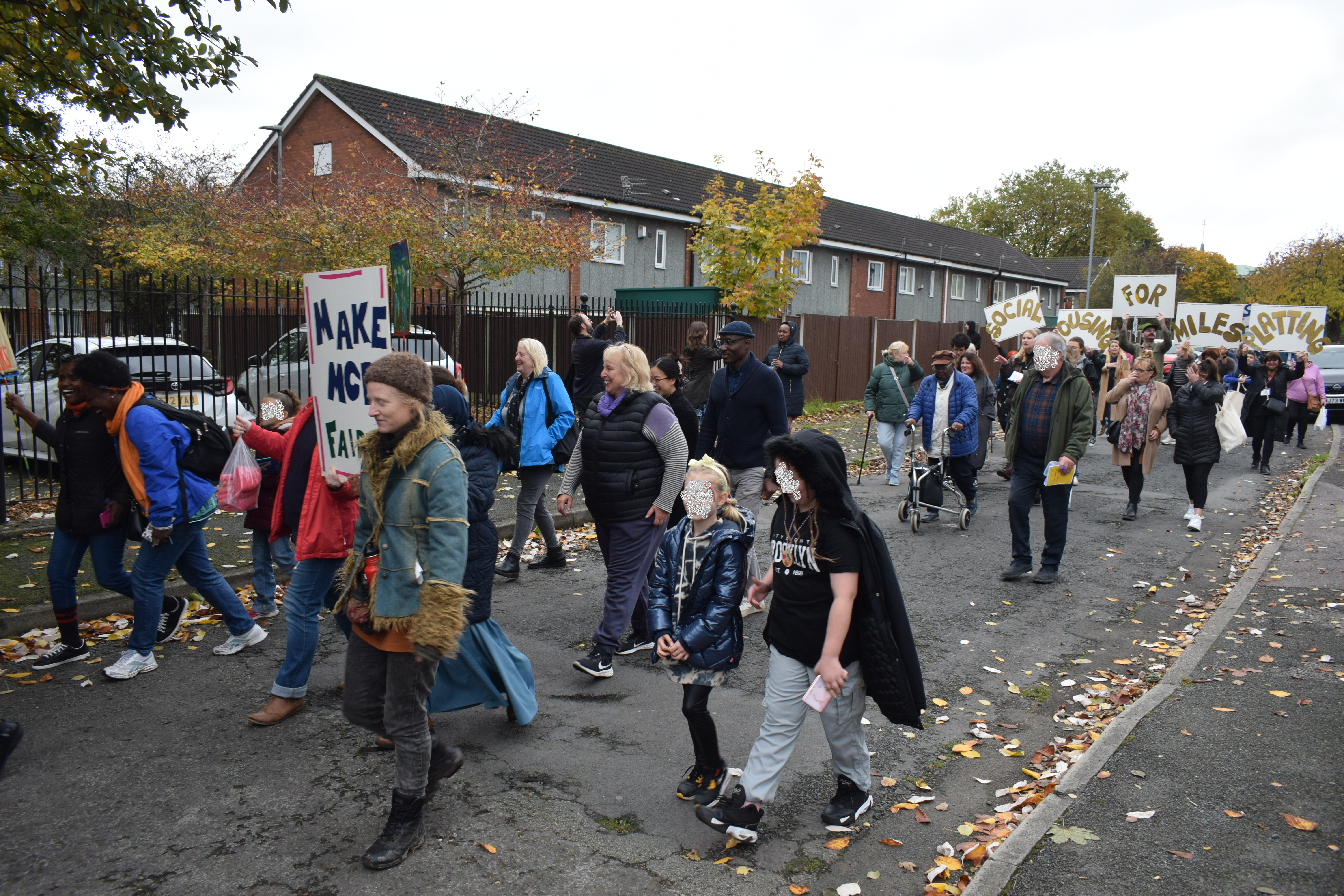
Miles Platting, Ancoats, and Collyhurst residents were out in force on Saturday to call for social homes to be built on a plot of land that has long been earmarked for community benefit.
Over 180 people attended the MPCAN family fun day where members also launched a city-wide campaign for more social homes to be built or brought into use across Manchester amidst a housing crisis in which more than 15,000 households are now on the waiting list for social housing in the city[1].
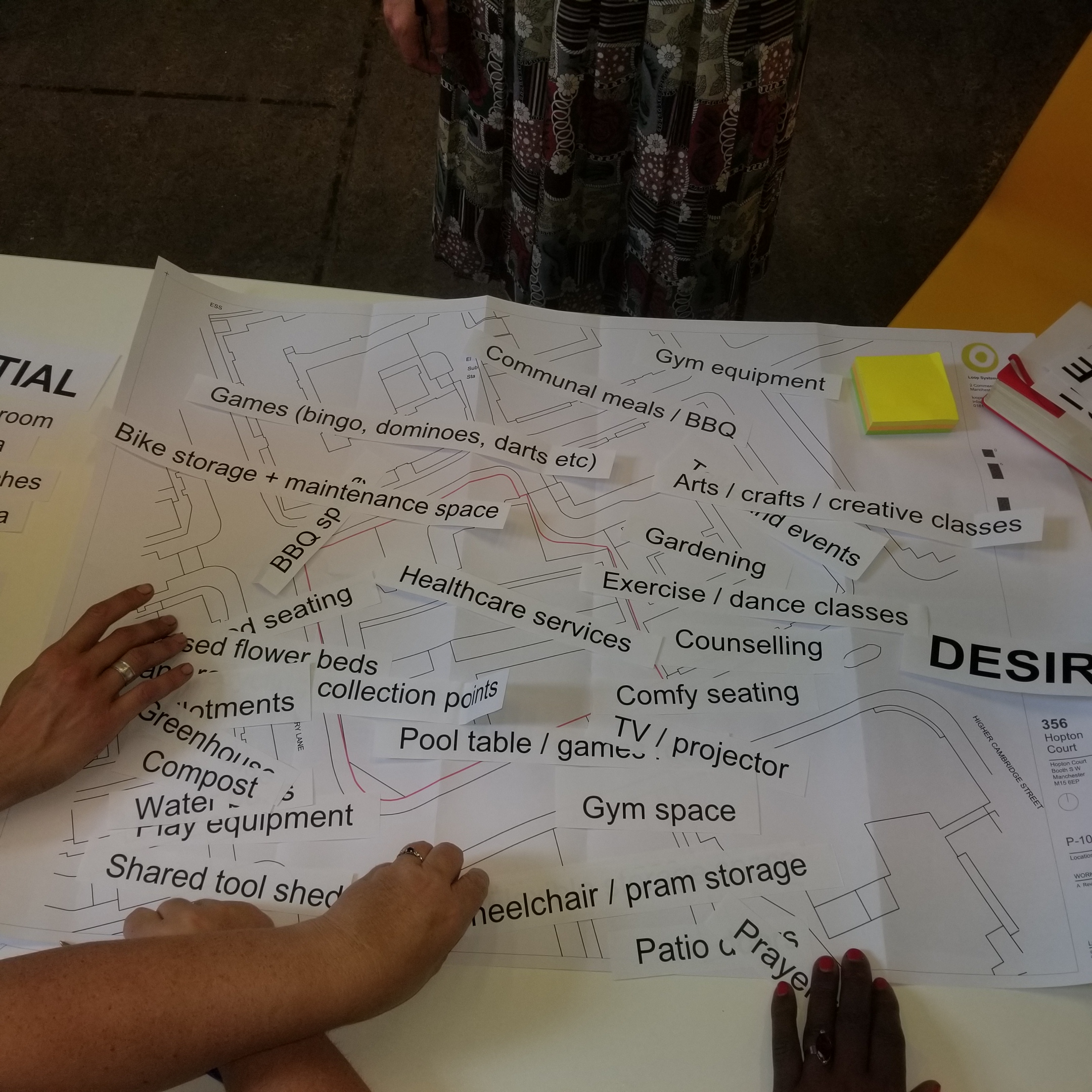
The Miles Platting PFI regeneration was justified to residents on the basis that there would be a Joint Services Centre providing a suite of NHS services and a Community Hub built at the intersection of Oldham Road and Varley Street behind the current location of Jigsaw Homes offices. This is the site where MPCAN leaders are calling for social homes to be constructed.

The Joint Services Centre was to include three GP practices; a pharmacy; chronic disease management, maternity and children’s health services; drugs misuse and sexual health services; counselling and therapy services; and breast screening and minor surgery. The Community Hub was supposed to incorporate: a new library; new sports facilities; advice and information; services for young people; spaces for community, recreation; and leisure use; and community outreach services.
There was also supposed to be retail facilities and a replacement swimming pool.
These facilities were never developed, and the community have experienced a net loss of 502 social homes following the regeneration (with 240 homes lost to demolition and others through right to buy). Meanwhile, the neighbourhood has been transformed into a landscape of private housing for sale and rent, with no shops or infrastructure to support this new population, creating a food desert, where residents must take two buses to access a supermarket or swimming pool.
Social Homes for Manchester Now!
As well as calling for social homes in Miles Platting, residents launched the Social Homes for Manchester Now! campaign by a coalition of social and climate justice organisations including Friends of the Earth Manchester, GM Tenants Union, Greater Together Manchester, Mustard Tree, Shelter, and Steady State Manchester.
The new spatial framework for Greater Manchester, Places for Everyone, is in the final stage of consultation on modifications which include the removal of specific reference to building social housing (in MM7.5). The new Local Plan for Manchester is being drafted and is expected to be published for consultation in Spring/Summer 2024. Together these policies will decide Manchester’s planning strategy and housing targets for the next 5-10 years.
Social Homes for Manchester Now! are calling on Manchester City Council to take on six key proposals in the context of these new strategic developments which were launched for the first time by Anne Worthington, MPCAN leader and local activist, on Saturday:
Social Homes for Manchester Now! – Six key proposals:
- At least 30% social homes to be included in all new developments of over 10 units to be enacted in local policy and enforced through the setting and enforcement of section 106 obligations.
- Stronger public accountability and scrutiny for the setting and enforcement of developer obligations to build new social housing.
- Establish a Commission on Social Housing for the City of Manchester.
- Create a specific policy for the promotion of Community Led Housing.
- Develop a practical strategy for the renovation/transfer of empty homes into homes for social rent.
- Ensure all new developments are climate and nature friendly.
Download the Social Homes For Manchester Now! briefing to find out how you can Get Involved in this campaign!
Respond to the Places for Everyone Modifications consultation to object to the removal of specific reference to Social Housing in modification MM7.5 here.
MPCAN leaders are now working with other Community Savers affiliates across the city to bring residents together around this campaign and the plots of land in their own neighbourhoods that require Social Homes Now!
[1] There were 14,912 households on the social housing waiting list in Manchester in 2022 and this figure is now likely to be significantly higher. Live tables on rents, lettings and tenancies, Table 600: numbers of households on local authorities’ housing waiting lists, found at https://www.gov.uk/government/statistical-data-sets/live-tables-on-rents-lettings-and-tenancies. We would like to thank Dr Richard Goulding, University of Sheffield, for his support to MPCAN in accessing statistics, research, and information.
More Stories
Learning from East Marsh
Pride in Place Manchester
Neighbourhood Planning in Hulme
Introducing…
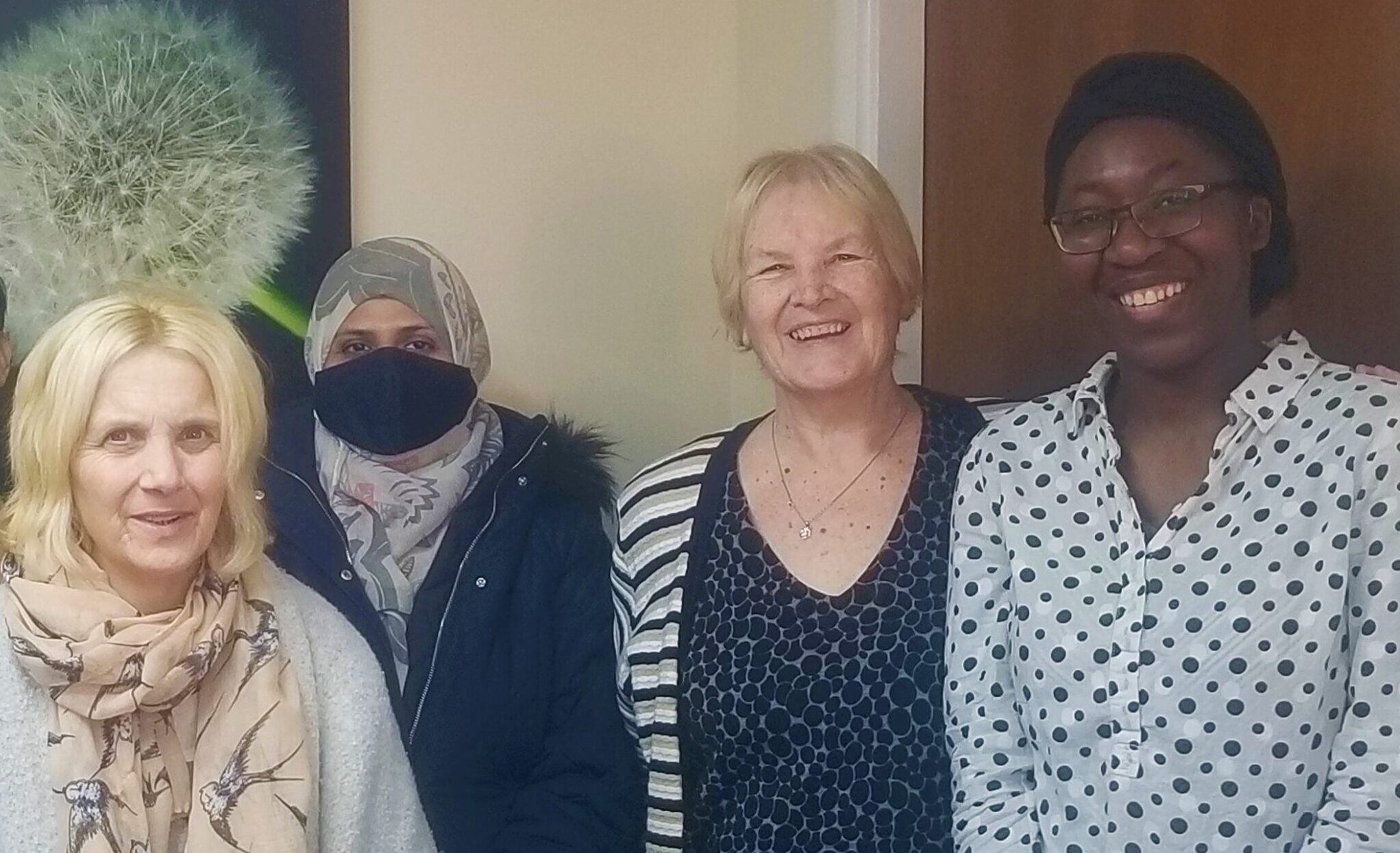
CLASS is delighted to have been able to develop our staff team throughout 2023! We welcomed Kate Parsons, our new Operations Manager, in March, and Fathima Naseer the new Women of Wythenshawe Admin Assistant in July; while our brilliant intern Ieva Pojuner was promoted to Neighbourhood Networks Coordinator in September. We asked Fathima, who is also Treasurer at Dandelion Savers (header image), and Kate (below), to share a few words about themselves, and their experience of joining the CLASS team and working with Community Savers and WoW…
Fathima:
Getting a job with CLASS and Women of Wythenshawe has been very emotional for me!
I came to the UK from Sri Lanka in 2011 with my family, and for a long time I was just at home being a housewife and mum. I had never worked in my life and I was always at home, but during COVID I saw a message from The Dandelion Community saying they needed volunteers. I texted them and Rev. Kate Gray from Dandelion asked me to come in the same day. So that’s when I started volunteering for 3 years at Dandelion foodbank.
Over time, I was able to take on more responsibility with the Foodbank, and I started managing the food bank vouchers and paperwork. Kate asked me, ‘what kind of job would you like if you could have a job?’ I said ‘paperwork – that’s what I like doing’, and she said ‘that’s called admin work’, – so that’s when I knew what it was called!
Then at Dandelion in January, we started up a new group called Dandelion Savers and this was really helpful for me because I didn’t ever use money before, my husband managed all the finances and looked after everything very well.
Since I became Treasurer at Dandelion Savers it was so good for me because I learned how to use money, how to manage money, going to the post office and using an ATM – I had never used those things, or even at the shops, or going on the bus, I had never used money. I never travelled on my own!
So, I have learned so much, and then this year, I was so pleased to get a job as Admin Assistant supporting the Women of Wythenshawe network!
The first two months have been really interesting: I have learned many new things and I am learning more every day. I had a bit of anxiety about some things like making bookings and sending emails but then I do it and that gets easier because I am just doing it. And I am talking to people on the phone all the time. I am still worried about doing meeting minutes but the other staff at CLASS are helping me learn this new skill.
It’s unbelievable to me, I thought I was never going to work in my life I thought I would be a housewife for ever! But my children started asking me questions like “mum, why do you not go to college; why are you not working?” They see their friends’ mums working so they wonder. And now, I give them £10 from my salary as pocket money and it makes me so happy! And they are already good savers – they save £5 for savings, £5 for snacks!
Kate:

After seven years of working at a mental health charity in an operations role I was looking for a
new challenge. A colleague recommended that I look at the role at CLASS and I read with
interest about the background of how the organisation had begun. The idea that these
groups are formed and driven from the ground up really appealed to me. Co-production is a
much talked of activity but few organisations achieve it. CLASS and Community Savers are doing an excellent job of working together to collaboratively create and strengthen groups and networks
that are representing community priorities and needs and with mutual respect are delivering
successful outcomes.
Since starting in my role as Operations Manager at the beginning of March 2023, I have met all the affiliated Community Savers groups and networks and have been impressed with their commitment to improving their communities and raising awareness of issues they have identified as important for their areas. Reflecting on my first six months in post, I have learned a lot from an amazing team of leaders who are addressing an impressive range of issues including housing, climate change, the cost of living and surviving on a low income. Their projects include the development of community hubs, green spaces, food banks and crisis funds. Women-led groups come together to share their knowledge and skills to make improvements that have an important impact in their local communities.
I have attended meetings where people have spoken passionately about wanting to help others and bring about the change that they want to see. After attending the annual retreat in July this year, I can really see the power that comes from bringing people together with similar aims to support and uplift each other. The network is stronger together and the support and skills offered are impressive. The wide range of activities is exciting and I am looking forward to the opportunity of supporting the leadership with their aims and objectives in the months ahead.
More Stories
Learning from East Marsh
Pride in Place Manchester
Neighbourhood Planning in Hulme
GM Green Spaces Fund invests in Miles Platting Climate Action!

Over £400,000 has been awarded to 16 community-led projects in the latest round of the Greater Manchester Green Spaces Fund. Successful projects are providing access to better green space where it is needed most.
Miles Platting Community and Age Friendly Network (a Community Savers affiliate) are delighted to be one of the Round 3 grantees for their work to develop a wildlife corridor with support from Dr Jenna Ashton at the University of Manchester and a range of other partners:
“The Miles Platting Wildlife Corridor for people and nature will enhance identified spaces and create new habitats in the neighbourhoods of Miles Platting, Manchester. The aim is to improve biodiversity and the local ecosystem, increase interaction and connection between residents and their natural environment, mitigate impacts of climate change, and encourage physical activity between sites and along the Rochdale Canal.” (GMEF, 1Sept 2023)
Community groups who haven’t previously received funding can still apply for support from the Green Spaces Fund, with Round 4 now open.
Mayor of Greater Manchester, Andy Burnham, said:
“Everyone should have access to quality green space and the benefits that it offers our physical and mental health, but the reality is that some areas of Greater Manchester are worse off than others at present.
“That’s why I’m so pleased to welcome the latest intake of Green Spaces Fund projects, all of which seek to redress the balance. I continue to be amazed by the imagination and endeavour shown by community groups applying for support from fund – from green-fingered growers to champions of biodiversity, the projects that we have been able to back so far are really making a difference to their local areas.
“There’s still time to get backing from the fund, so if you have an idea for how to turn your local area green please do apply and help us make Greater Manchester a greener, fairer place.”
Read the full press release here.
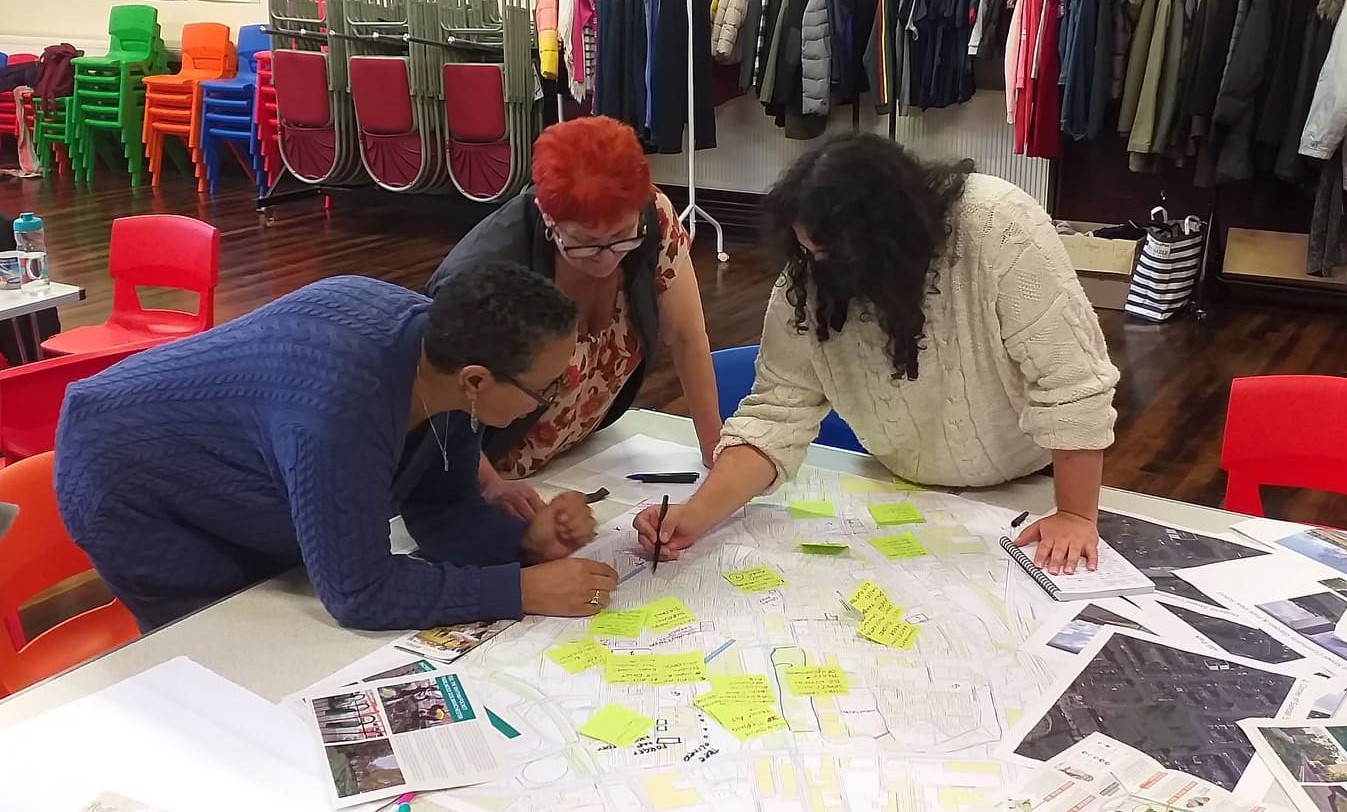
Miles Platting Community and Age-friendly Network (MPCAN) established their Climate Action Group after community leaders came together with support from CLASS and URBED to map public and disused sites across their neighbourhood that was not yet earmarked for development and to create a shared vision for the future of the area in consultation with local residents.
Since then, leaders have identified a series of priorities including:
- the protection and improvement of green spaces and habitat creation for increased biodiversity;
- a community-led redevelopment of the St Cuthberts church site into a worship space and community hub in partnership with the Parochial Church Council.
- increasing the number of social homes available in the area after successive developments and a PFI regeneration programme left the community with a net loss of approximately 500 social homes.
Visit www.mpcan.org.uk to find out more and get involved!
Header image: “Swallows” by A Bird in the Hand Theatre at MPCAN’s climate resilience pageant in July 2023.
More Stories
Learning from East Marsh
Pride in Place Manchester
Neighbourhood Planning in Hulme
Ageing Well in Place at Hopton Court: Achievements and challenges
Tina Cribbin and Gill Edwards from Aquarius Community Savers reflect together on the rollercoaster ride of developing a pilot Naturally Occurring Retirement Community at Hopton Court tower block in Hulme, a video clip of Roy Bennett sharing achievements to date in April 2023 is also included.
Tina Cribbin:
“Cycles of HOPE, confusion, frustration, and anger, HOPE. Repeat. That’s been my experience of developing the Naturally Occurring Retirement Community (NORC) model in Hulme. Never in my life have I ever heard so many professionals play dumb, “I don’t know! “I will take that away”, “I was never made aware of that”. Or just tell lies: “there was never any agreement on that”, “we had to turn it around quickly so there was no time to consult”.
The NORC model improves the quality of life and wellbeing of older people in tower blocks reducing the need for older people to be moved into different accommodation in later life. This has been an issue I have campaigned on for years but got no joy. It originated in New York and has also been done in other parts of the US and Canada. New York has undergone gentrification on a huge scale for many years and the NORC model has proved successful in older people maintaining their homes and ageing well in place. This is the first time anyone has adapted it in the UK.
In 2019, we joined Community Savers and started working with CLASS. CLASS is a small charity which supports groups affiliated to the Community Savers network. CLASS is led by, for and with women leaders of the network. They worked with us to recognise how important our voices are and what we contribute to our community. They supported us in ensuring local people were not only privy to information but also that we were instrumental in decision making. CLASS is our ally and we have learned that it is near impossible to make change without working collectively. No matter how hard it is. It’s the only way forward.
We established a partnership called Ageing Well in Place in Hulme looking at the needs of older tower block tenants in our neighbourhood. We have undertaken community research, door knocking, BBQs, drop ins, workshops, taught at universities. We have undertaken community exchanges and some of us have been lucky enough to travel to Africa! Endless meetings, meetings, and more meetings…!

In March 2021, One Manchester agreed to work with us to adapt the NORC model for our tower block, Hopton Court. Think of the “batteries not included” film. Hopton is a bit like that.
My understanding of NORC is a way of working with older tenants living in tower blocks. Tower block living is quite isolating and tenants have a set of very unique issues which needs a flexible and responsive approach which is inclusive towards the community it sits in.
Bringing this concept to us and other professionals is difficult. Many were unsure exactly what the NORC is. Rightly so, it is complex because it is about co-production and not always pre-determining the outcomes – letting them come out of the partnership work. The NORC model is adaptable, flexible, with constantly shifting priorities that ebb and flow depending on need. Its messy but that reflects the real lives of the people and the community.
Working with partners at the two universities, One Manchester, CLASS, and tenants, the first urgent need that was agreed was for an Independent Living Advisor. Manchester Local Care Organisation and One Manchester provided the funding for her role as a pilot for a year. Katie had a huge impact on the Hopton community people were getting the right benefits (pension credits is one of the most underclaimed), aids and adaptations, repairs in the block were now being delivered promptly, health and care workers were able to access their patients. Older people’s lives were being transformed. Unfortunately, a major restructure at One Manchester meant there was no-one leading on the project for six months and they missed the opportunity to apply for further funding for her role. She had her contract terminated after a year. What a bitter blow – the tenants were devastated.
We are still negotiating for One Manchester to fundraise through our partnership to finance a new Independent Living Adviser role but we have lost Katie now and all the relationships of trust she built up over a whole year of working with the tenants.
We have learned that no matter what they throw at us WE FIGHT BACK. We are a community under siege (on the edge of Manchester city centre and two constantly expanding universities) and understand how difficult it is to live with constant pressure. We’ve learned that pressure works both ways.
We now have a NORC development worker and community researcher who work at the block ensuring that the project is rolled out in partnership with tenants and ensuring decisions are informed by tenants. They have already undertaken research with tenants to determine the design and uses of our new community space. They are improving the lives of older people by holding weekly activities and providing support. Since they became employed, there is definitely a renewed energy about the place.
At times I got so lost in meetings, workshops, partnership agreements, I lost sight of why I was doing it.
I returned to Hopton every day and seeing the changes big and small keeps me grounded.
For anyone thinking about working in tower blocks: Just do it! All of this sounds so huge. But we started with a cup of tea. And that still remains one of the most important things we do. Being beside people combating isolation a brew at a time.
People think that you have to start at the top getting written agreements and permission: you don’t! Its why it’s worked in Hopton – as it comes from the ground up. We didn’t ask permission to start. We just did. The biggest thing I have learned is that PEOPLE DON’T GIVE YOU POWER, YOU TAKE IT.
My amazing sister Activist Gillian Edwards will share her thoughts on the community space.”
Gill Edwards:
“Yay we got the community space!”
“We have been through so many ups and downs with regards to the community space. We started out doing some research looking at what was happening to tenants at the block. There was so much isolation and people falling through the gaps in services. A new community building was one of our first priorities when CLASS supported us to get a ta dialogue going with our housing provider One Manchester.
Over the last three years there have been many obstacles to overcome. The first being to come to the agreement for the need for a community space and what form it should take. In 2021, we agreed to co-design a new purpose-built community building which would be installed in a corner of our shared gardens at Hopton Court. We agreed that tenants and the Ageing Well partnership would use the designs to raise money for the construction as long as there were no problems with feasibility.
We worked together with Manchester School of Architecture to get some ideas about what the community space could look like and we also undertook a survey of Hopton Court to find out what the residents wanted. We had over 50% of tenants complete the survey which was presented to One Manchester.
They agreed for us to go ahead and contract an architectural practice to work with us to get the design phase through to planning permission or “ready to construct” stage – we invested £16,000 of our own Lottery resources that we had through Community Savers to do this. The architects worked with all the tenants to co-design the new building and get all the ground surveys done ready to submit proposals to planning.

Everyone was so excited. Then a bombshell dropped when some of the staff we were working with left through a big restructure and One Manchester suddenly said they would not support the new building!
The heart had been ripped out of the residents of Hopton Court, but we kept up the fight and they have agreed to renovate a 3-bedroom ground floor flat into an alternative community space.
We have had to do all the surveys and consultations over again to get tenants views on what they would like to see in the space, but it is finally due to open in November of this year.
We have achieved a great deal but we have won the battle not won the war: the future is still uncertain. We have many obstacles to overcome as One Manchester have still not agreed a clear investment plan or project plan for the NORC pilot and our Community Development Worker started in post nearly a year ago. But we will keep up the fight because are a community that has a right to be here, a right to services, and a right to be heard. Our community has lost so much due to university expansion and ‘regeneration’ but we are not going to be forgotten or swallowed up. We will not give in or give up! We are Hulme!
Watch Roy Bennett sharing some of Hopton’s achievements in April 2023:
“Our achievements include:
- Hopton Court being designated an Over-50s block.
- An Independent Living Adviser supporting elderly and vulnerable tenants through one-to-one case work for 12 months.
- Replacement of our lifts and ensuring lifts stop on every floor (work to commence this year).
- A new ground floor tenant-managed community space.
- A new Community Development Worker in post who is working in partnership with us to make Ageing Well in Place at Hopton Court a reality including social events, gardening, and developing connections and partnerships with local services.
- Successfully opposing proposals for an 11-storey purpose built student accommodation block that a developer wants to construct right opposite our gardens which would block all our sunlight and put huge pressure on our local services which are already on their knees.
That struggle is not over but by working together through the Block the Block campaign and with all our supporters we will keep up the fight. We are still here with the strength of will and courage of a unified voice to stand up and say no. Our community is what has made us and what we will stand up for. We will not be beaten into submission by big corporations.
Do not underestimate the power of your communities and the voice you have as a collective. Anyone can achieve great things as a community so use what was given to you to improve yours!”
“You have the power!“
More Stories
Learning from East Marsh
Pride in Place Manchester
Neighbourhood Planning in Hulme
Community Savers 2022: Outcomes, Learning & Next Steps
2022 was an exciting year of growth and change for Community Savers – read all about it in our evaluation report!
Download: Community Savers 2022: Outcomes, Learning & Next Steps
This report summarises findings from our impact evaluation looking at the ways in which our work throughout 2022 has addressed poverty and inequality in the neighbourhoods, towns, and cities where Community Savers affiliates are based throughout 2022.
You will find reflections from members and partners and the Community Savers leadership on what we are learning and what is helping and hindering us to achieve social change.
Short of time? There is even an Executive Summary!
We would like to thank all our partners, supporters and funders and we look forward to working with you on into the future.
Here is a taster of all the amazing initiatives and developments you can read about in our report…

More Stories
Learning from East Marsh
Pride in Place Manchester
Neighbourhood Planning in Hulme
Introducing….
In this introductory blog, Ieva Pojuner tells us info about her role as Community Action Intern working with the Community Savers groups in Miles Platting.
Alongside my role within CLASS, I am a final year Social Anthropology and Sociology student at the University of Manchester. I spent the summer of 2022 as an intern with Greater Together Manchester, supporting a Social Super Market pilot project to tackle food poverty and food waste. This experience enlightened me about the strong sense of community that has been created by local residents and frontline workers in Miles Platting. I was eager to continue supporting those living in the area and across Manchester, which led me to the Community Action Internship with CLASS.
I have connected strongly with Community Savers as a women-led organisation after studying intersectionality and feminist theory. This really made me aware of how women face additional barriers in inequitable socioeconomic conditions. It has been inspiring to learn more about how these groups come together and support each other during these current times of economic and political uncertainty. I am looking forward to learning from these relationships throughout all my community action work this year.
My work with CLASS has particularly focused on the Miles Platting Community and Age Friendly Network (MPCAN). After a few months of working with action groups across Miles Platting, it has been eye-opening to learn how representatives from across the community congregate to think collectively and engage in collaborative ways. Communication is at the heart of these networks, and it has been a pleasure to begin supporting MPCAN to maintain this. I have really enjoyed getting to know key members of the community and hearing about their priorities for ongoing local developments. Being a part of these conversations and listening to such critical pieces of dialogue is something I am grateful for. Although it has only been a couple months, I have learnt a lot about what it takes for a community to build trust and positive social relations. Even when there may be setbacks, the individuals in this community can always come together to find meaningful resolutions.
As for 2023, I am looking forward to making progress with MPCAN regarding plans for a new social club in Miles Platting. I anticipate this project to be very rewarding as we continue to facilitate community consultations and create a space for residents to socialise and connect with one another. This development, once completed, will be enjoyed by future generations to come, and I am excited to support its journey through each stage.
More Stories
Learning from East Marsh
Pride in Place Manchester
Neighbourhood Planning in Hulme
Thinking change, making change

From October 2021 to July 2022, Community Savers and CLASS held a series of joint reflections and strategic planning workshops to develop a common vision and shared understanding of why and how we organise, the change we believe we can achieve together, and why it matters.
In December 2022, we reviewed progress and looked at what we have learned through our collective action and alliance building to date.
Here we share our Theory of Change (ToC) and some of our learning to date.
Take a look at Community Savers & CLASS Theory of Change on a page
Our alliance
Community Savers is a network of women-led and place-based community associations and neighbourhood networks which works in alliance with a support agency called Community Led Action and Savings Support (CLASS). CLASS was set up and is co-governed by leaders from across the Community Savers network. We act together to achieve community-led change that reduces poverty and inequality.
Community Savers are inspired by, and continue to be mentored by, Muungano Wa Wanavijiji and other national affiliates from the Shack/Slum Dwellers International (SDI) movement.
CLASS and the Community Savers network are majority women-led.

How we achieve change
Our ToC briefly outlines the historical and sustained inequalities in power that hold women and our communities in poverty.
We do not claim to be a magic bullet. But we do believe that an important pillar for change is for women involved in community action to be supported to form strong, networked, and federated associations to ensure women are collectively shaping local solutions, and urban and public interventions and policy.
We have adapted SDI ideas and approaches for our own contexts which have been tested, iterated and developed over more than 30 years of community practice across 32 countries of the Global South. For us, our action includes: forming and strengthening women-led associations which run poverty-reducing projects; networking associations together for common identity, visions and agendas; supporting community leaders to carry out data gathering about their priority issues; using community data to form progressive partnerships and innovative precedent-setting projects that can demonstrate alternatives that work for communities; amplifying the voices of women and communities in public fora.

In December, we came together as an alliance to think about our work to date focused around some of the following questions – here are some of our key reflections (with some post-it collation and paraphrasing!)…
What keeps us going and what do we value?
Making new friends and learning from each other.
Watching the network grow.
Learning new skills.
Making the invisible visible.
Going to Nairobi and seeing how it works. It seemed too good to be true before.
Seeing new meeting spaces and facilities being developed.
Getting funding – big grants invested in our work and our achievements.
Every voice matters and even small groups have a voice.
Loyalty and respect for each other.
Sticking to our principles of being women-led and following a bottom-up approach.
Doing something very different based on community justice.
What has changed?
We have changed! We are growing spiritually and mentally. We didn’t realise what we could have, change, do. The way we look at things has changed.
Community Savers groups are changing: more confident, more hopeful, more knowledgable, more oomph!
Instead of waiting for the answers from up there, we bring the answers.
We have progressed through what we thought was the impossible: getting things done against the odds.
We have built a solid foundation which will help us have a strong presence at higher levels over time.
We can see through the bullshit of men in suits!
We have broadened our horizons: we are looking outwards beyond the fire fighting.
We are strategic: we are not just on a wing and a prayer – we see the process.
We are convening neighbourhood networks bringing the community together around common agendas.
We are thinking bigger and dreaming bigger.
What is our best future?
A strong, diverse, and well-resourced movement achieving class awareness, local change and policy change that makes a significant difference to people’s lives.
Spreading across the UK and being able to support all groups as required: reaching all neighbourhoods, estates, and forgotten areas.
Recognition for the achievements of community leaders.
Communities are skilled, informed, educated and active in the planning system.
Young people are involved in savings and community action.
What will it take to get us there? What have we learned?
Understanding structures of power and who can influence change.
Exchanges and retreats are vital: we learn and grow through each other’s experiences and with each other’s support.
Reflection, communication and sharing: we have to make time to talk and reflect on what we are doing, what is changing and why, and what next.
Face to face matters.
Its ok to make mistakes – we can support each other through them.
Not everyone has the confidence to ask for support – we have to work together to identify support that is needed.
We must use diverse media to tell more stories!
Personal development and recognition of our leaders and our achievements matters: space for personal reflection and planning, training, skills, paid opportunities, support into employment.
Not all change has to be big – small changes can make a big difference: changes in perspective, skills, confidence, an improved relationship, a new platform…
We need to balance growth and capacity: we want to connect with more groups, but we need to make sure we can provide the tailored support required.

We are all excited about our next steps and looking forward to 2023! Thanks for your continued interest and support.
More Stories
Learning from East Marsh
Pride in Place Manchester
Neighbourhood Planning in Hulme
Introducing…

In this introductory blog, Ellie Regan reflects on her first two months as Development Worker working alongside Community Savers affiliates (including Brinnington Savers, with Julie and Heather above).
I first came to hear about Community Savers and their work whilst studying for my Masters degree in International Development. Naturally I was intrigued to find out that there was an organisation on my doorstep putting into practice and experimenting with those development models I was spending my time researching. I immediately wanted to know more and identified an opportunity to volunteer supporting Hopton Hopefuls (now Aquarius Community Savers) carry out a block-wide survey for their ‘Ageing Well in Place’ project in Hulme. I was so enthused by the progress that these powerful local leaders had achieved driving change against the odds. Cut to 6 months later and I am very excited to be working at CLASS as the new Development Worker!
I have spent most of my first few months working on the CLASS-Community Savers 2022 Impact Evaluation which has been an excellent way to immerse myself within the network. Conducting surveys with savers, affiliates and partners across the network has revealed the wide reach of the work being done; as well as the diverse pool of amazing but often ‘forgotten’ community members who are both contributing and benefiting from their local groups and networks; and the positive impacts Community Savers leaders are having within their communities and beyond.
I love the ethos here at Community Savers. The fact that the organisation is women-led really resonates with me. Being able to work in an environment that encourages shared learning is really positive, I’ve got to know many inspiring figures, some involved in community activism for years, others who are only just discovering it now into their 80’s! In October we had a visit from our partners at the Muungano Alliance and got to hear about the way the savings model has been adapted for those living in informal settlements in Nairobi. I have already learnt a lot from the pooled expertise of many of these activists. Being in the presence of so many intelligent, resilient and fun women has been such a joy & really inspired me.
Looking forward to 2023, I am really excited to see some new savings groups set up as the network expands as well as seeing the direction some of the more established groups begin to take as they build new alliances across the UK & beyond.
More Stories
Learning from East Marsh
Pride in Place Manchester
Neighbourhood Planning in Hulme
“When we know each other, we build each other” – the power of international exchange.
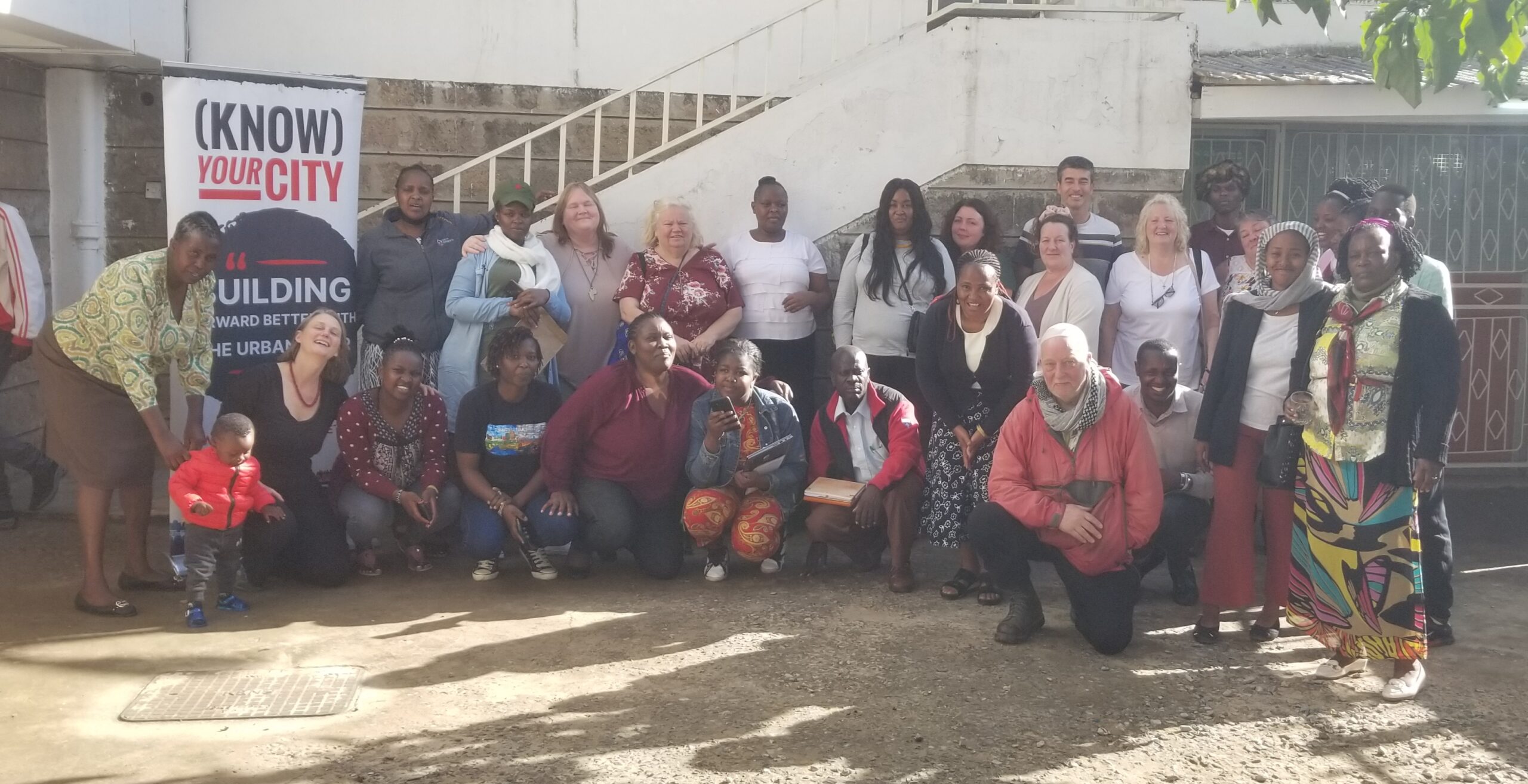
These were the words of Rashid, Chair of Muungano Wa Wanavijiji, at the opening session of a week-long international exchange in Nairobi between Muungano and Community Savers leaders from Manchester and Sheffield.
Rashid was sharing on the power of exchanges in the SDI tradition – a tradition that has been nurtured, tested, and adapted over more than thirty years, in 32 countries across the Global South.
November 2022 was a special month as Community Savers leaders were able to welcome activists from Nairobi here in the UK, share knowledge and learning on their adaptation of SDI/Muungano methodologies with postgraduate students in Manchester, and then travel to Nairobi to experience these approaches first hand; visiting settlements and exchanging learning with their sister federation.
Here we try to capture some highlights from a rich month of learning and inspiration…
“We Kenyans, and you from the UK, we are the same.”
Anastasia Wairimu is Chair of Akiba Mashinani Trust one of three organisations that make up the Muungano Alliance. After her second trip to the UK in November 2022 exchanging learning with Community Savers, she recognised that despite very different histories, low-income communities in the UK experience the same dynamics of exploitation and discrimination as informal settlement communities in Kenya.
Tina Cribbin is Chair of Aquarius Community Savers in Hulme, Manchester: these exchanges have enabled Tina and Anastasia to develop a strong relationship of trust and mutual respect, and Tina agreed with Anas’s observations. In particular, Tina noted the similarities in negative attitudes among those holding power and purse strings who judge low-income communities as criminal, as lazy, as a problem that needs fixing.

During her latest visit to the UK, Anastasia was shocked to see how older people are treated after visiting Hopton Court tower block in Hulme where 75% of tenants are aged Over-50 and many have long-term conditions, disabilities and mobility constraints. During their visit, the lifts were out of order again (a regular occurrence over the previous five years) and elderly people had been left with no way of getting out of the block or bringing food shopping up to their flats. Tenants shared how throughout the pandemic they had nowhere to meet with their neighbours due to the absence of a communal area at the block; and how elderly people are falling through the gaps between housing, health and social care services in ways which leave them unable to pay for food, heating or sometimes without appropriate end of life care.
During the Nairobi visit, Ellie and Sue from Miles Platting shared experiences of top-down regeneration and gentrification which resonated strongly with Muungano anti-eviction activists. Leaders reflected that although the extremity of the circumstances are very different the principle of top-down attempts to push lower-income groups away from the inner-city is the same.

During November, leaders from Miles Platting gave urban inequality students a tour of their neighbourhood. They explained to them how the Private Finance Initiative that was supposed to regenerate the area for the existing community has resulted in a net loss of approximately 500 social rental homes and the inflation of house prices and private rents far beyond a threshold that local working families can afford. This is leading to the breaking up of families and people on lower incomes being pushed out to other boroughs of Greater Manchester. Existing residents had agreed to the PFI (including compulsory purchase orders and demolitions) on the basis that a suite of community facilities would be built, including a joint services centre and leisure and retail facilities. In the end, none of this was delivered. The community are now calling on Manchester City Council to protect the public land that these community facilities were supposed to be constructed on for community benefit.

At our final reflection, Jonte shared how an elderly woman housing activist in Kambi Moto who has been involved in their community-led housing movement for over 30 years was amazed to learn that she can sit together with people from the UK, this developed country, and find that they are struggling against the same social issues and can learn from how communities have organised over land and housing in Nairobi.
“Saving is an act of resistance”
Community Savers have been holding learning exchanges with Muungano activists since 2017 and during November’s exchange in Nairobi, Tina explained to Anas that:
“What changed for me was about the savings: I used to feel like I don’t want to save, I want to spend. But you told me that every time you save it is an act of resistance and that has really changed it for me.”
Savings groups are the building blocks of a united and powerful community-led movement for poverty reduction and the transformation of urban social power relations. Tina’s group are now beginning to see the fruits of building power through savings as on return to the UK they had a meeting with the housing provider at Hopton Court (above). The provider issued an official apology for the experiences of older people at the block and announced that they will be replacing the lifts to ensure elderly people are never put in a situation of being trapped in the building again.

Aquarius Community Savers have also been able to build a new coalition of groups in their social housing estate who are coming together to form a new Aquarius Neighbourhood Forum including members of Hulme Tenants Union; Epping Park Warriors; Aquarius Tenants and Residents Association and Age-Friendly Hulme and Moss Side. They have worked closely with their local ward councillors to oppose a private development that would block the sunlight from Hopton Court gardens and put even more pressure on overburdened local services. They are now working with their councillors to request the rezoning of the Aquarius estate out of the city centre planning area and into the Inner South zone in support of a community-led plan for their thriving local community.
“Unity is our strength, Information is our power”
Muungano begin their meetings with call outs to their members “Unity? Is our strength! Information? Is our power!” During the final reflection at Muungano House on 25 November, Anastasia explained that:
“There are 43 tribes in Kenya, but at Muungano we know only two tribes: the haves and the have-nots”
Unity is critical to addressing this inequality.
We reflected on the importance of collective solutions and collective thinking. We discussed how in the UK people have become individual clients of government and service providers. Although it is good to have a social welfare system, it is provided in a way that has made people become passive. Tina observed that “it is given but it is never what you would have asked for. Now we are learning to ask for what we need.”
We reflected on the power of community data and also the value of university partnerships even though universities generally represent the “Haves”. Nicerah from Kibera shared how after she joined Muungano and began collecting data in her settlement, officials were asking her “How can you know how to make these survey questions on your own? What university did you go to?” Nicerah was able to tell them “My University is Muungano”.
Emily, a national leader from Mathare, explained how at the same time, Muungano has developed partnerships with university departments and their students. Students can help them to collect data and write up reports. This is not because the community cannot do it without their help, but it is about recognising that these students may be the next Planning Officer or Water and Sanitation official in the future: “If we teach them now, they may come back to us in the future”.
Validation is a critical step in the process: presenting the data collected back to the community through public meetings to enable them to correct inaccuracies and build a sense of ownership over the information and the change that the information makes possible.
Earlier in the week, as we began our learning exchange, Nancy explained that data collection underpins everything for Muungano: “we have to know ourselves” and this is the principle underpinning Know Your City TV…
Know Your City TV: “We can change the story”
One of the most inspiring engagements for UK activists during their week in Nairobi was with the Youth Federation leaders involved in data collection, advocacy, and Know Your City TV.
Through KYCTV young people are engaged in community action by creating opportunities for them to learn skills they are interested in like film-making and photography while leaders also engage youth through art, music and sports.
The UK team took home the principle of “Just One” – you only need one engaged young person to start a youth movement. That one person will be able to engage other young people.
UK delegates were inspired by their inclusive approach involving arts and sports and participatory approaches and tools for engagement and planning – especially the Tree of Transformation which enabled young people in Mukuru to come together for visioning of the changes they wanted to see and the conditions that they needed to foster to achieve those changes.

Georgie from Arbourthorne asked the youth leaders what made them engage with Muungano and KYCTV as it can be hard to engage young people in the UK who say “nothing ever changes”. They explained that they grew up in the settlements and they saw politicians come and go with promises that they never delivered on. They recognised Muungano’s message that we have the solutions and we know our community best. We were tired of all the negative representations in the media and decided that with the training they were offering we can change the story.
Younger youths were inspired and motivated by older youth mentors who they looked up to. The older leaders explained that they put their trust in the young people to carry out data gathering and document Federation processes; and importantly they show them love and nurture them. The leaders focus on what the young people themselves are interested in and what they want to learn and: “Give them a chance to be who they are”.
They advised the UK team: “try to spot the ones with ambitions, start with them, find the youth that want change, show them the opportunities, show them a better way of life”.
Exchanges such as these between grassroots communities across different international contexts are critical for enabling communities to recognise their expertise and the commonalities of their experiences, struggles and strength within global and urban systems which act to exploit and oppress them. Yet they resist, they organise, and they grow stronger, smarter, and more effective through global solidarity networks: when they know each other, they build each other.
More Stories
Learning from East Marsh
Pride in Place Manchester
Neighbourhood Planning in Hulme
Women take the lead on poverty action in Wythenshawe
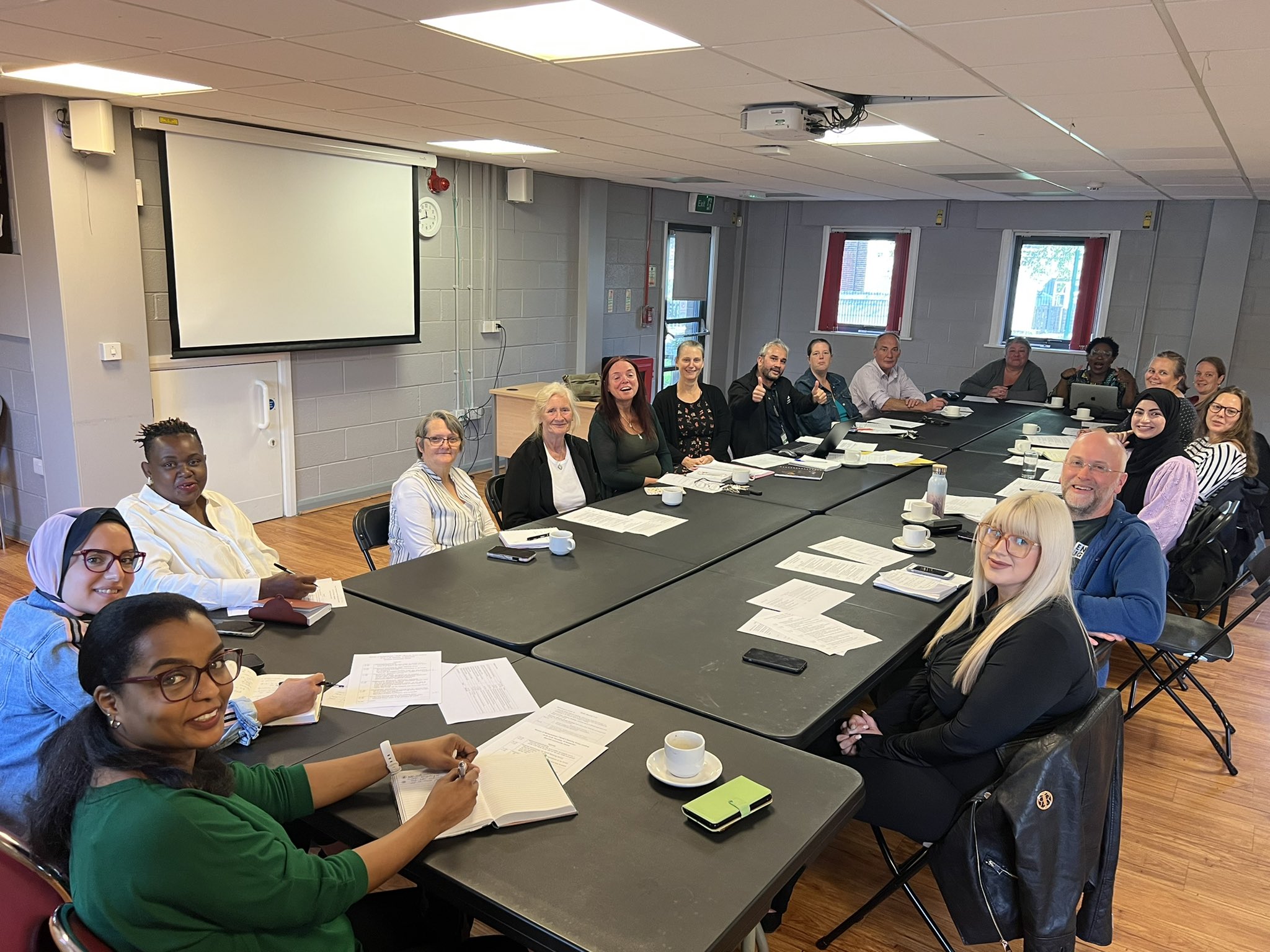
Women of Wythenshawe or ‘WoW’, is a new women-led poverty action network in Manchester made up of women’s organisations who say enough is enough. WoW has been awarded £500,000 by The Smallwood Trust for an innovative three-year programme to build a women-led poverty action network from the bottom up across the Wythenshawe area.
Women will be supported to share their knowledge and experience and to identify common areas for action on gendered poverty in the neighbourhood, developing strategies for systems changes that will reduce disadvantage and make significant improvements to women’s ability to thrive. Mums Mart Savers have played an important role in establishing the network, engaging in community exchanges across Wythenshawe, while CLASS will convene the network and work closely with local support agencies to enable women’s participation across at least ten different groups.
Women will be in the lead while able to call on the support of trusted local agencies when they require that help, such as bringing in key decision-makers to identify channels for influence and change. These include Executive Director of Wythenshawe Community Housing Group, Paul Seymour and Mike Kane MP.
Reflections from WoW members:
“We are so excited to be part of the Women of Wythenshawe network all the women in our group are excited about it. We have a lot that we need to share and we need to bring our voices out there.”
Ruth, Know Africa Foundation
“Our group is beautiful! We come together and make food and do activities and try to practice speaking English. WoW is a good idea for us because we need to do more activities with English speakers, but we can also share the different ideas we have – we can give each other good ideas to help each other.
Narjes, Well Women refugee support project
We have been in the Wythenshawe area for 13 years supporting carers of adults or children with learning disabilities and autism. We are really excited to be part of the WoW network because there are so many families that we work with that we want to support to have a louder voice. Many of our mums will be passionately involved in this piece of work over the next three years. It’s going to be a fantastic opportunity, also to meet with other groups in our area and become stronger by working together.
Emma, Lifted Carers Centre
Wythenshawe has had millions of pounds of regeneration funding invested over the past twenty years’ but poverty persists in many areas. WoW recognises that solutions and approaches need to be developed in partnership but from the bottom up. That means people bringing their experiences together from the individual and household level into a collective problem-solving space that is led by those directly affected.
WoW unites grassroots women around the place where they live and their common experiences, while bringing together a wide diversity of experiences and backgrounds including women of different ages, abilities, ethnicities and experiences. Wythenshawe has extremely high rates of domestic abuse (significantly higher than those for Manchester and England) and survivors are also represented.
Wherever you go in the world, poverty is gendered. As mothers, carers, low-income workers, and survivors, women shoulder an unequal burden of poverty while providing the social safety nets that hold communities together.
In the UK, it is women who have been disproportionately impacted by austerity policies, by COVID, and now by the current economic crisis (www.wbg.org.uk).
Paul Seymour said:
We are looking forward to supporting the WoW network as it evolves. We are really excited to be involved in this initiative that we believe could be the start of something transformational for women in Wythenshawe.
More Stories
Learning from East Marsh
Pride in Place Manchester